



 English
  中文简体
中文简体 
HOME / NEWS / Industry News / Sponge Swabs & Sterile Foam Swab Sticks: Materials, Grades & Sourcing Guide
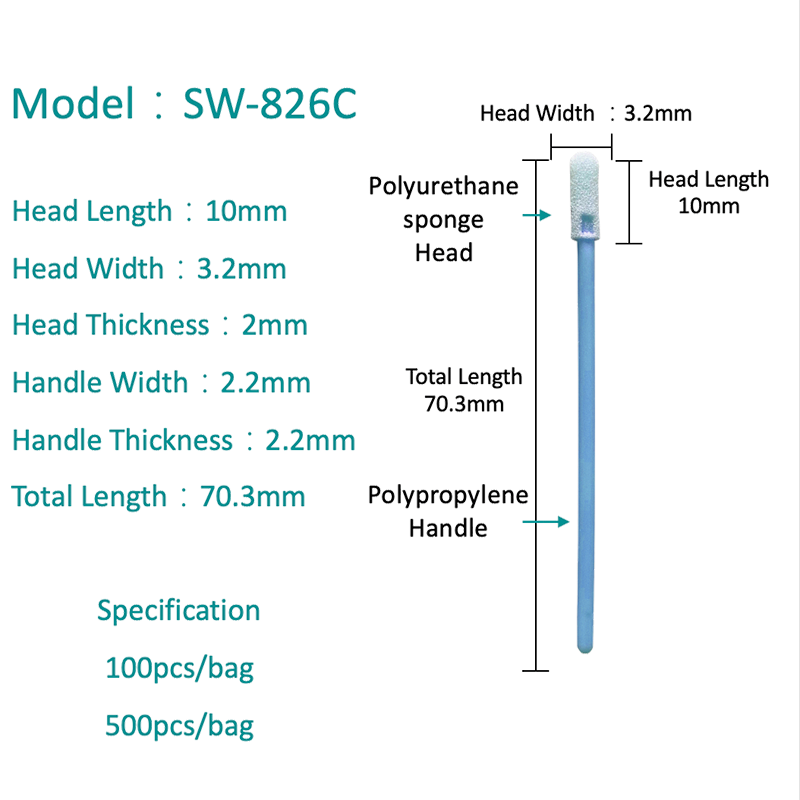
A sponge swab is built around an open- or closed-cell foam head bonded to a handle, designed to absorb, apply, or wipe liquids without shedding particles or fibers. The foam structure is what separates a basic cleaning swab from a sterile sponge foam swab stick suitable for cleanroom, medical, or electronics work — and getting that structure wrong is the most common reason a swab fails in critical applications.
Content
Foam Type and Cell Structure Determine Absorption and Residue Behavior
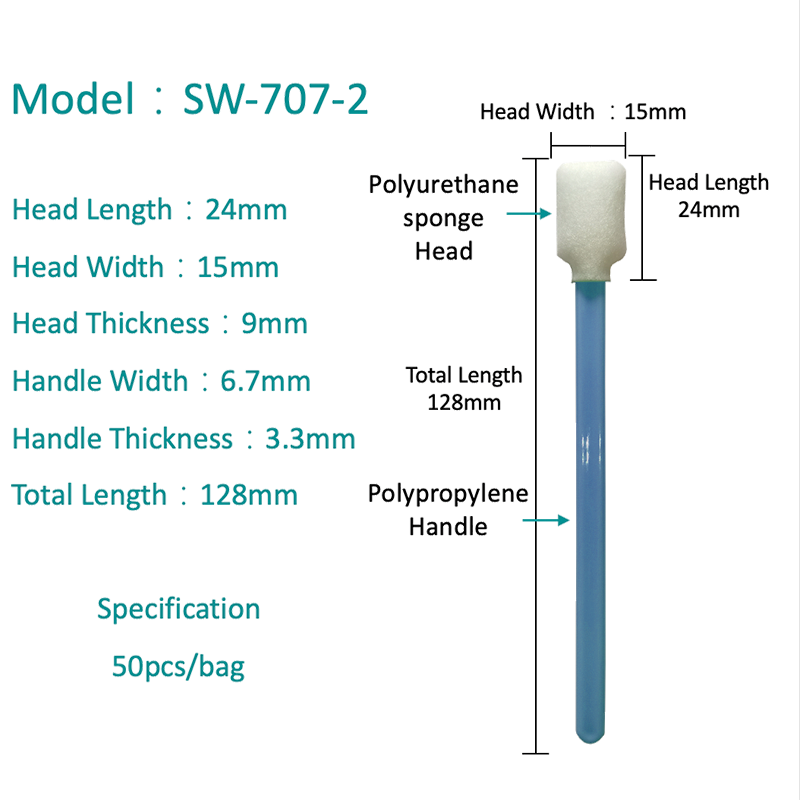
Polyurethane (PU) foam and polyvinyl alcohol (PVA) foam are the two dominant materials used in sponge swab heads, and each behaves differently under load. PU foam with an open-cell structure absorbs quickly and holds a higher liquid volume, making it suitable for general cleaning, ink application, and adhesive spreading. PVA foam, by contrast, is denser, lint-free, and chemically resistant to solvents like acetone and IPA, which is why it dominates in electronics rework and optical lens cleaning.
The key performance differences include:
- Open-cell PU foam: high absorbency, soft texture, lower chemical resistance
- Closed-cell PU foam: lower absorbency but reduced particle shedding
- PVA foam: solvent-resistant, lint-free, ideal for residue-sensitive surfaces
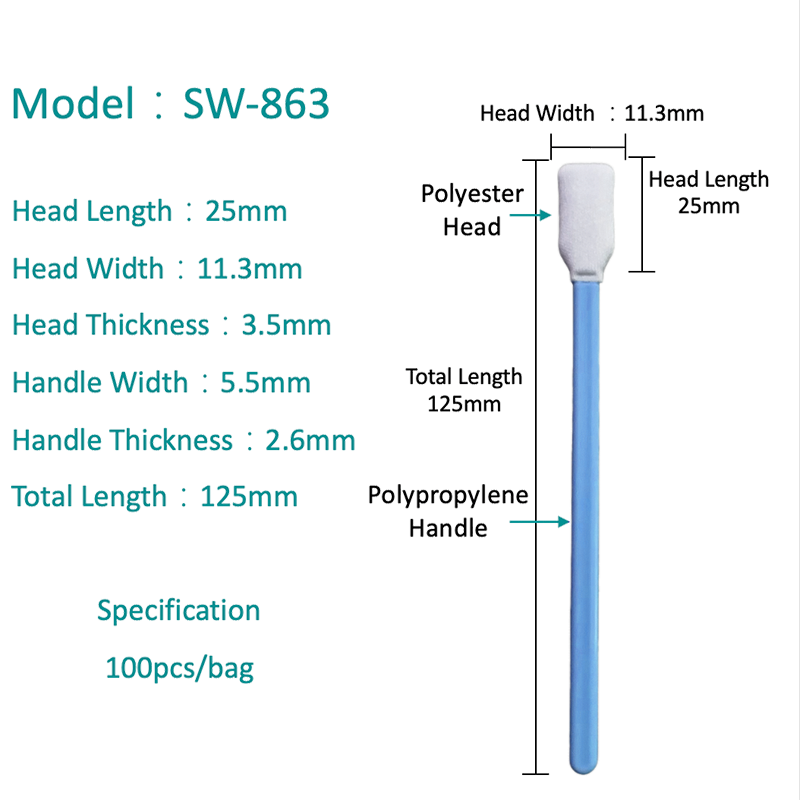
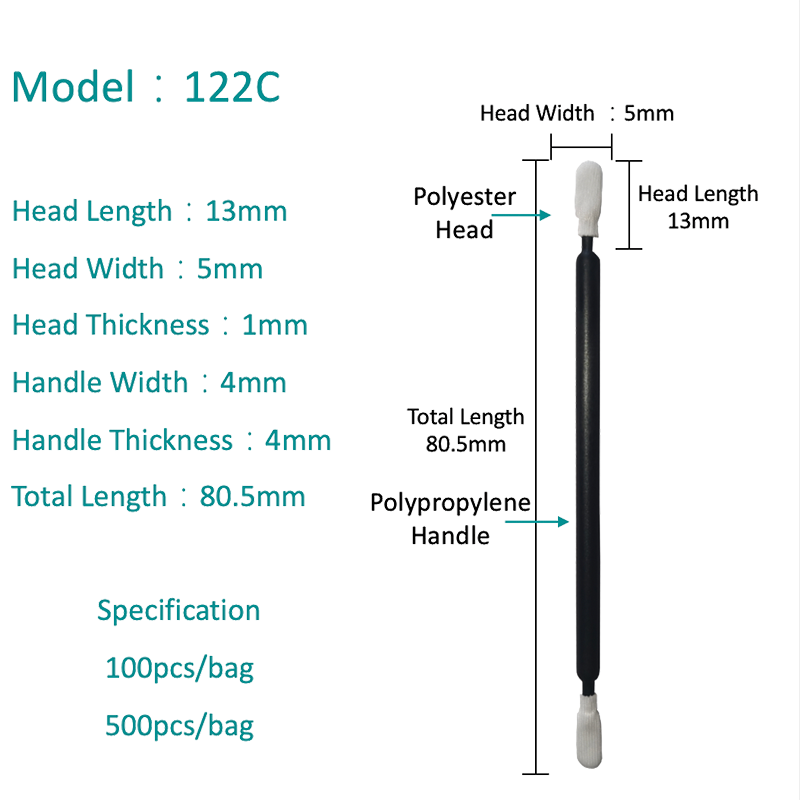
- Knitted polyester over foam: adds durability for abrasive scrubbing without tearing
Handle Material Affects Both Reach and Chemical Compatibility
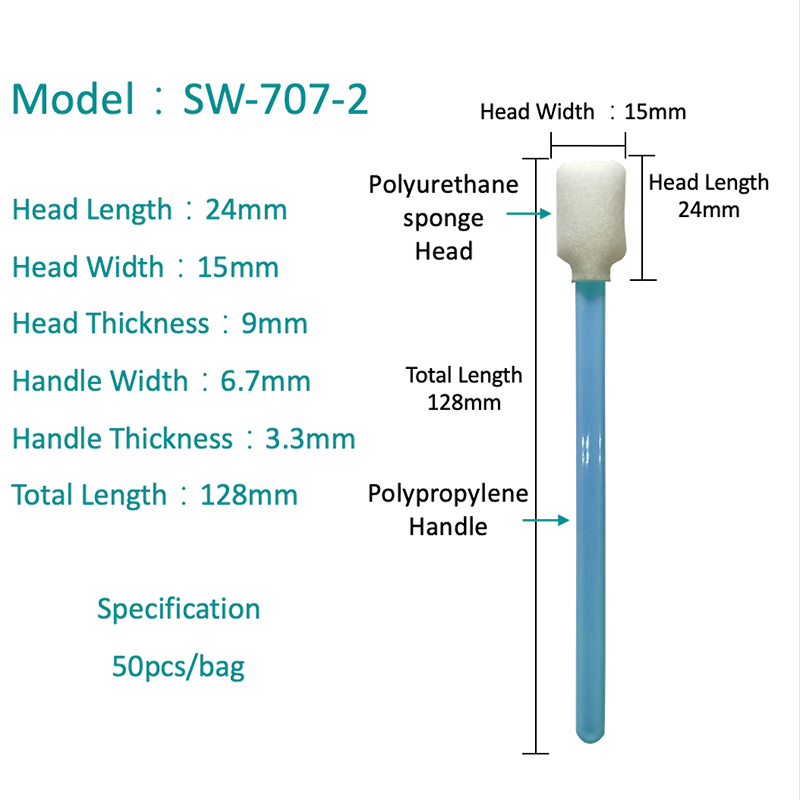
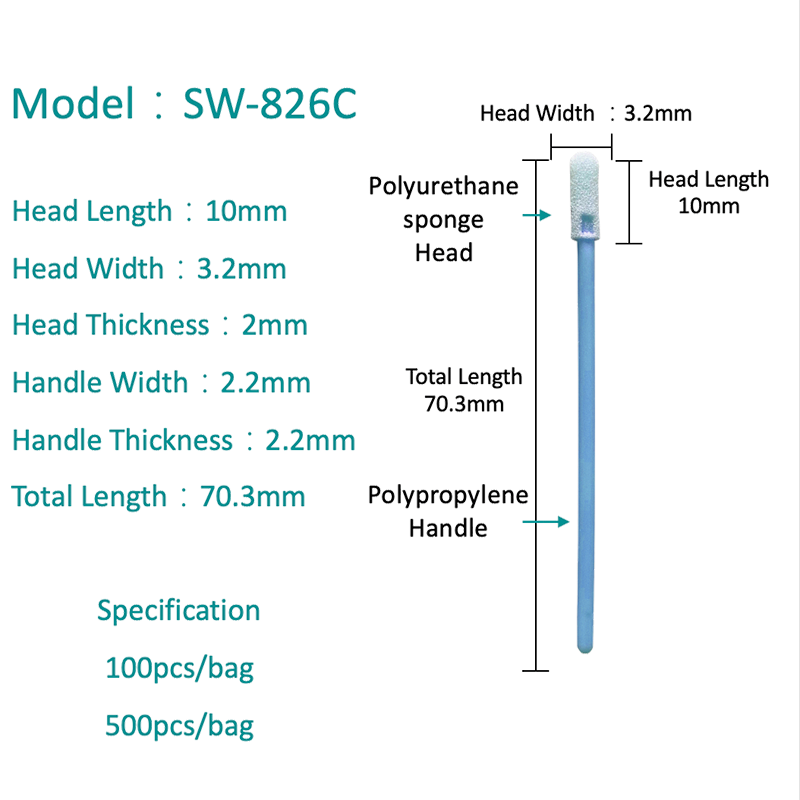
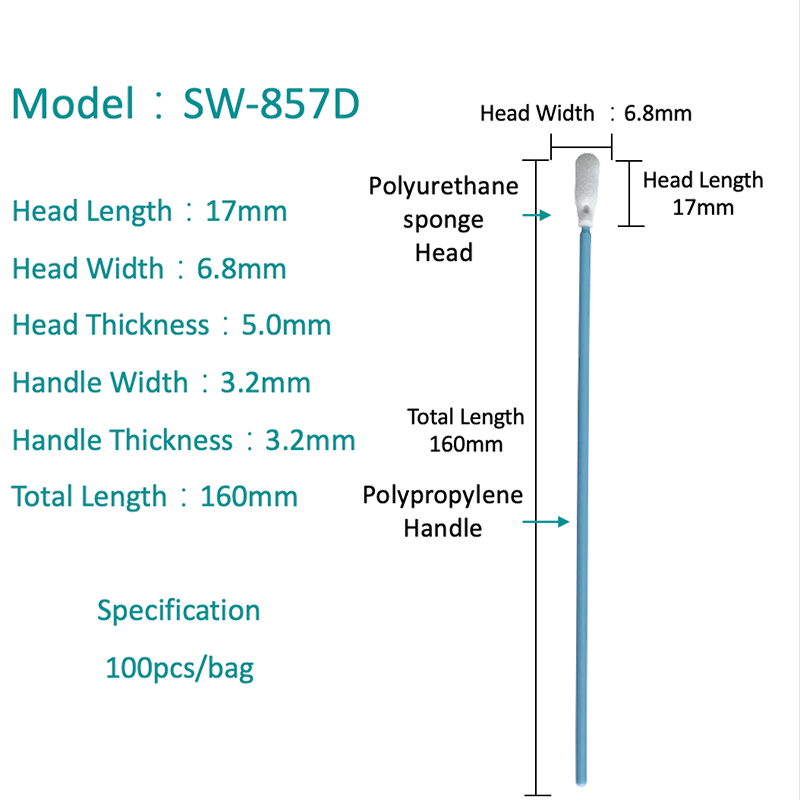
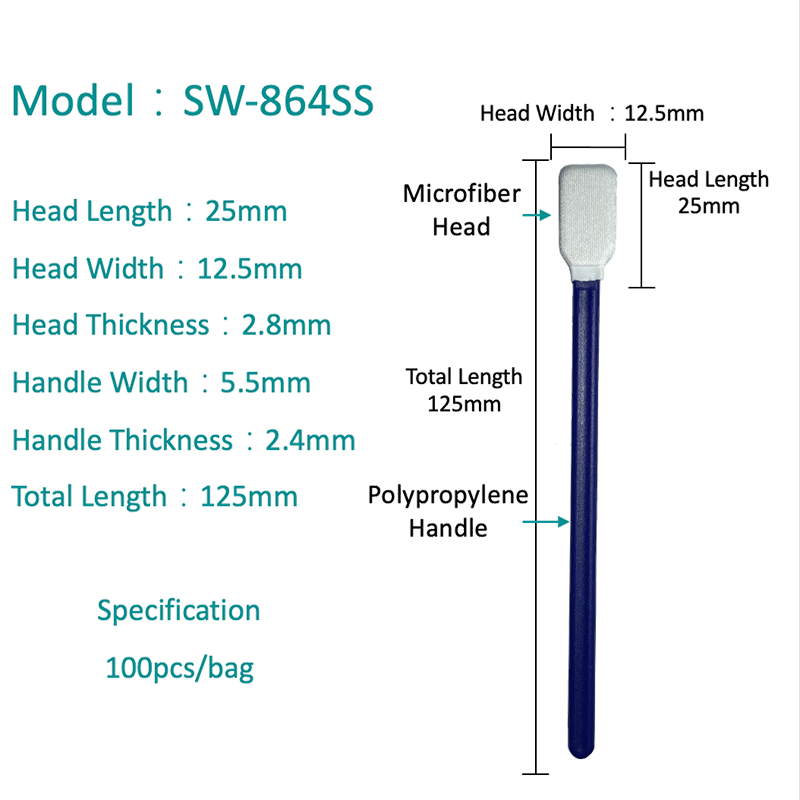
The handle of a sponge swab is rarely an afterthought in technical applications. Polypropylene handles are the most common choice because they resist most solvents and won't degrade under repeated exposure to isopropyl alcohol, a standard in electronics cleaning. Paper-stick handles are cheaper and biodegradable but can wick liquid up the shaft, which is undesirable when working near live circuitry or in sterile fields.
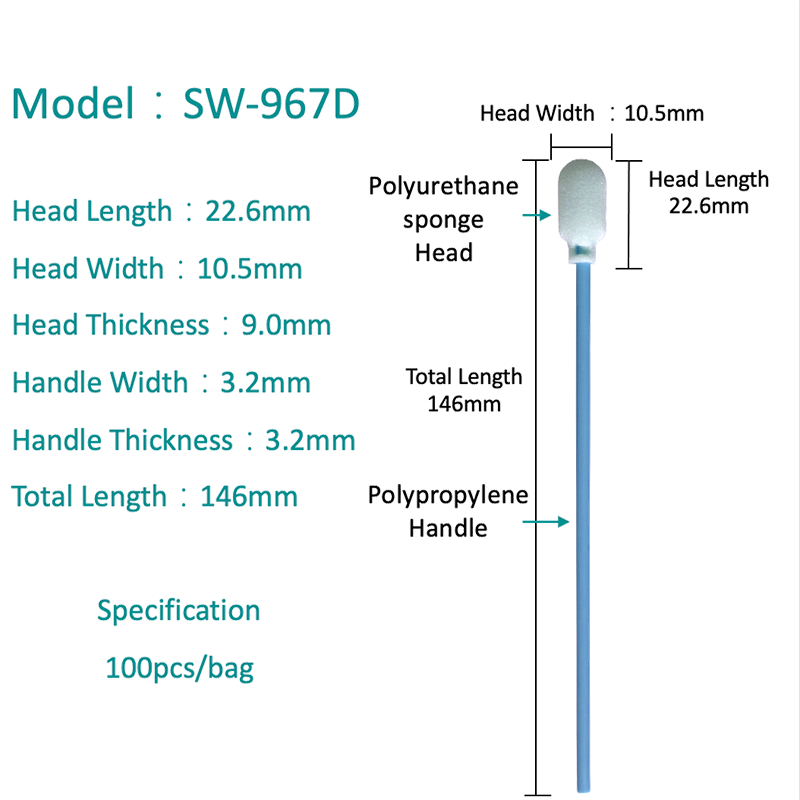
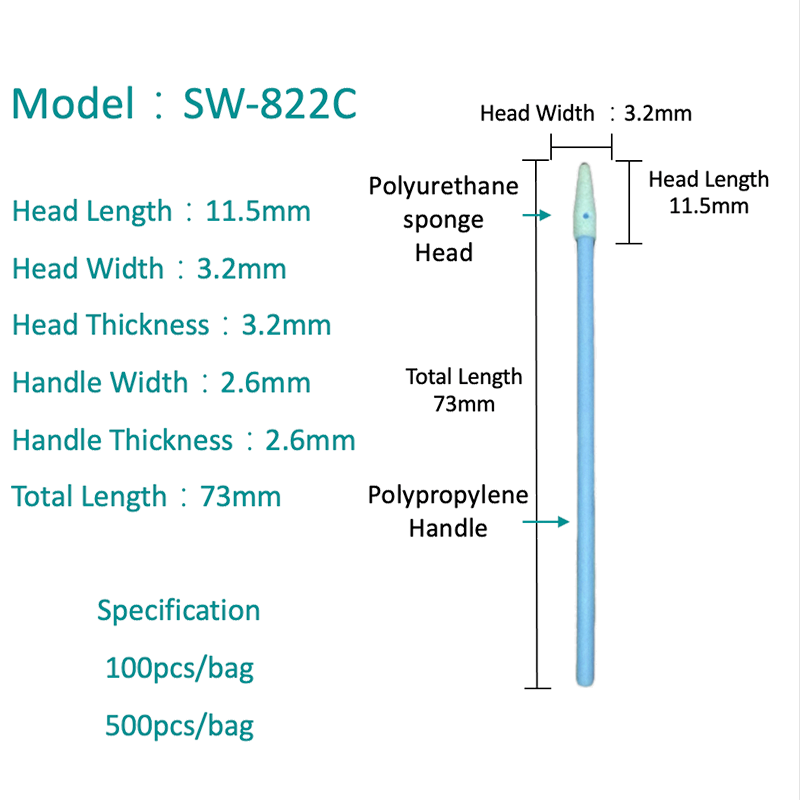
For applications requiring access to recessed areas — connector housings, narrow grooves, or small medical cavities — a tapered or pointed foam head on a rigid handle allows controlled pressure without the shaft flexing. Handle length typically ranges from 75mm for general-purpose swabs to 150mm or longer for industrial maintenance work in deep equipment housings.
Sterility and Cleanroom Classification Standards Buyers Should Verify
"Sterile" is not a marketing term — it refers to a validated process, usually gamma irradiation or ethylene oxide (EtO) treatment, that reduces bioburden to a specified sterility assurance level (SAL), commonly 10⁻⁶ for medical-grade products. A genuinely sterile sponge foam swab stick should ship with a certificate of conformance referencing the sterilization method and batch validation, individually wrapped to maintain sterility until point of use.
For cleanroom applications, the relevant benchmark is particle and ion contribution under ISO 14644 cleanroom classifications. Swabs rated for ISO Class 4–5 environments are manufactured and packaged in controlled environments themselves, with low non-volatile residue (NVR) and minimal ionic content — critical when even microscopic contamination can cause defects on semiconductor wafers or disk drive components.
| Application | Recommended Foam | Sterility Requirement |
|---|---|---|
| Wound care / medical prep | PU open-cell | Gamma or EtO sterile, individually packed |
| PCB / electronics cleaning | PVA closed-cell | ISO Class 5 cleanroom packed |
| General industrial wipe-down | PU with polyester overwrap | Non-sterile, bulk packed |
Sourcing Considerations: Shape, Packaging, and Batch Consistency
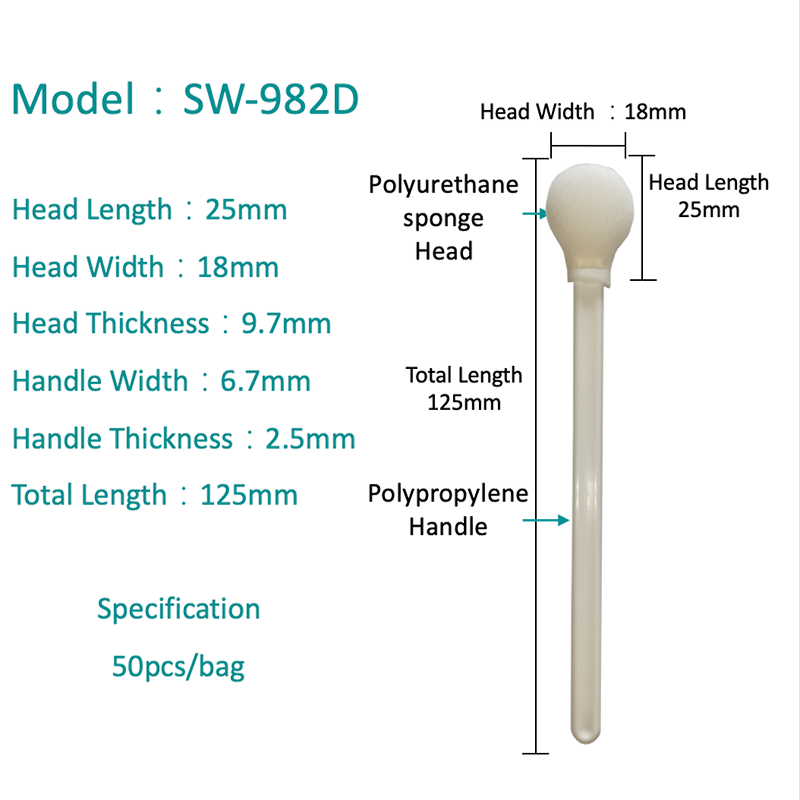
When evaluating suppliers, head shape matters as much as material. Round or "lollipop" heads suit general wiping, while pointed, tapered, or rectangular heads are designed for precision tasks like cleaning connector pins or applying solder flux. Buyers sourcing in volume should also confirm packaging options — bulk bagged, blister-packed, or individually pouched — since packaging directly affects shelf life and contamination risk during storage and transport.
Batch-to-batch consistency is often the deciding factor between suppliers. Foam density variation as small as 5–10% can change absorption rates enough to affect downstream processes like flux residue removal or sample collection volume. Requesting certificates of analysis (CoA) for each production lot, along with documented quality control checkpoints, helps ensure the swabs perform predictably across reorders — particularly important for buyers integrating swabs into regulated manufacturing or medical workflows.

 ADDRESS
 CONTACT
 FAX
FAX EMAIL
EMAIL
