



 English
  中文简体
中文简体 
Sterile Sponge Foam Swabs Stick, Printer Cleaning Sticks Manufacturers
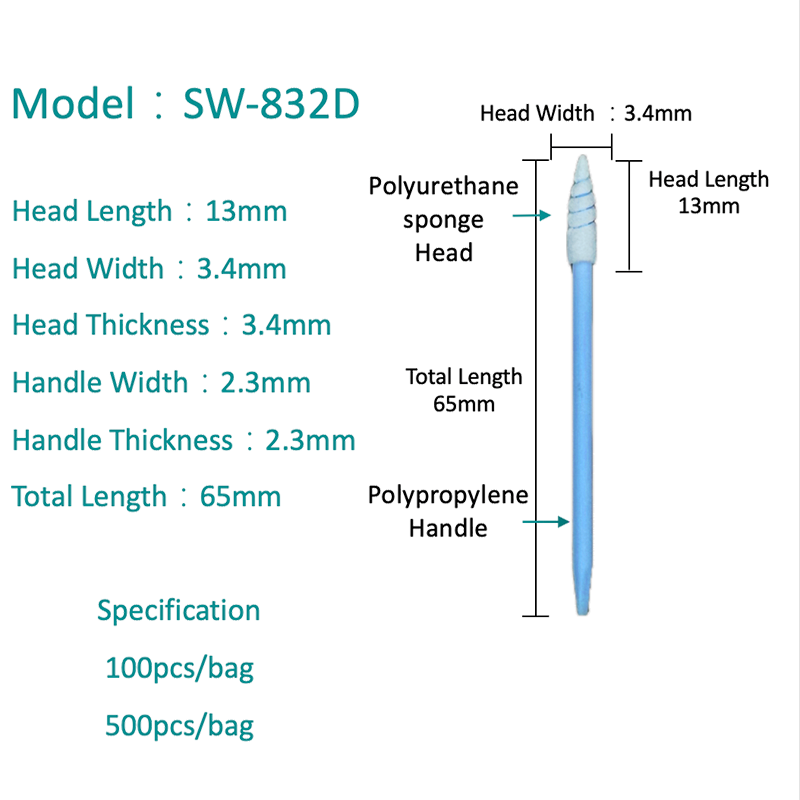
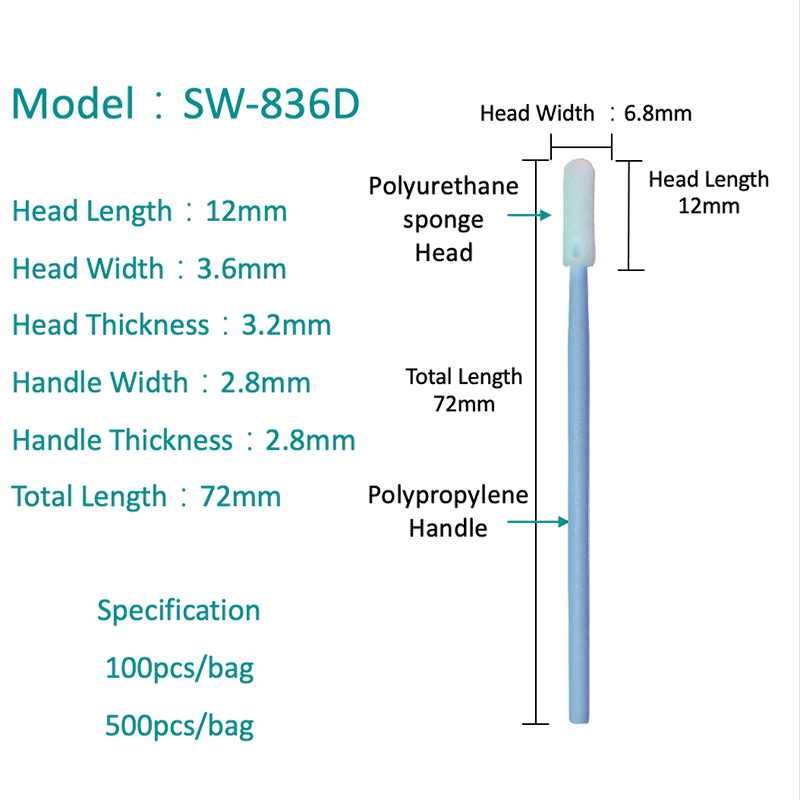
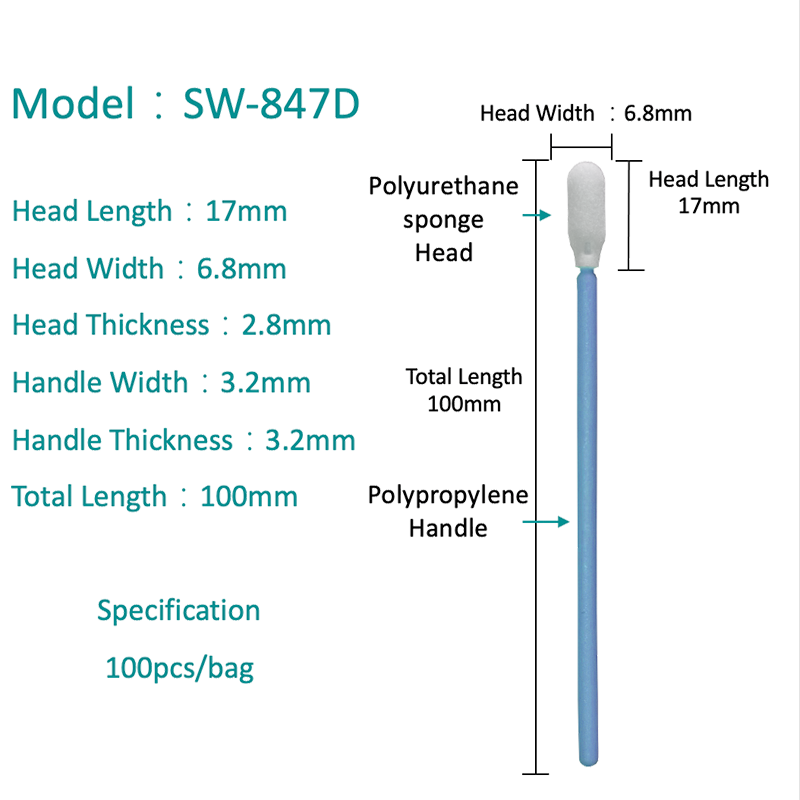
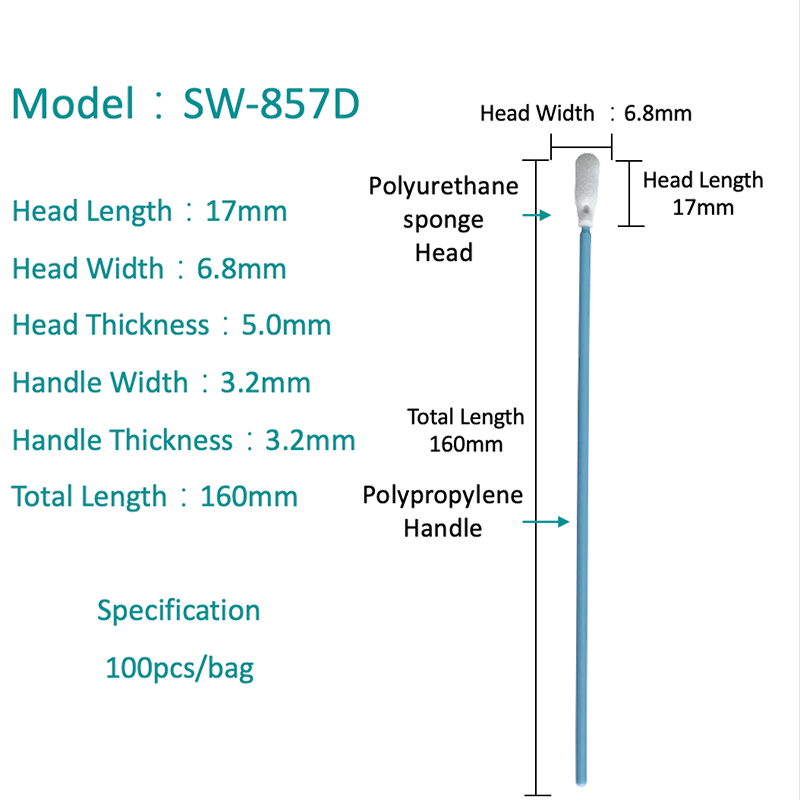
Product Overview
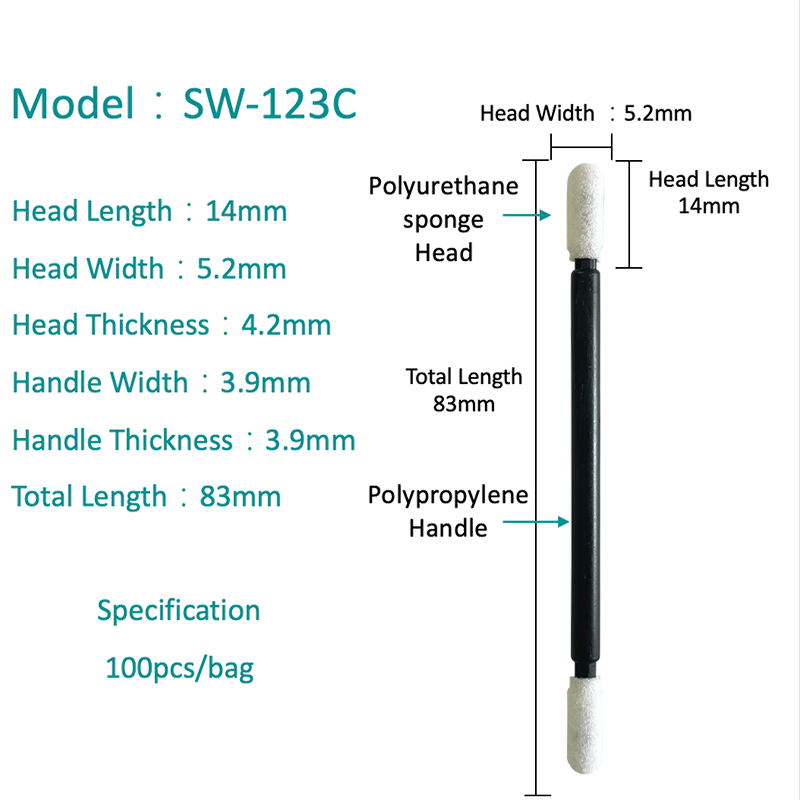
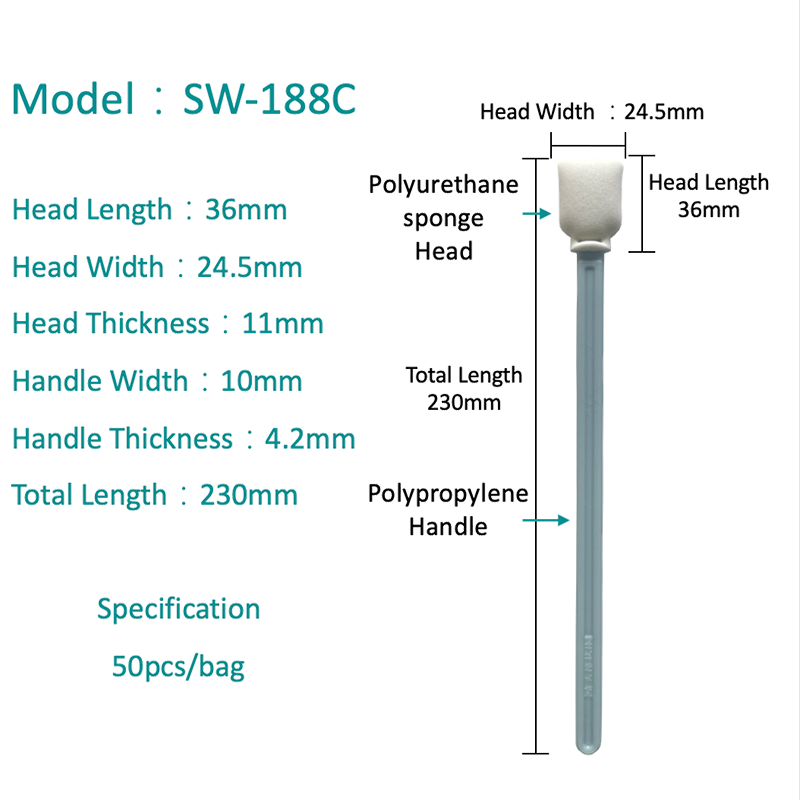
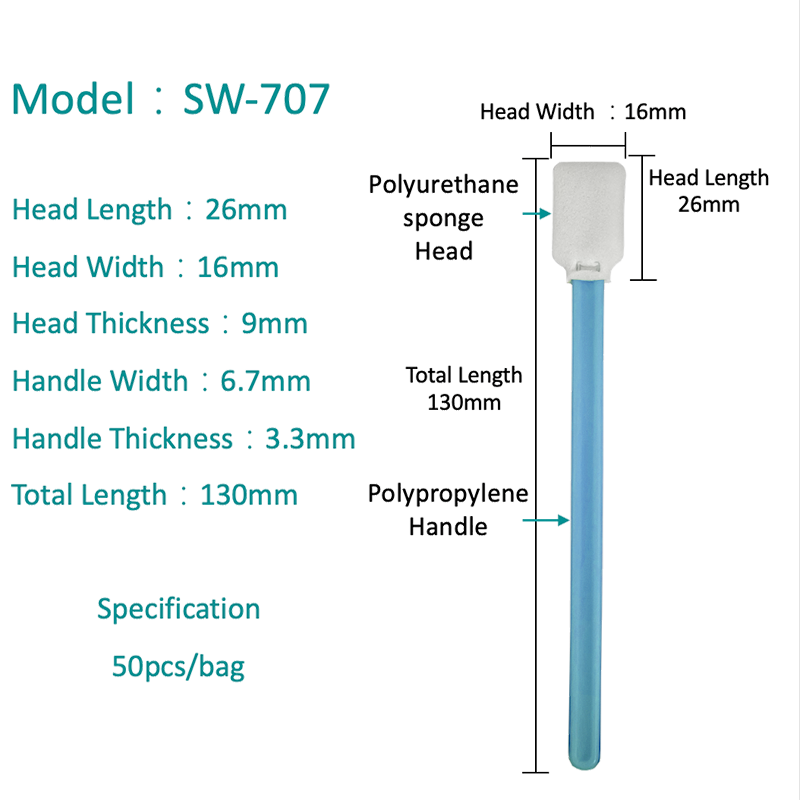
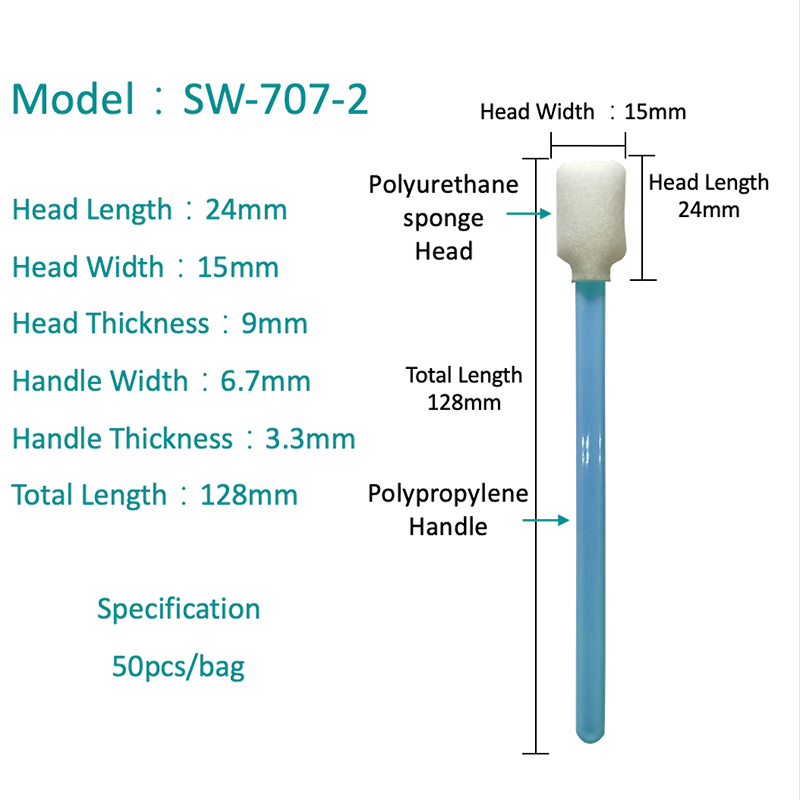
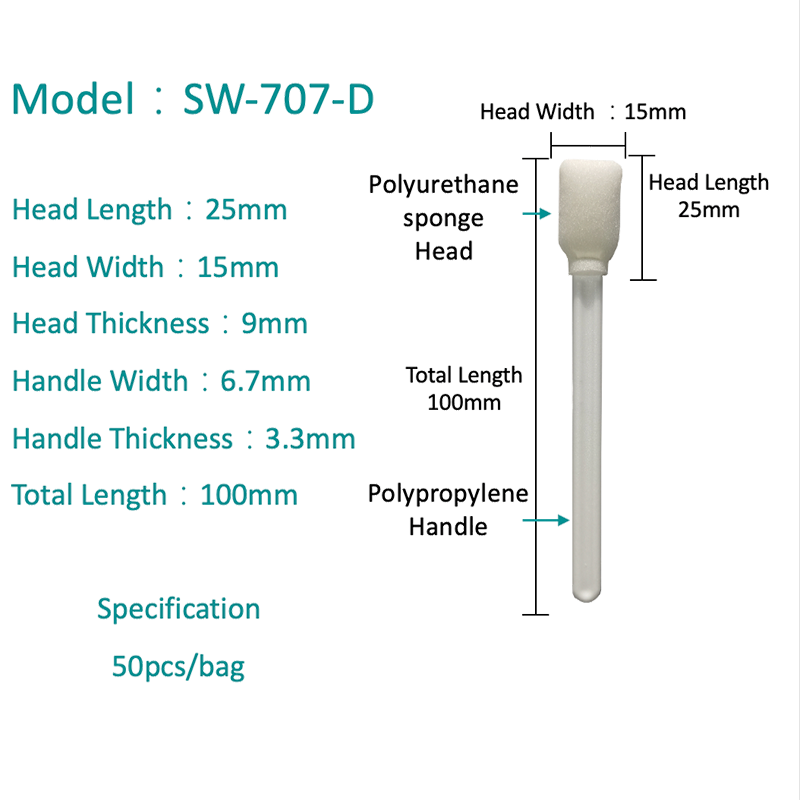
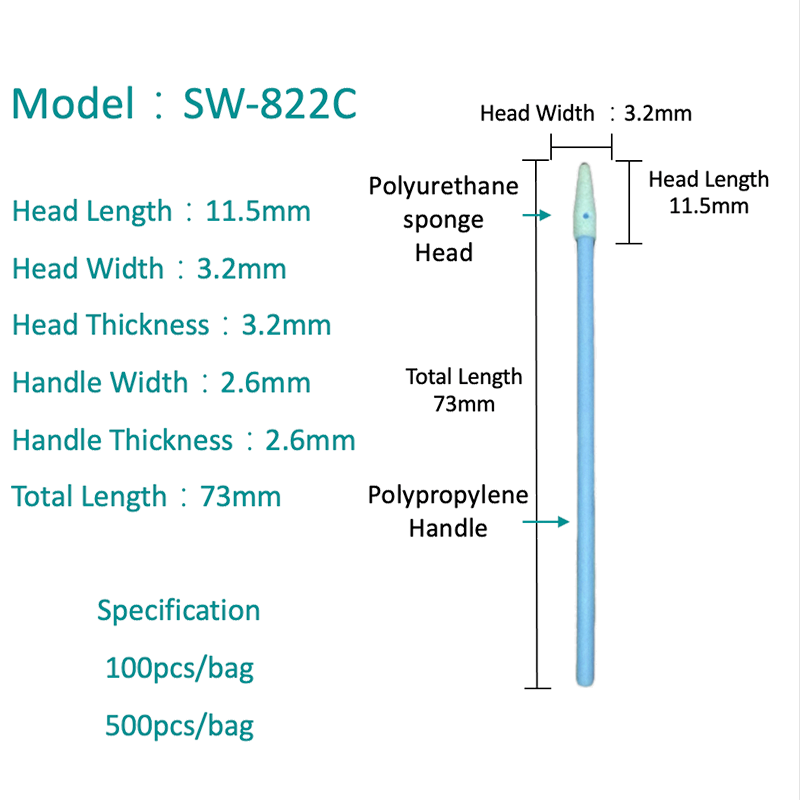
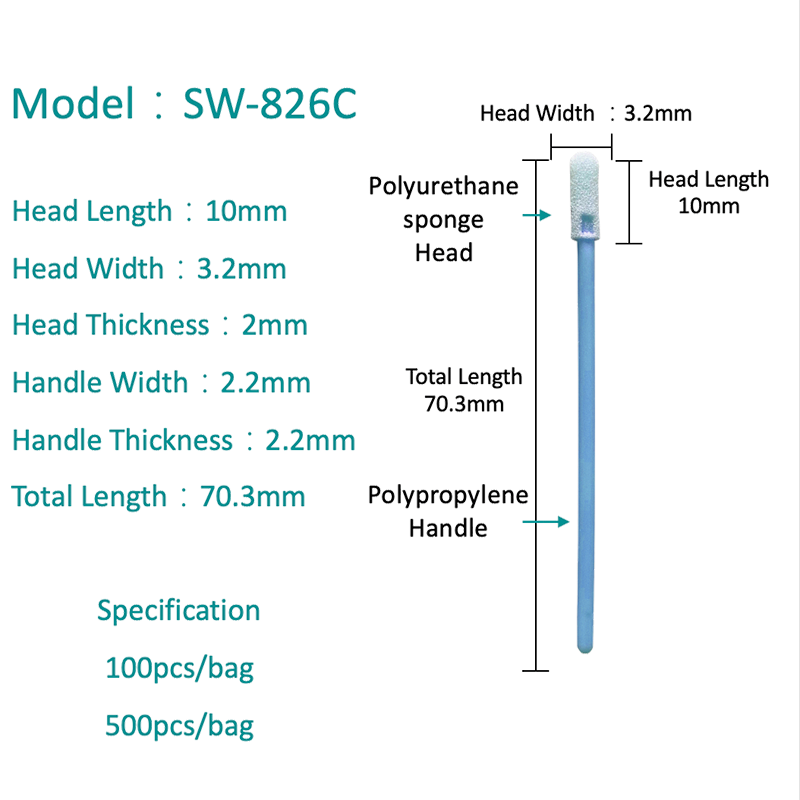
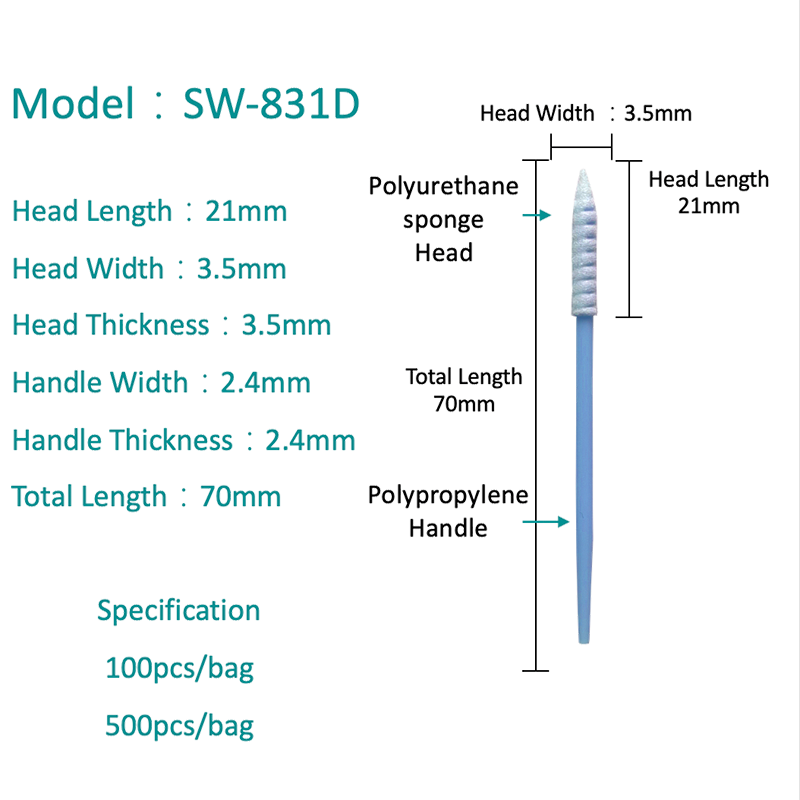
This product is specifically designed for cleaning the surfaces of inkjet printer nozzles and spray heads. Crafted from reliable raw materials, it is compressed by a high-density Japanese-imported sponge, ensuring corrosion resistance, uniform pore structure, good oil resistance, and a soft, safe texture that won't damage the printer heads. The sturdy polypropylene swab stick is securely bonded to the head using heat fusion technology, effectively preventing detachment due to solvent corrosion. After dust-free cleaning, the swab head is clean. The sponge is made from fully open-cell foam, which is particularly uniform in pore structure and boasts good oil resistance. It also has high-temperature bonding, making it an ideal aid for cleaning inkjet printer nozzles and spray heads.
Product Description
The swab head is made from premium materials and has been cleaned in a dust-free environment. The polypropylene swab stick is robust, with the swab head being heat-bonded, soft, and resistant to wear, and it is free of silicone.
Product Features
The product boasts non-volatile residue levels far below standards, low dust output, high wear resistance, absence of adhesives that could contaminate the product, and good resistance to chemical solvents. Imported open-cell sponge provides a larger contact surface and adsorption space, allowing contaminants to quickly enter the sponge holes. Dust-free polyester fiber head and Microfiber head has stronger wear resistance and higher cleanliness. Widely used in the hard disk industry, optical instruments, lenses, printer scanners, semiconductors, chips, laboratories, flat electronic display, packaging and testing microelectronics, integrated circuits, precision instruments, aerospace and pharmaceutical industries.
Suzhou Zhuojing Cleanroom Technology Co., Ltd.
Suzhou Zhuojing Dust-free Technology Co., Ltd. is a specialized manufacturer dedicated to the research, development, production, and sales of dust-free cleaning cotton swabs, dust-free wipers, dust-free wipping papers and various dust-free anti-static consumables.
We are China Wholesale Sterile Sponge Foam Swabs Stick Factory and OEM/ODM Printer Cleaning Sticks Manufacturers. Our team comprises a group of engineering technicians engaged in the development of dust-free products and highly skilled marketing personnel, ensuring the quality of our products and our sales services. Our clientele spans across the nation, and we also provide OEM services to international peers in the same industry.
Our factory is equipped with cleanrooms ranging from Class 10 to Class 1000, and we have introduced advanced global dust-free cleaning equipment. The cleaning process utilizes ultra-pure water with a purity of up to 18 mega-ohm, ensuring that all dust-free products undergo production within a controlled environment. They are then vacuum-sealed to maintain their cleanliness before being delivered to our customers. Our specialized dust-free production, washing, and drying processes guarantee that our products meet high standards of cleanliness.
We are committed to the field of dust-free and anti-static technology, offering a range of services including the design, manufacturing, sales, OEM cooperation, and production and sales of various anti-static clean products. Our products are widely used in industries such as semiconductors, microelectronics, integrated circuits, precision instruments, aerospace, and pharmaceuticals.
At our company, customer needs are always important, and we pay more attention to our customers' needs. We are continuously striving for high technology and high quality, which are our goals. Developing new products and promoting new services are the driving forces behind our development. Honesty, integration, responsibility, and innovation are the guiding principles of our business philosophy.
Adhering to the quality policy of "scientific management, quality-oriented continuous improvement, and customer satisfaction," we are eager to collaborate with clients both domestically and internationally. We look forward to your partnership as we work together towards a bright future.
News
-
Sponge Swabs for Medical Use: Wound, Surgical & Dental Guide
Medical & Healthcare Supplies Sponge Swabs for Medical Use: Wound Care, Surgical, and Dental Applications Sponge swabs show up across nearly every corner o...
Read More -
How to Use a Sponge Swab for Surface Sampling: Complete Guide
Lab & Sampling Supplies How to Use a Sponge Swab for Surface Sampling Sponge swabs are a standard tool for collecting surface samples in food safety, envir...
Read More -
Cleanroom Swabs: Materials, Types & How to Choose
Swab material is the single biggest factor separating a clean, residue-free wipe from a swab that leaves fibers, scratches a sensitive surface, or introduces ...
Read More -
Poly Swabs, Microfiber Swabs & Swab Types Explained
Poly Swabs, Microfiber Swabs, and Swab Types Explained Swabs are one of the simplest tools in precision cleaning and quality control, yet the differences betw...
Read More
Message Feedback
Industry Knowledge
Open-Cell vs. Closed-Cell Foam: Which Sponge Structure Fits Your Cleaning Task
Polyurethane foam swabs divide into two fundamentally different internal structures, and selecting the wrong one for a given application consistently produces incomplete cleaning results regardless of the swab's other specifications. The distinction is not primarily about softness or size — it is about how the foam interacts with liquids and contaminants at the cellular level, which determines whether the swab absorbs and retains what it picks up or simply moves it from one location to another.
Open-cell foam is a reticulated structure in which the cell walls between adjacent pores have been removed, creating an interconnected network of channels throughout the foam body. When this structure contacts a liquid-contaminated surface, capillary action pulls both the liquid and any dissolved or suspended contaminants into the foam matrix, where they are retained within the channel network rather than released back onto the substrate under subsequent contact pressure. This makes open-cell foam the correct choice for tasks requiring high liquid absorption and particle entrapment: solvent cleaning of printer components, ink residue removal from capping stations, flux uptake from PCB assemblies, and any application where the swab must capture and hold the contamination it collects during the wiping stroke.
Closed-cell foam retains its cell walls intact, producing a denser, firmer structure that resists liquid penetration. This lower absorbency is an advantage rather than a limitation in specific scenarios: lubricant application tasks where the foam should carry and deposit a controlled amount of oil without absorbing it back, scrubbing tasks on hard surfaces where the foam's structural rigidity maintains effective contact pressure, and cleaning applications where the foam must not over-saturate the target surface. Open-cell foam suits liquid capture; closed-cell foam suits controlled liquid delivery and mechanical scrubbing. Suzhou Zhuojing's sponge swab range covers both foam structures across multiple head geometries, with the structure selection visible in product specifications to support accurate task matching.
How Printer Cleaning Sticks Prevent the Most Common Wide-Format Printhead Failures
Inkjet printhead failures in wide-format printers — Roland, Mimaki, Mutoh, Epson, and DTF platforms — divide into two categories: nozzle blockage from dried ink deposits, and mechanical contamination that disrupts the automatic maintenance cycle. Both are preventable through correct manual cleaning with appropriate foam swab tools, and both worsen rapidly when maintenance is deferred or performed with unsuitable cleaning materials like cotton swabs that deposit fiber contamination inside the service station.
The capping station is the highest-priority manual cleaning target on any inkjet printer. When the printhead parks, the capping station's rubber cap seals against the nozzle plate to prevent ink drying and draws cleaning solution through nozzles during purge cycles. Ink pigment and dye accumulate on the cap interior walls and in the sponge pad that absorbs purged ink over time; when this buildup becomes sufficient to prevent a full seal against the nozzle plate, the printer loses its ability to maintain nozzle hydration during idle periods and nozzle blockage rates increase sharply. A foam-tipped printer cleaning stick loaded with the appropriate cleaning solution — manufacturer-specified solvent for eco-solvent inks, water-based cleaning fluid for aqueous inks — and worked along the cap walls and sponge pad surface removes this accumulated residue without leaving the fiber contamination that cotton swab alternatives introduce into the cap seal zone.
The wiper blade, which sweeps the nozzle plate during each maintenance cycle, accumulates a crust of dried ink along its rubber edge over high-volume production runs. When this crust reaches a thickness that prevents the blade from making uniform contact with the nozzle plate, it begins transferring contamination onto the nozzle surface rather than removing it. Roland's official maintenance documentation recommends minimum monthly cleaning of the printhead sides and cap area, with wiper blade inspection and replacement on a use-frequency schedule. Printer cleaning sticks with rectangular foam heads matched to the wiper blade geometry clean the blade edge effectively in a single lateral pass without the edge-damage risk that hard tools present on rubber components.
Sterile Sponge Foam Swabs in Medical and Pharmaceutical Environments
The requirements for foam swabs used in medical device manufacturing, pharmaceutical cleanrooms, and clinical applications differ from industrial cleaning requirements in one fundamental way: the swab material must be demonstrated safe for contact with products or surfaces that ultimately contact human tissue or enter the human body. This is formalized in the ISO 10993 biocompatibility testing framework, which specifies the cytotoxicity, systemic toxicity, and sensitization tests that medical-grade foam must pass to confirm it does not release substances harmful to biological systems under conditions of use.
Standard industrial polyurethane foam formulations use processing aids — amine catalysts, silicone surfactants, plasticizers — that facilitate foam manufacturing but leave residual extractable species in the foam structure. These extractables are acceptable in electronics and industrial cleaning contexts where the cleaned surfaces are not in biological contact, but they disqualify the foam from medical device and pharmaceutical applications where extractables testing under ISO 10993 would detect cytotoxic or sensitizing compounds. Medical-grade foam for sterile sponge swab sticks is formulated without these standard processing aids and undergoes extractables characterization to demonstrate that the foam body contains no species that would fail biocompatibility screening — the same material transparency that drives the silicone-free and amide-free declarations on industrial cleanroom foam swabs, but to a more rigorous documented standard.
Sterility adds a second independent requirement on top of biocompatibility: the swab must arrive at the point of use with a documented Sterility Assurance Level of 10⁻⁶, achieved through validated gamma irradiation, ethylene oxide gas, or autoclave sterilization applied to the individually packaged swab after manufacturing. The engineering team at Suzhou Zhuojing designs foam swab products to accommodate these sequential requirements — biocompatible foam formulation, cleanroom manufacturing, and sterilization-compatible construction — across the sterile product formats in this range, enabling medical and pharmaceutical customers to source foam swabs that satisfy both the material chemistry and sterility specifications their quality systems require from a single supply relationship.
Head Geometry and Handle Length: Matching Sponge Swab Format to Access Requirements
Foam head shape and handle length are the two physical specifications that determine whether a sponge swab can physically reach the cleaning target and make effective contact with it. These parameters receive less attention in procurement specifications than material type, but in practice they are the selection variables that most directly determine whether a cleaning procedure can be completed in a single swab pass or requires multiple repositioning steps that increase contamination exposure time and operator fatigue in production workflows.
Rectangular and square foam heads provide the most efficient coverage on flat surfaces — PCB top surfaces, optical panel zones, equipment housing panels, and printer service station flat walls — because the full head width contacts the substrate in a single stroke without the dead-angle gaps that round or pointed tips create between passes. For these applications, head width should be matched to the width of the cleaning zone: a head significantly narrower than the target zone requires multiple parallel passes with alignment precision, while a head significantly wider than the zone contacts adjacent components or housing walls. Pointed and round foam heads access the geometries that rectangular heads cannot — connector recesses, nozzle plate corners, instrument channel interiors, and curved housing features where the cleaning target is surrounded by surfaces that must not be contacted by the swab during the cleaning stroke.
Handle length selection follows a simple access rule: the handle must be long enough to place the foam head at the cleaning target while keeping the operator's hand outside the equipment enclosure. Standard 70–100mm handles suit bench-accessible surfaces and open printer service stations. Extended 130–160mm handles are required when the cleaning target is recessed more than 80mm from the nearest access point — deep printer ink delivery channels, medical device tubing interiors, and enclosed instrument housings that cannot be partially disassembled for cleaning without disrupting process continuity. Double-headed sponge swab formats, where foam tips are present at both ends of the handle, extend the utility of a single swab in two-stage cleaning workflows: one end for initial solvent application and residue uptake, the other for the finishing wipe, reducing consumable consumption in high-frequency maintenance operations without compromising the cleanliness of the final cleaning pass.

The information provided on this website is intended for use only in countries and jurisdictions outside of the People's Republic of China.
REQUEST A FREE QUOTE
 ADDRESS
No. 93 Weihe Road, Suzhou Industrial Park, Jiangsu Province
 CONTACT
 FAX
FAX EMAIL
EMAILCopyright © Suzhou Zhuojing Cleanroom Technology Co., Ltd. All Rights Reserved.
Wholesale Sterile Sponge Foam Swabs Stick, Printer Cleaning Sticks Manufacturers
