



 English
  中文简体
中文简体 
Dust-Free Foam Head Cleanroom Swab Manufacturers
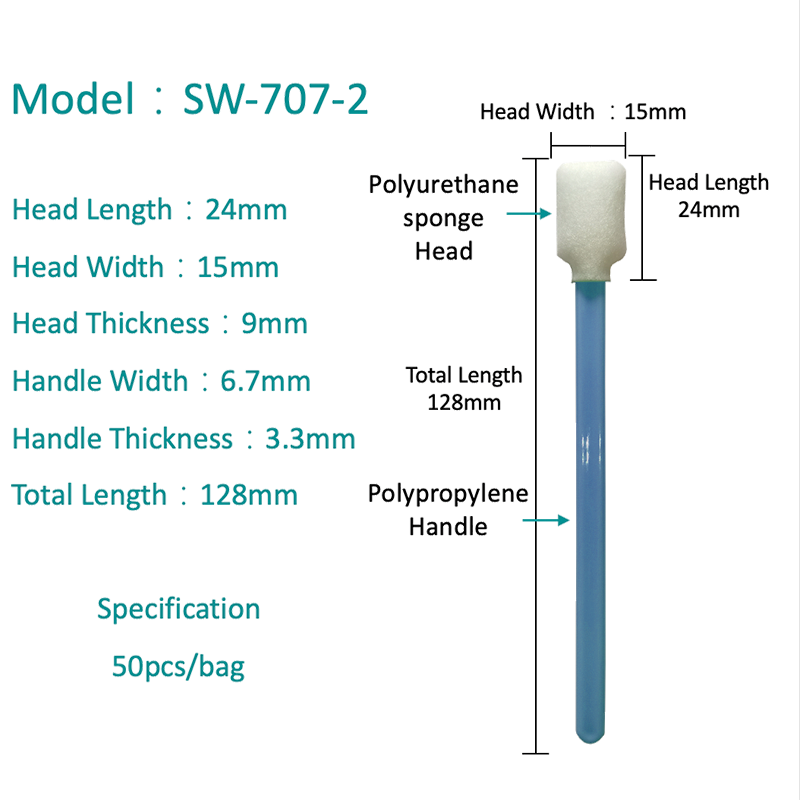
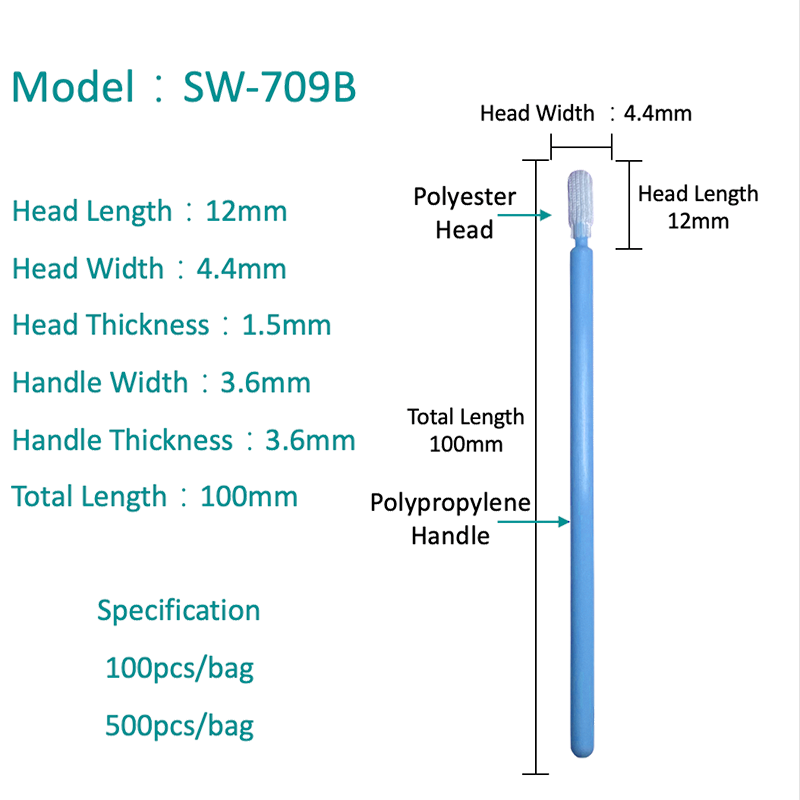
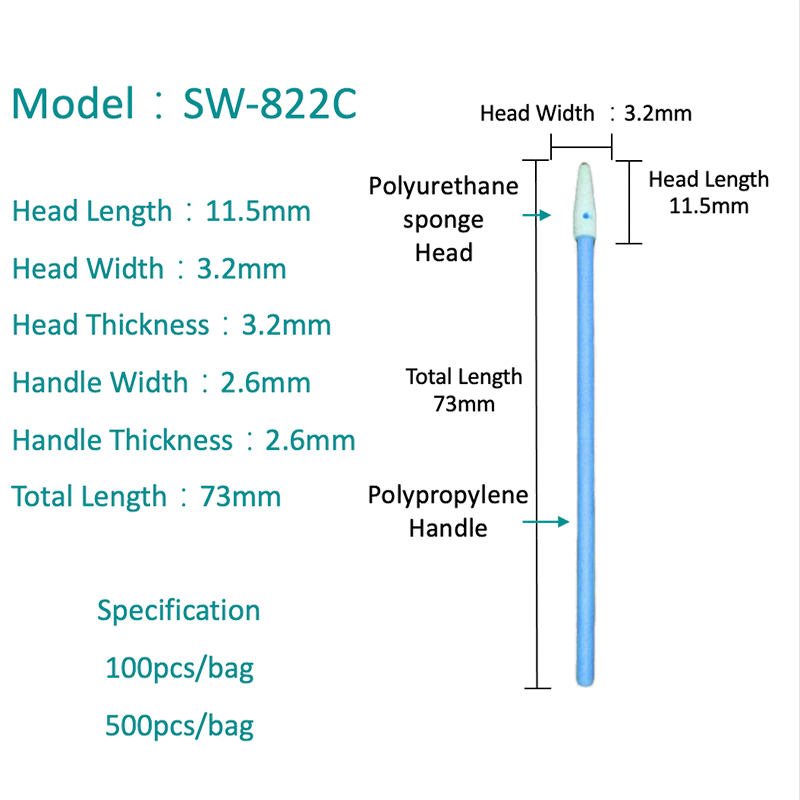
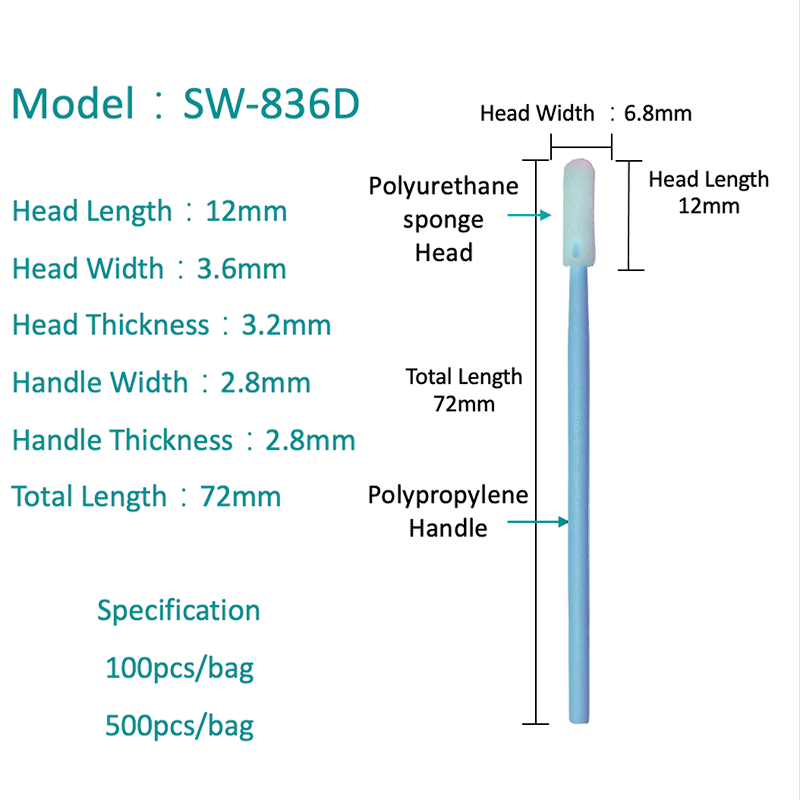
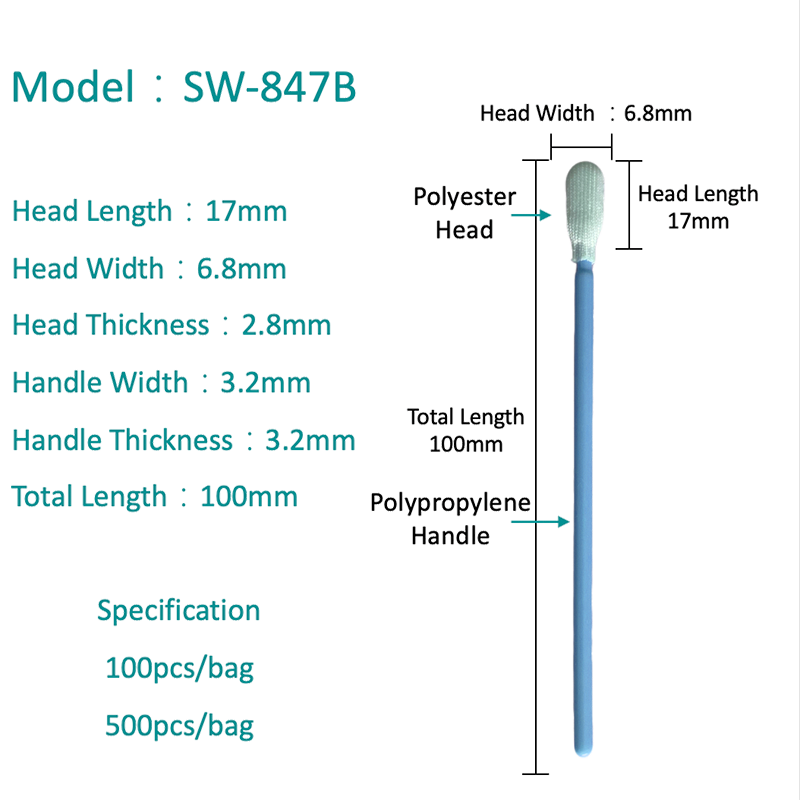
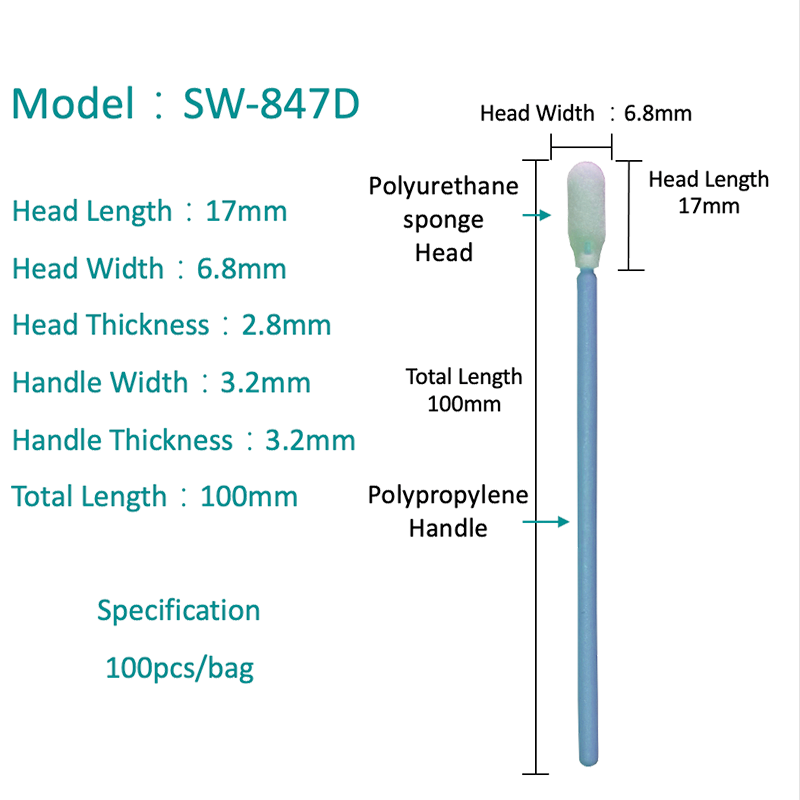
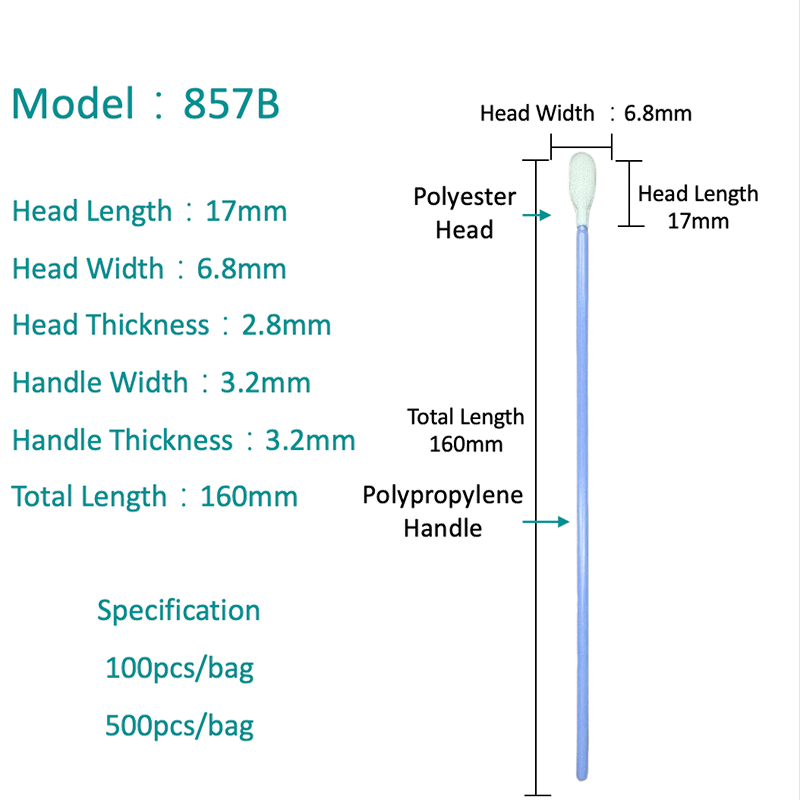
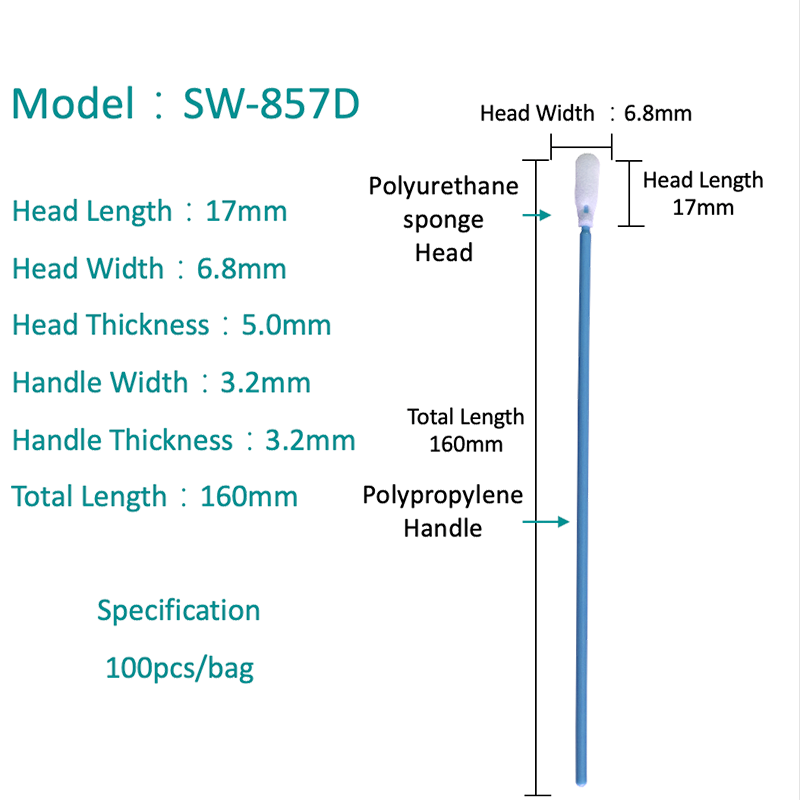
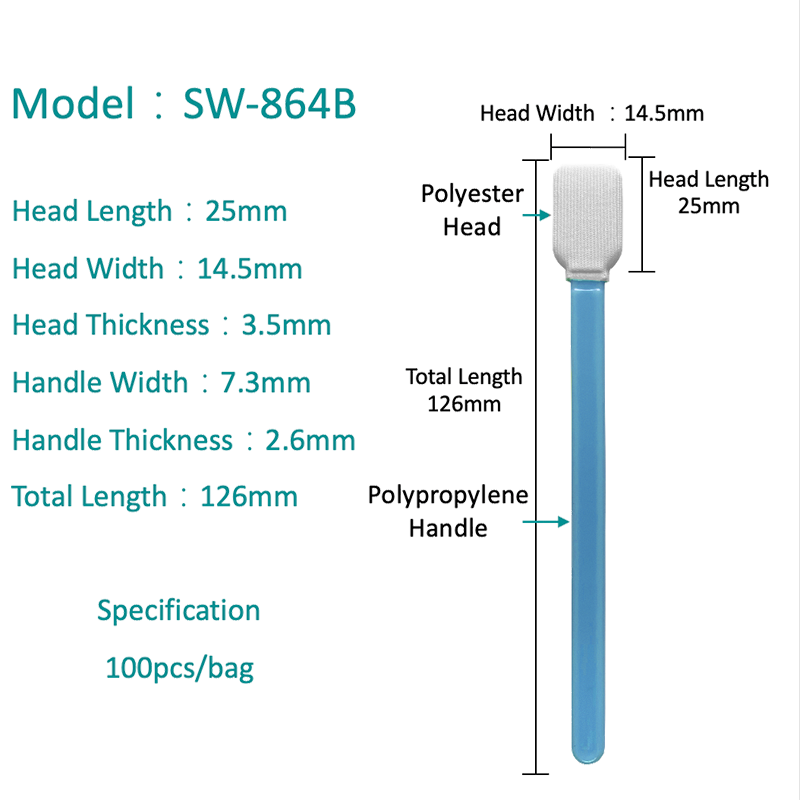
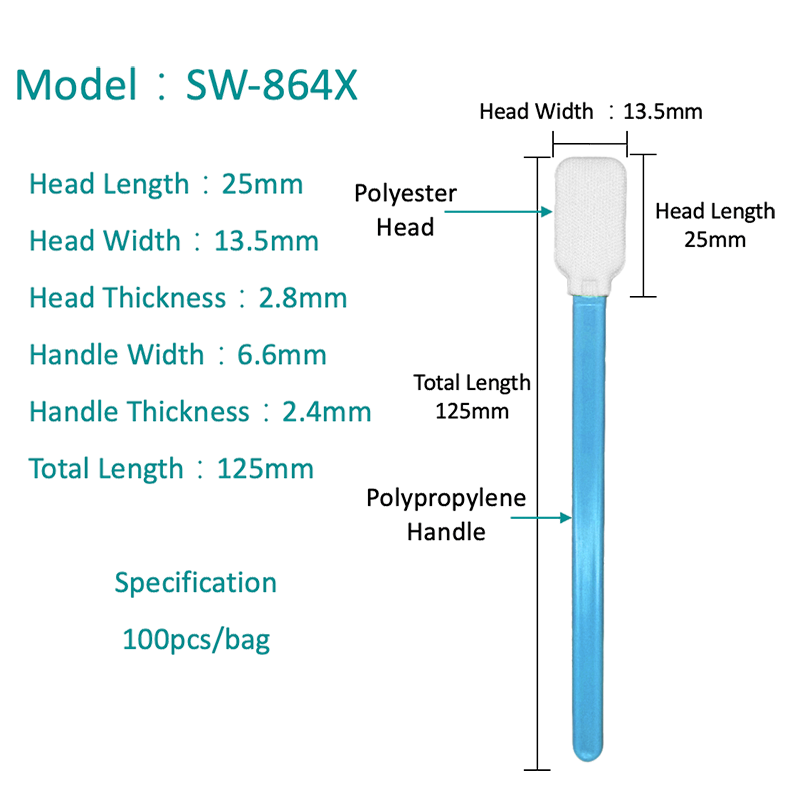
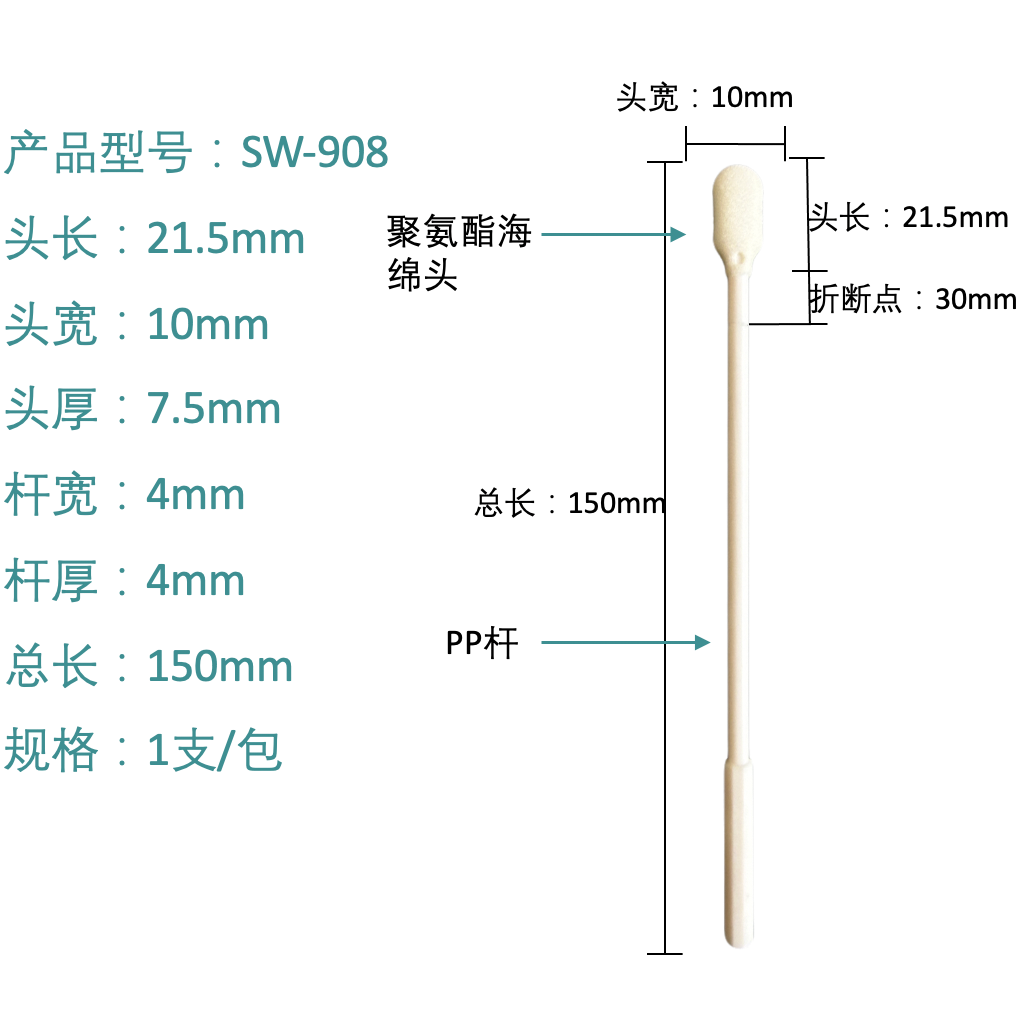
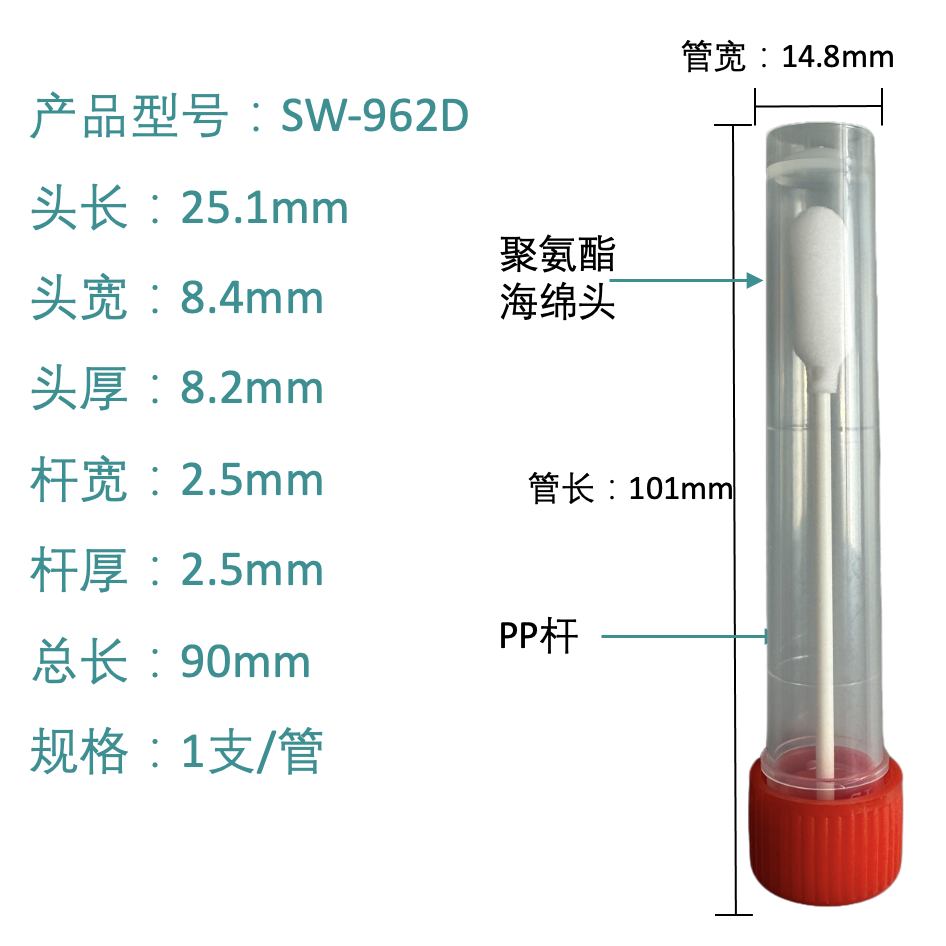
The head of the lint-free wipe is crafted from a blend of polyester fibers, ultra-fine fibers, and imported polyurethane foam with pore sizes ranging from 100ppi to 500ppi. These materials are then integrated with a polypropylene rod through a thermoplastic process, ensuring the absence of organic contaminants such as silicone and phthalates. The use of a physical bonding technique eliminates the need for adhesives, thereby avoiding the pollution associated with their use and preventing any wobbling or detachment during the wiping process. The entire production process takes place in a dust-free environment, ranging from CLASS10 to CLASS100 clean rooms, where the products undergo dust-free cleaning, mechanized assembly, and rigorous quality control, followed by double-layer purified bag packaging. The anti-static dust-free cleaning stick is designed to swiftly remove micro dust particles during use, ensuring the good cleanliness of your products. It is particularly effective for cleaning hard-to-reach areas such as tiny holes, grooves, edges, and flat surfaces. The polypropylene rod is formulated with a special anti-static chemical composition, which provides good anti-static properties and guarantees the high cleanliness of the product. The flexible handle is easy to bend, allowing for better access to those difficult-to-reach areas and enhancing the efficiency of the cleaning process.
The wiping rod is crafted from polypropylene, while the head is made from a blend of continuous filament ultra-fine fibers and polyester fibers, all processed in a dust-free environment to ensure less particle generation. These materials offer strong liquid absorption, softness, and cleanliness. Due to precise edge sealing and heat radiation techniques, the head is securely attached to the handle without the use of adhesives, eliminating the risk of contamination associated with adhesives.
Many people mistakenly confuse lint-free wipes with cotton swabs, but there is a fundamental difference between the two. Cotton swabs have cotton heads that cannot be subjected to dust-free cleaning processes, and they may shed fibers during the wiping process. In contrast, lint-free wipes come with either sponge or fabric heads, both of which are treated to be dust-free and are packaged in a cleanroom environment to ensure purity. For wipes used in high-grade dust-free environments, they must meet cleanliness levels of Class 100 or better. Only lint-free clothes and wipes can fulfill these stringent requirements. On the other hand, lint-free paper and cotton swabs are suitable for general-purpose cleaning in non-critical environments.
Our anti-static cleaning swabs are meticulously crafted from specialized anti-static polypropylene. The swab heads are made from a blend of polyurethane sponge, continuous filament polyester fibers, and ultra-fine fibers, all meticulously processed in a dust-free environment to undergo anti-static treatment. These swabs boast the amount of dust generation, strong liquid absorption, and a soft, clean texture. The precision edge sealing and heat radiation technology employed ensure that the head is securely attached to the handle, eliminating the need for adhesives and the potential contamination they bring. The integration of anti-static technology guarantees that your products are safeguarded from the harmful effects of static electricity. These swabs are designed for the meticulous cleaning of sensitive materials such as various liquid crystal displays, electronic components (CDs, semiconductors), optical instruments, fiber optics, and electron microscopes. They are also suitable for use in the medical, food, and cosmetics industries, where cleanliness and precision are paramount.
Suzhou Zhuojing Cleanroom Technology Co., Ltd.
Suzhou Zhuojing Dust-free Technology Co., Ltd. is a specialized manufacturer dedicated to the research, development, production, and sales of dust-free cleaning cotton swabs, dust-free wipers, dust-free wipping papers and various dust-free anti-static consumables.
We are China Wholesale Dust-Free Foam Head Cleanroom Swab Factory and OEM/ODM Dust-Free Foam Head Cleanroom Swab Manufacturers. Our team comprises a group of engineering technicians engaged in the development of dust-free products and highly skilled marketing personnel, ensuring the quality of our products and our sales services. Our clientele spans across the nation, and we also provide OEM services to international peers in the same industry.
Our factory is equipped with cleanrooms ranging from Class 10 to Class 1000, and we have introduced advanced global dust-free cleaning equipment. The cleaning process utilizes ultra-pure water with a purity of up to 18 mega-ohm, ensuring that all dust-free products undergo production within a controlled environment. They are then vacuum-sealed to maintain their cleanliness before being delivered to our customers. Our specialized dust-free production, washing, and drying processes guarantee that our products meet high standards of cleanliness.
We are committed to the field of dust-free and anti-static technology, offering a range of services including the design, manufacturing, sales, OEM cooperation, and production and sales of various anti-static clean products. Our products are widely used in industries such as semiconductors, microelectronics, integrated circuits, precision instruments, aerospace, and pharmaceuticals.
At our company, customer needs are always important, and we pay more attention to our customers' needs. We are continuously striving for high technology and high quality, which are our goals. Developing new products and promoting new services are the driving forces behind our development. Honesty, integration, responsibility, and innovation are the guiding principles of our business philosophy.
Adhering to the quality policy of "scientific management, quality-oriented continuous improvement, and customer satisfaction," we are eager to collaborate with clients both domestically and internationally. We look forward to your partnership as we work together towards a bright future.
News
-
Sponge Swabs for Medical Use: Wound, Surgical & Dental Guide
Medical & Healthcare Supplies Sponge Swabs for Medical Use: Wound Care, Surgical, and Dental Applications Sponge swabs show up across nearly every corner o...
Read More -
How to Use a Sponge Swab for Surface Sampling: Complete Guide
Lab & Sampling Supplies How to Use a Sponge Swab for Surface Sampling Sponge swabs are a standard tool for collecting surface samples in food safety, envir...
Read More -
Cleanroom Swabs: Materials, Types & How to Choose
Swab material is the single biggest factor separating a clean, residue-free wipe from a swab that leaves fibers, scratches a sensitive surface, or introduces ...
Read More -
Poly Swabs, Microfiber Swabs & Swab Types Explained
Poly Swabs, Microfiber Swabs, and Swab Types Explained Swabs are one of the simplest tools in precision cleaning and quality control, yet the differences betw...
Read More
Message Feedback
Industry Knowledge
What Foam Pore Density Actually Controls in Cleanroom Swab Performance
Polyurethane foam is described in cleanroom swab specifications by its PPI rating — pores per inch — a measurement of how many open cells the foam contains per linear inch of material. This number is not a marketing specification; it directly determines three performance variables that affect cleaning outcomes in semiconductor, optical, and electronics manufacturing environments: liquid absorption rate, particle retention capacity, and surface contact softness.
At the lower end of the scale, 100 PPI foam contains approximately 100 open cells per inch, producing a smooth surface texture with fine capillary channels that enable rapid solvent uptake and controlled release. The interconnected open-cell network pulls cleaning solution into the foam matrix on contact and holds it against the substrate during the wiping stroke, releasing it progressively rather than flooding the target area. This makes 100 PPI foam the standard specification for precision solvent-cleaning tasks — flux residue removal on PCB assemblies, optical surface preparation, and semiconductor component cleaning — where even solvent distribution and controlled contact are both required. As PPI increases toward 500, pore diameter decreases further, producing higher surface area per unit volume, finer particle capture capability, and a softer contact face that generates less mechanical stress on polished or coated substrates. Higher PPI ratings are therefore appropriate for the most sensitive surfaces, while 100 PPI represents the proven balance between absorption capacity and cleanliness for general precision cleaning.
Suzhou Zhuojing produces foam cleanroom swab heads across the 100 PPI to 500 PPI range, all processed in Class 10 to Class 100 cleanrooms with 18 mega-ohm ultra-pure water laundering to ensure that the foam's internal pore structure is free of contaminating residues that standard manufacturing processes leave behind in the open-cell network.
Thermal Bonding vs. Adhesive: Why Head Attachment Method Is a Contamination Variable
The method used to attach the foam head to the polypropylene handle is a contamination source that receives less attention in procurement specifications than it deserves. In a conventional adhesive-bonded swab, the adhesive layer between head and handle is in direct contact with the cleaning solvent during use — solvent that migrates into the bond zone by capillary action through the foam's open-cell structure. This contact dissolves trace amounts of the adhesive's constituent chemistry, including plasticizers, curing agents, and carrier solvents, which are then carried onto the cleaned surface when the contaminated solvent evaporates. In semiconductor and optical manufacturing, these adhesive-derived deposits are detected as organic contamination in downstream surface analysis and are a known source of NVR specification failures.
Thermal bonding — the method used in cleanroom-grade foam swab manufacturing — eliminates this contamination pathway entirely. A controlled heat and pressure cycle is applied to the interface between the foam head and the polypropylene handle, causing the polymer surfaces to fuse directly without any intermediate adhesive material. The resulting bond is mechanically strong, chemically inert, and introduces no organic extractables into the cleaning process. The bond also eliminates the wobble and head separation risk that adhesive bonds present under the lateral force of the wiping stroke, particularly when the swab is loaded with solvent and the adhesive layer has softened through chemical attack.
The same principle extends to contaminating species in the foam material itself. Production-grade cleanroom foam swabs are manufactured free of silicone, amide, and phthalate ester additives — compounds routinely used in standard polyurethane foam processing that transfer to cleaned surfaces and affect downstream bonding, coating adhesion, and electrical measurements. Verifying that a dust-free foam head cleanroom swab carries a silicone-free and amide-free material declaration is a straightforward procurement step that eliminates a frequently overlooked contamination source from the cleaning workflow.
Cleanroom Swabs vs. Cotton Swabs: The Practical Difference in Critical Environments
Cotton swabs remain the most widely purchased swab format globally and are suitable for a broad range of general-purpose cleaning tasks. The confusion arises when cotton swabs are used in cleanroom or controlled-environment applications where their construction creates contamination rather than cleaning. Understanding the specific points of failure is more useful than a general statement that they are unsuitable.
Cotton fiber is a natural material that cannot be reliably cleaned to cleanroom standards. The fiber surface harbors residual processing chemicals from the agricultural and textile manufacturing supply chain — pesticide residues, bleaching agents, sizing compounds — that standard laundering does not fully remove and that transfer to cleaned surfaces during use. More directly, cotton fibers shed during the wiping stroke: individual fibers separate from the cotton head under the mechanical stress of contact with surfaces and surface features, depositing fiber contamination in component gaps, optical cavities, and connector housings that is extremely difficult to remove in subsequent cleaning steps without disassembly.
Cleanroom foam and polyester swabs address both failure modes at the material level. Reticulated polyurethane foam and continuous-filament knitted polyester are synthetic materials with no natural fiber variability, no agricultural processing residues, and no short fibers in the material structure that can separate under wiping stress. Both are compatible with the ultra-pure water laundering and cleanroom packaging processes that bring the swab to a documented cleanliness level before first use — a process cotton swabs cannot undergo because the cotton fiber structure would be destroyed by the washing conditions required to reach Class 100 cleanliness. For any application requiring Class 100 or better cleanliness, only foam or polyester cleanroom swabs can consistently meet the requirement; cotton swabs and lint-free paper are appropriate only for non-critical environments where particulate standards are not enforced. The engineering technicians at Suzhou Zhuojing specify this material distinction explicitly in product selection guidance to ensure customers in semiconductor, LCD, and pharmaceutical applications are not substituting general-purpose tools into critical cleaning workflows.
Antistatic Handle Design and Its Role in ESD-Sensitive Cleaning
The polypropylene handle of a standard cleanroom swab is chemically inert and low-particle, but it is an electrical insulator — and in environments where sensitive electronic components, MEMS devices, and bare semiconductor die are being cleaned, the triboelectric charge generated by swab-to-surface contact during wiping is a damage mechanism that the handle's material properties directly affect. When an ungrounded insulating handle contacts a charged surface or moves through an ionized air zone, charge can accumulate on the handle and transfer to the swab tip during the cleaning stroke, ultimately discharging through the sensitive component being cleaned. Electrostatic discharge events at voltages below 100V are sufficient to cause latent damage to high-impedance semiconductor devices — damage that does not produce immediate failure but creates reliability degradation that manifests only after the device is deployed in the field.
Antistatic polypropylene handles address this through a special chemical composition integrated into the handle polymer during manufacturing — typically a carbon-loaded or inherently dissipative polymer blend — that provides a controlled surface resistivity in the electrostatic dissipative (ESD-safe) range defined by IEC 61340-5-1 and ANSI/ESD S20.20. This resistivity level allows charge to dissipate continuously from the handle surface at a rate fast enough to prevent accumulation, but slowly enough to avoid the rapid discharge event that a conductive handle would produce on contact with a charged component. The result is a handle that remains charge-neutral throughout the cleaning operation without the triboelectric buildup that standard polypropylene accumulates under repeated friction contact.
For cleanroom swab selection in ESD-protected zones — semiconductor assembly, hard disk drive manufacturing, TFT-LCD panel cleaning, and medical electronics production — specifying antistatic handle construction alongside foam head purity is the complete approach to contamination control. Particle-clean foam with a standard insulating handle still creates static discharge risk on sensitive components; antistatic handle with substandard foam still creates particle contamination. Both specifications must be met simultaneously, which is why cleanroom swab manufacturing for ESD-sensitive applications processes antistatic handle material and high-purity foam heads under the same cleanroom conditions rather than treating them as independent product variables.

The information provided on this website is intended for use only in countries and jurisdictions outside of the People's Republic of China.
REQUEST A FREE QUOTE
 ADDRESS
No. 93 Weihe Road, Suzhou Industrial Park, Jiangsu Province
 CONTACT
 FAX
FAX EMAIL
EMAILCopyright © Suzhou Zhuojing Cleanroom Technology Co., Ltd. All Rights Reserved.
Wholesale Dust-Free Foam Head Cleanroom Swab Manufacturers
