



 English
  中文简体
中文简体 
HOME / PRODUCTS
Industrial Sterile pp Cleaning Swab Manufacturers
Suzhou Zhuojing Cleanroom Technology Co., Ltd.
Suzhou Zhuojing Dust-free Technology Co., Ltd. is a specialized manufacturer dedicated to the research, development, production, and sales of dust-free cleaning cotton swabs, dust-free wipers, dust-free wipping papers and various dust-free anti-static consumables.
We are China Wholesale Industrial Sterile pp Cleaning Swab Suppliers and OEM/ODM Industrial Sterile pp Cleaning Swab Factory. Our team comprises a group of engineering technicians engaged in the development of dust-free products and highly skilled marketing personnel, ensuring the quality of our products and our sales services. Our clientele spans across the nation, and we also provide OEM services to international peers in the same industry.
Our factory is equipped with cleanrooms ranging from Class 10 to Class 1000, and we have introduced advanced global dust-free cleaning equipment. The cleaning process utilizes ultra-pure water with a purity of up to 18 mega-ohm, ensuring that all dust-free products undergo production within a controlled environment. They are then vacuum-sealed to maintain their cleanliness before being delivered to our customers. Our specialized dust-free production, washing, and drying processes guarantee that our products meet high standards of cleanliness.
We are committed to the field of dust-free and anti-static technology, offering a range of services including the design, manufacturing, sales, OEM cooperation, and production and sales of various anti-static clean products. Our products are widely used in industries such as semiconductors, microelectronics, integrated circuits, precision instruments, aerospace, and pharmaceuticals.
At our company, customer needs are always important, and we pay more attention to our customers' needs. We are continuously striving for high technology and high quality, which are our goals. Developing new products and promoting new services are the driving forces behind our development. Honesty, integration, responsibility, and innovation are the guiding principles of our business philosophy.
Adhering to the quality policy of "scientific management, quality-oriented continuous improvement, and customer satisfaction," we are eager to collaborate with clients both domestically and internationally. We look forward to your partnership as we work together towards a bright future.
News
-
Sponge Swabs for Medical Use: Wound, Surgical & Dental Guide
Medical & Healthcare Supplies Sponge Swabs for Medical Use: Wound Care, Surgical, and Dental Applications Sponge swabs show up across nearly every corner o...
Read More -
How to Use a Sponge Swab for Surface Sampling: Complete Guide
Lab & Sampling Supplies How to Use a Sponge Swab for Surface Sampling Sponge swabs are a standard tool for collecting surface samples in food safety, envir...
Read More -
Cleanroom Swabs: Materials, Types & How to Choose
Swab material is the single biggest factor separating a clean, residue-free wipe from a swab that leaves fibers, scratches a sensitive surface, or introduces ...
Read More -
Poly Swabs, Microfiber Swabs & Swab Types Explained
Poly Swabs, Microfiber Swabs, and Swab Types Explained Swabs are one of the simplest tools in precision cleaning and quality control, yet the differences betw...
Read More
Message Feedback
Industry Knowledge
Why Sterility Classification Determines Swab Selection
Not every cleanroom application requires a sterile swab — and selecting the wrong sterility level in either direction creates real process risk. The distinction matters most in pharmaceutical aseptic processing and medical device manufacturing, where EU GMP Annex 1 (revised and effective August 2023) now mandates a facility-wide Contamination Control Strategy that explicitly classifies which materials entering Grade A and Grade B environments must carry documented sterility assurance. For swabs used in these zones, sterile designation is not a product upgrade but a regulatory prerequisite: performing a non-sterile wipe in a classified aseptic area is a direct GMP violation regardless of the swab's particle generation performance.
Industrial sterile swabs are processed to achieve a Sterility Assurance Level (SAL) of 10⁻⁶ — the internationally accepted threshold meaning no more than one chance in one million of a viable organism surviving the sterilization process. This level applies to swabs used in surface monitoring programs, equipment cleaning verification in aseptic fill-finish lines, and environmental sampling in ISO Class 5 and Class 6 classified zones. For general semiconductor manufacturing, optical cleaning, and electronics assembly applications where microbial contamination is not the primary concern, non-sterile cleanroom swabs with documented particle and ionic contamination specifications are the appropriate choice. Confusing these two categories leads either to unnecessary cost in low-risk environments or to compliance exposure in regulated manufacturing.
At Suzhou Zhuojing Dust-free Technology Co., Ltd., cleanroom classifications from Class 10 to Class 1000 support production across both sterile and non-sterile swab categories, with ultra-pure water at 18 mega-ohm purity used throughout the washing process to ensure that sterility treatment begins from a controlled baseline contamination level rather than compensating for residual process contamination.
Polypropylene as a Handle Material: What the Chemistry Actually Means
The polypropylene (PP) handle on an industrial sterile PP cleaning swab is not an arbitrary material choice — it is selected because PP satisfies a combination of requirements that few other polymers meet simultaneously in sterile industrial cleaning contexts. PP is chemically inert to the broadest range of cleaning solvents, disinfectants, and process chemicals encountered in pharmaceutical, semiconductor, and medical device manufacturing environments: it resists attack from IPA, ketones, dilute acids, alkaline cleaning formulations, and quaternary ammonium disinfectants without swelling, softening, or releasing extractable chemical species into the cleaning solution during use.
From a sterilization compatibility standpoint, polypropylene is compatible with ethylene oxide (EtO) gas sterilization — the most widely used low-temperature sterilization method for assembled plastic components — and can withstand gamma irradiation at standard sterilization doses of 25–40 kGy with acceptable performance, though some discoloration may occur at higher doses. Polypropylene homopolymer (PP-H) is also compatible with autoclave steam sterilization at 121°C, tolerating repeated cycles where the sterilization protocol requires re-sterilization. This multi-method sterilization compatibility allows swab manufacturers and end-users to select the sterilization method that best fits their facility infrastructure without switching to a different handle material.
| Sterilization Method | PP Compatibility | Key Consideration |
|---|---|---|
| Ethylene Oxide (EtO) Gas | Excellent | Requires post-process aeration to remove residual gas |
| Gamma Irradiation | Good (25–40 kGy) | Stabilized PP grades preferred; possible slight discoloration |
| Steam Autoclave (121°C) | Good (PP-H grade) | PP-H tolerates hundreds of cycles; copolymer grades vary |
| Vaporized H₂O₂ (VHP) | Compatible | Widely used in pharmaceutical isolator decontamination cycles |
One property that is frequently overlooked in procurement specifications is PP's low extractable ionic content. In semiconductor and microelectronics applications, ionic contamination on cleaned component surfaces from the swab handle — transferred via solvent contact during cleaning — can affect device electrical performance. PP's non-polar polymer structure makes it inherently resistant to ionic species absorption and release, producing lower handle extractables than many alternative polymer handle materials under equivalent solvent exposure conditions.
Surface Monitoring in Pharmaceutical Cleanrooms: Where Sterile Swabs Do the Actual Work
Environmental surface monitoring in pharmaceutical cleanrooms is the application where sterile swab performance is most rigorously tested and documented. Under EU GMP Annex 1 and FDA 21 CFR Part 211, facilities must demonstrate that their classified manufacturing surfaces maintain microbial cleanliness within defined action and alert limits — and swab sampling is the primary method for monitoring non-flat surfaces, equipment joints, tubing connections, valve assemblies, and hard-to-reach areas that contact plates cannot access. The swab must arrive sterile at the sampling point, collect viable organisms without killing them through the swab's own chemical extractables, and release them effectively into the recovery diluent during laboratory processing.
The standard surface sampling procedure involves moistening a sterile swab with a neutralizing diluent — which deactivates disinfectant residues on the monitored surface so that organisms are not falsely suppressed during recovery — and then performing a systematic S-motion wipe across a defined area, typically 25 to 100 cm² per sampling point. The swab is transferred to recovery medium and incubated for colony count enumeration. Results exceeding action limits trigger documented investigation procedures under the facility's Contamination Control Strategy, which since the 2023 EU GMP Annex 1 revision must be maintained as a living document with risk-based sampling frequency justification.
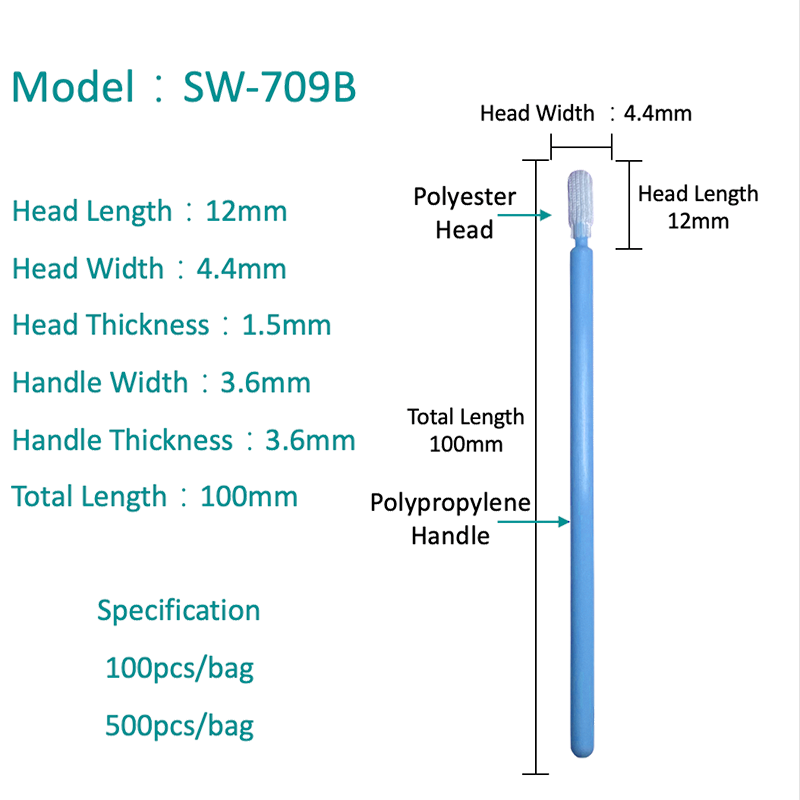
In practice, the swab's physical construction affects sampling accuracy in ways that are easy to overlook when procurement focuses only on sterility certification. A swab head that sheds fibers onto the sampled surface deposits non-viable particulates that can interfere with downstream microscopic analysis and give false-positive particle monitoring results. A handle that releases extractables into the neutralizing diluent alters the diluent's pH or ionic balance, potentially suppressing microbial recovery. These are the reasons why industrial sterile swab procurement for surface monitoring programs specifies not just SAL 10⁻⁶ sterility, but also low NVR, low ionic extractables, and lint-free construction as concurrent requirements. The full range of swab formats suited to these requirements — from pointed polyester tips for valve joint monitoring to wide foam heads for flat equipment surface sampling — is available through the industrial sterile PP cleaning swab product line.
Matching Swab Head Geometry to Industrial Sterile Cleaning Tasks
Sterility certification determines whether a swab can enter a regulated environment; head geometry determines whether it can perform the specific cleaning or sampling task once it is there. In industrial sterile cleaning applications, the mismatch between swab geometry and task geometry is a common but underrecognized source of incomplete cleaning — a pointed tip used on a wide flat surface leaves uncleaned strips between passes, while a wide flat head used in a narrow connector housing contacts the housing walls before reaching the target surface. Getting this selection right matters more in sterile environments than in general industrial cleaning because rework — re-cleaning a surface that was inadequately cleaned on the first pass — each time opens the environment to additional contamination events from operator presence and tool re-entry.
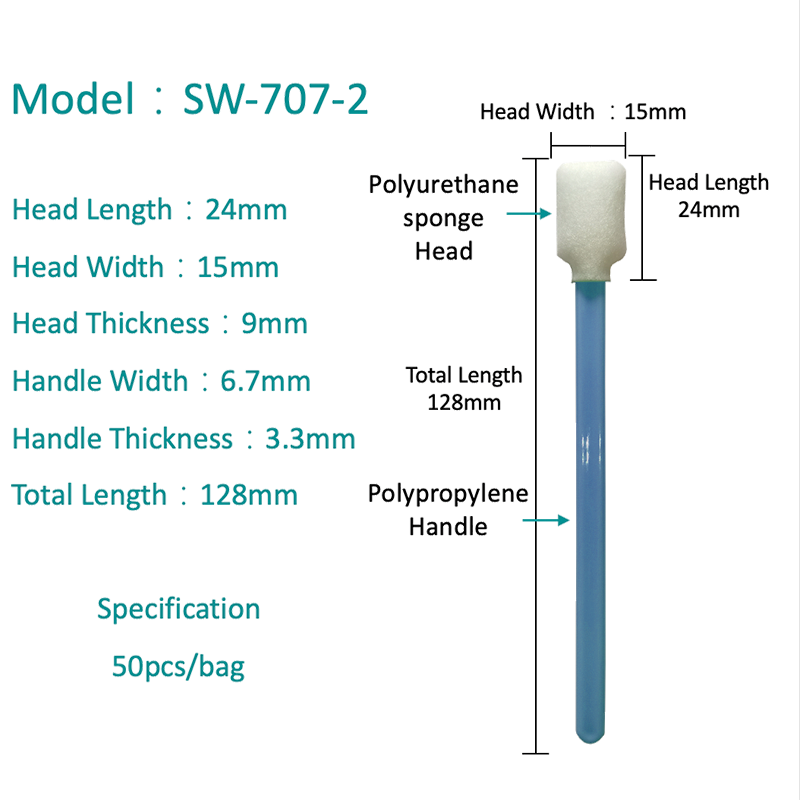
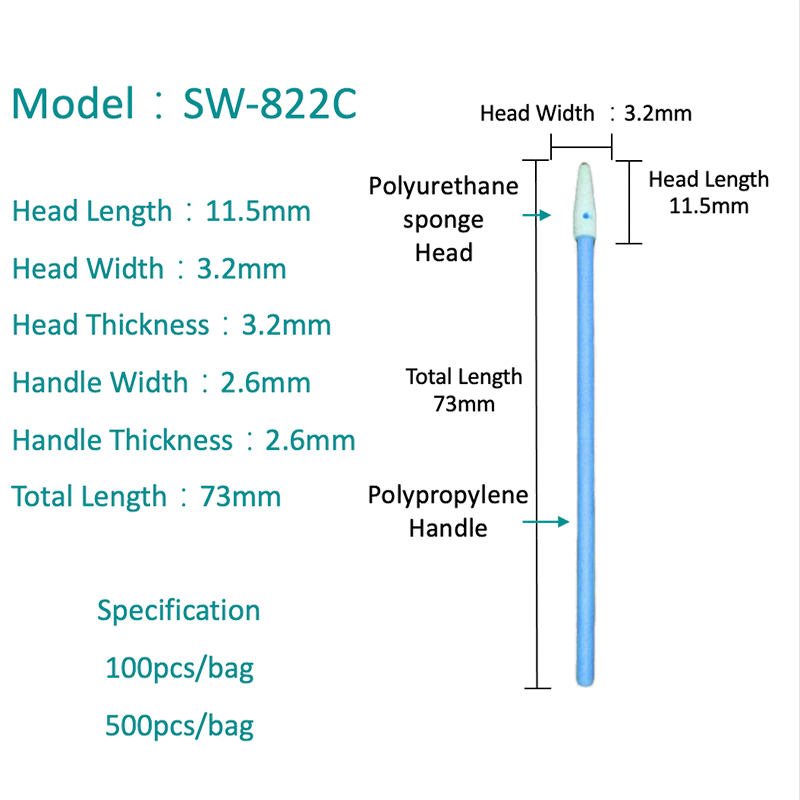
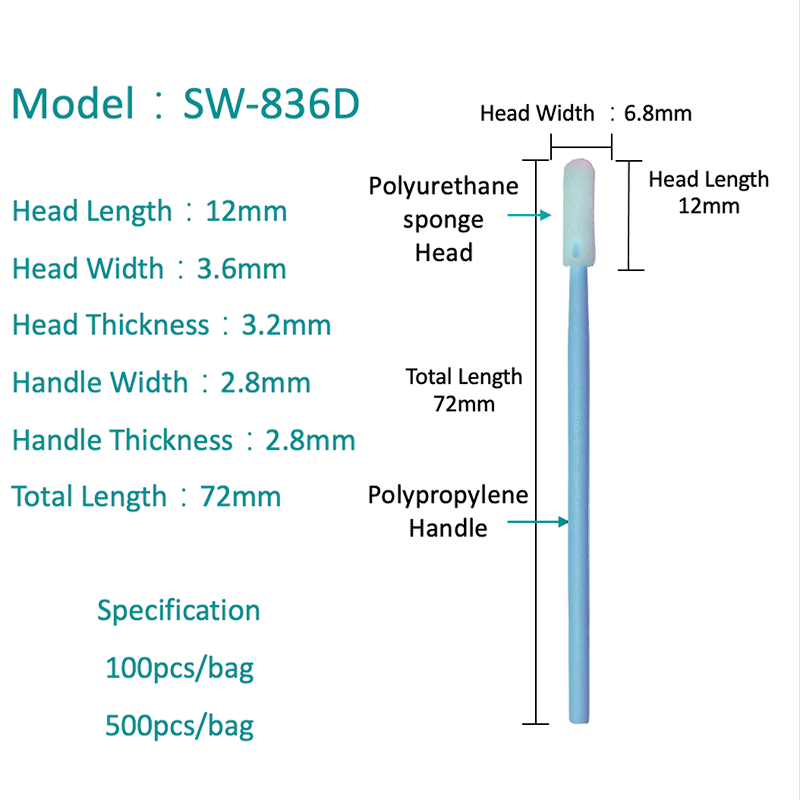
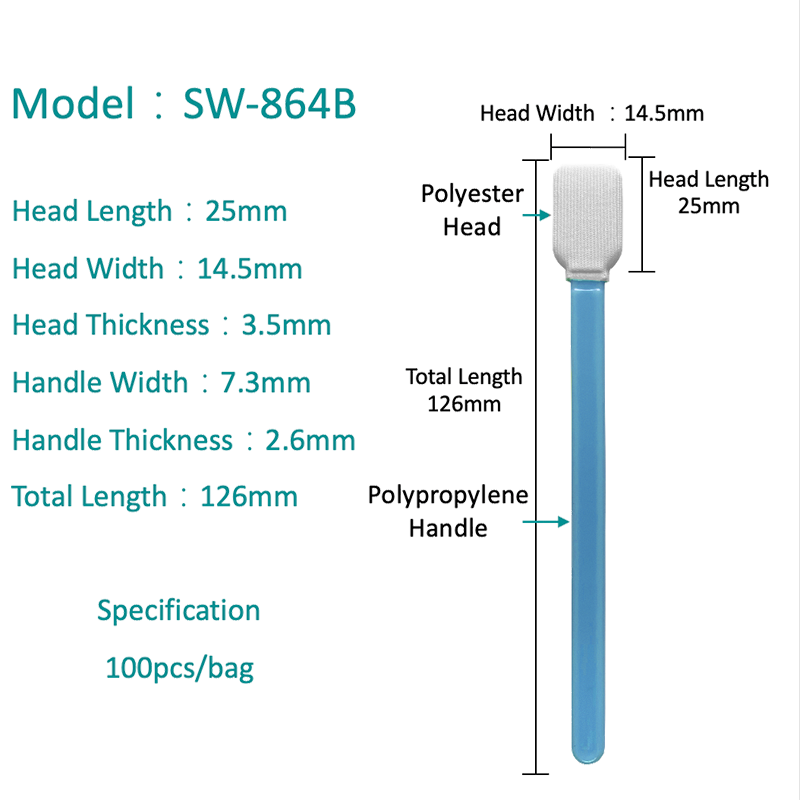
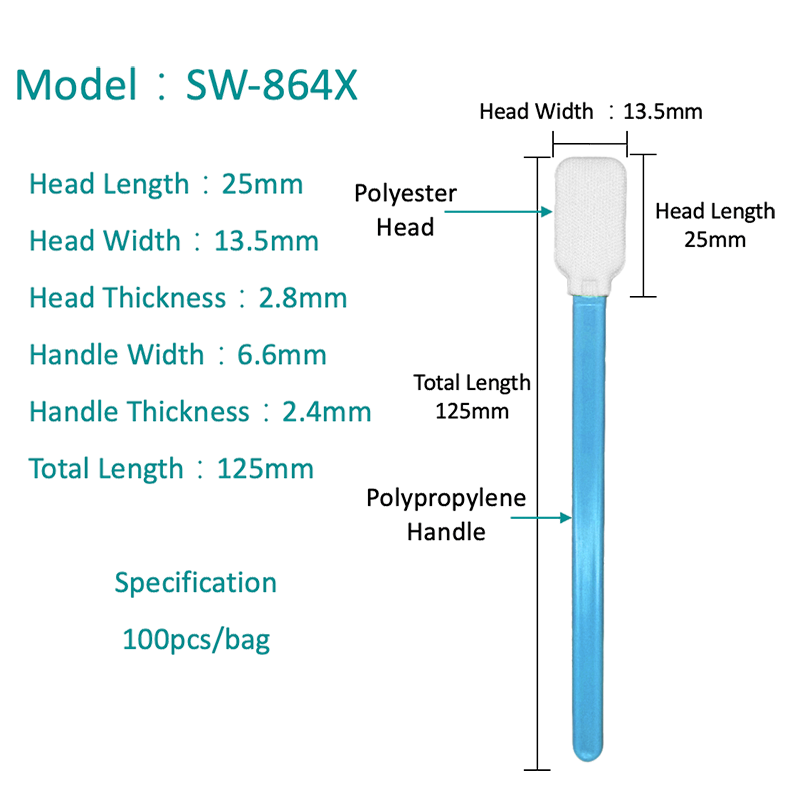
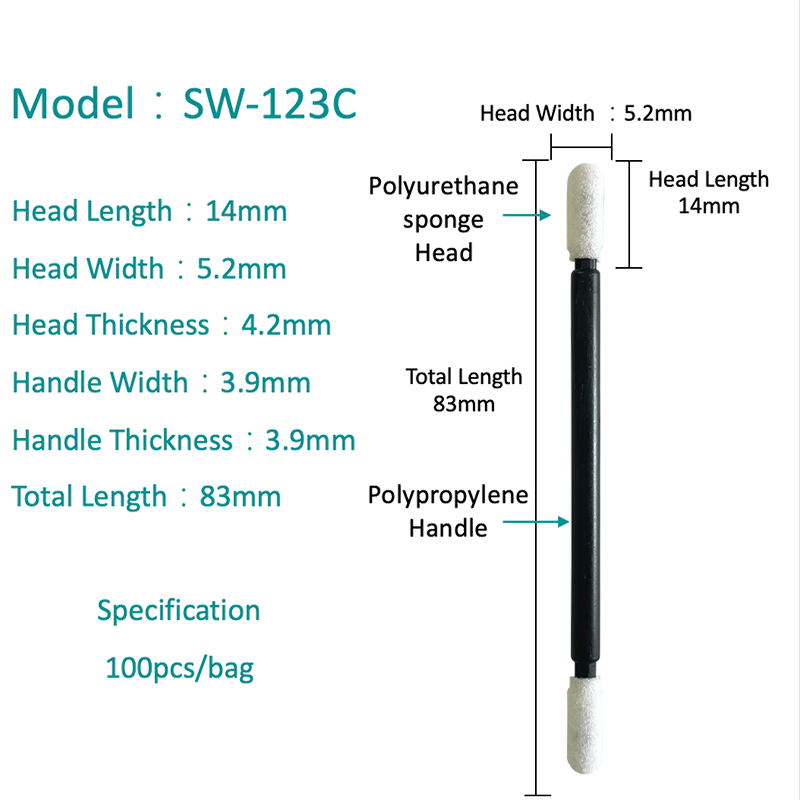
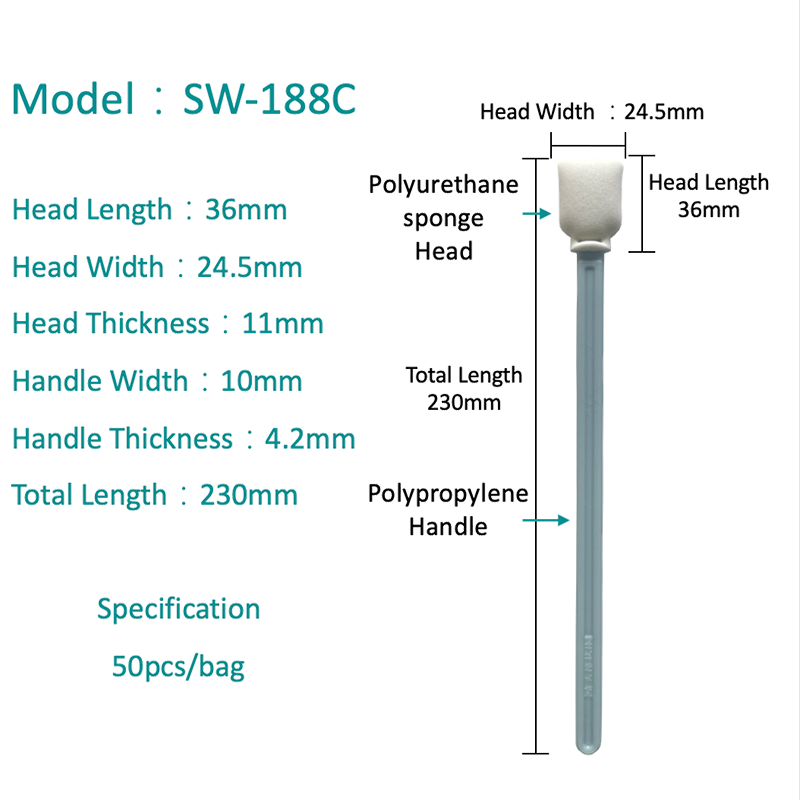
For flat equipment surfaces, housing panels, and wide instrument contact zones, rectangular or wide foam heads measuring 25mm or more in length provide the coverage efficiency to clean a defined area in the minimum number of strokes, reducing both process time and contamination exposure duration. For valve stems, tubing connections, and threaded fitting interiors, pointed or narrow-tip heads between 3–5mm width provide targeted contact without depositing swab material on surfaces outside the cleaning zone. Double-ended swab configurations — where both ends are available for sequential use — extend per-swab utility in sterile environments where each swab opening from individually sealed packaging represents a procedure step that must be documented.
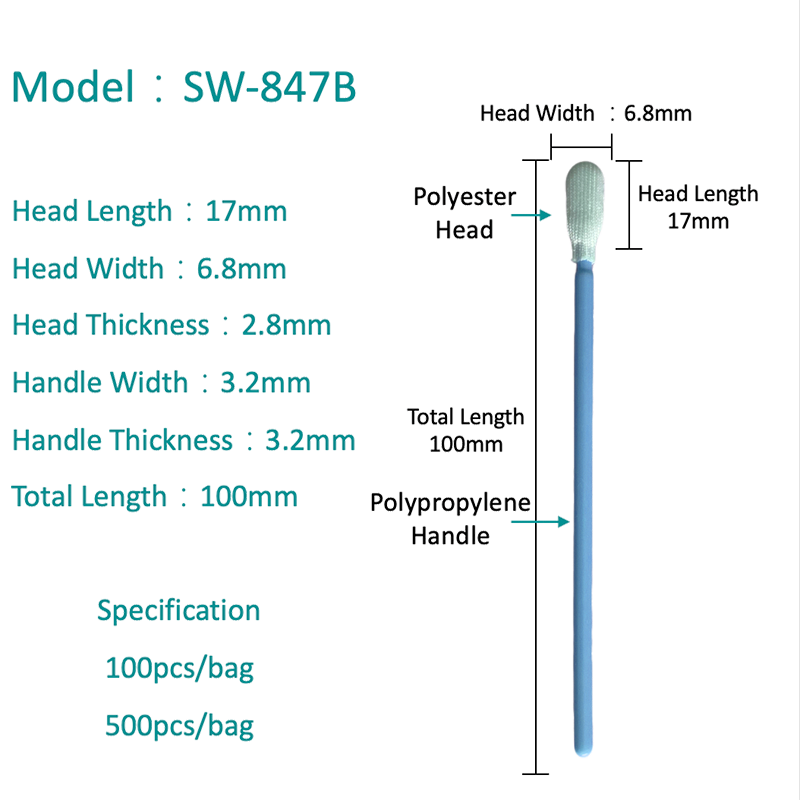
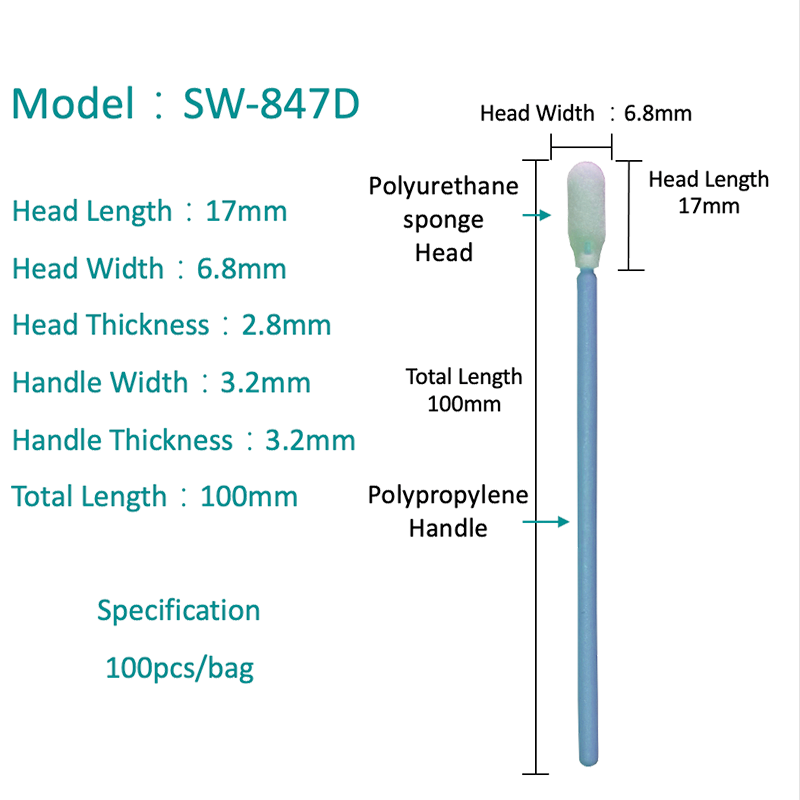
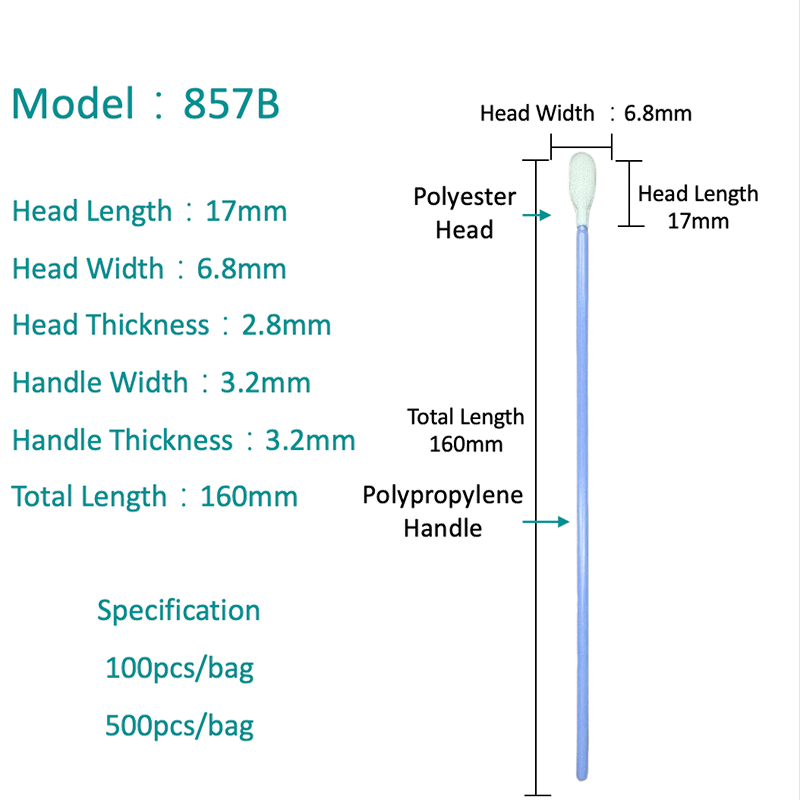
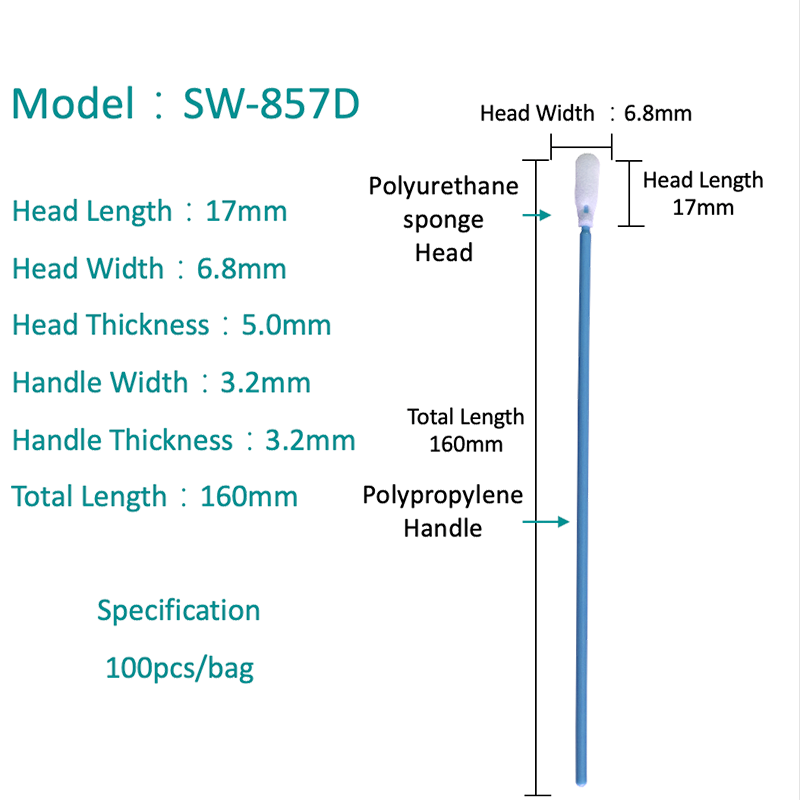
The depth of the cleaning target relative to the access point determines handle length selection: standard 100mm handles suit bench-accessible surfaces and open equipment housings, while extended 145–160mm handles are required when the cleaning target is recessed inside process equipment bodies or instrument enclosures that cannot be fully disassembled for cleaning without disrupting process continuity. Zhuojing's manufacturing capability spans this full geometry range — from ultra-fine pointed tips to large-area foam heads, across standard and extended handle lengths — allowing procurement teams to source sterile cleaning swabs matched to specific task requirements rather than defaulting to a single format that partially fits multiple applications.

The information provided on this website is intended for use only in countries and jurisdictions outside of the People's Republic of China.
REQUEST A FREE QUOTE
 ADDRESS
No. 93 Weihe Road, Suzhou Industrial Park, Jiangsu Province
 CONTACT
 FAX
FAX EMAIL
EMAILCopyright © Suzhou Zhuojing Cleanroom Technology Co., Ltd. All Rights Reserved.
Wholesale Industrial Sterile pp Cleaning Swab Manufacturers
