



 English
  中文简体
中文简体 
HOME / NEWS / Industry News / Microfiber Polyester Swab: Types, Applications & Selection Guide
Content
What Makes Microfiber Polyester Swabs Different from Standard Cleaning Swabs
A microfiber polyester swab is a precision cleaning tool engineered with a tip made from ultrafine polyester filaments — typically under 1 denier in diameter — bonded or knitted into a dense, low-lint pad or knob. Unlike conventional foam or cotton swabs, the microfiber construction gives each tip a dramatically higher surface-area-to-volume ratio, allowing it to capture, retain, and remove sub-micron particles, residues, and fluids without shedding fibers or leaving secondary contamination.
The key structural advantages over alternatives are measurable:
- Fiber count: Microfiber polyester tips can contain hundreds of thousands of individual filaments per square centimeter, versus the coarse bundles in cotton or the open-cell matrix of foam.
- Particle entrapment: The filament gaps physically trap particles rather than simply pushing them aside, making microfiber swabs especially effective on optical surfaces, circuit boards, and sensor windows.
- Chemical compatibility: Polyester resists most IPA-based, acetone-free, and aqueous cleaning solvents used in electronics and medical manufacturing, with no fiber degradation at typical operating concentrations.
- Low ionic contamination: High-purity polyester produces minimal extractable ions — a critical requirement in semiconductor and disk drive assembly environments where ionic residues cause corrosion or signal failures.
Cotton swabs generate loose fibers and carry natural organic impurities. Foam swabs, while low-lint, can absorb and re-deposit solvents unevenly and may leave silicone-based additives on surfaces. Microfiber polyester sits in a different performance class: it combines the mechanical scrubbing action of a textured tip with the chemical inertness of synthetic polymer.
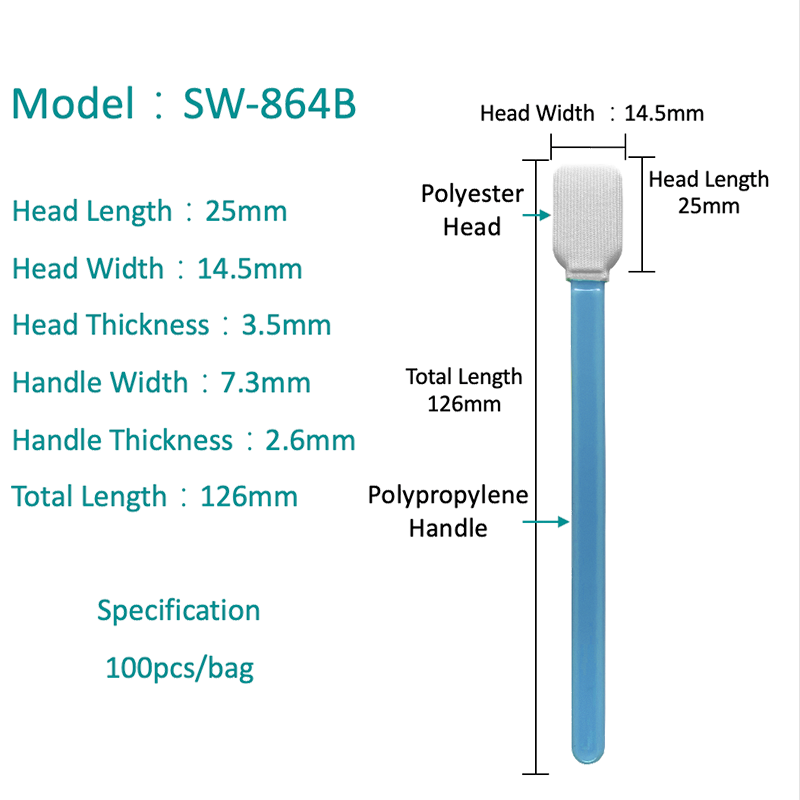
Primary Applications Across Industries
Microfiber polyester swabs are specified across a broad range of contamination-sensitive processes. The common thread is that the work surface is too small, too fragile, or too precision-critical for wipes, brushes, or bulk cleaning methods.
Electronics and Semiconductor Manufacturing
PCB rework, solder flux removal, SMT stencil cleaning, and connector contact wiping are among the most common uses in electronics. The swab's ability to enter confined spaces — under BGA packages, between pin rows, inside USB or SFP ports — without leaving residue makes it a production floor staple. In wafer and disk drive manufacturing, cleanroom-compatible versions rated ISO Class 4 or better are used to spot-clean chuck surfaces, spindles, and bond pads.
Fiber Optic and Photonics Cleaning
Contamination on fiber optic connector end-faces — including dust, oils, and dried gel — is a leading cause of signal loss and return loss in optical networks. Microfiber polyester swabs sized to 1.25 mm (LC/MU) and 2.5 mm (SC/FC/ST) ferrule diameters are the preferred tool for one-pass wet-dry cleaning of end-faces before mating. A single sub-micron particle bridging the fiber core at a connector junction can introduce insertion losses exceeding 1 dB, which is why lint-free, high-filament-density tips are mandated in telecom and data center maintenance standards such as IEC 61300-3-35.
Medical Device and Laboratory Settings
In medical device assembly and laboratory instrumentation, microfiber polyester swabs serve both cleaning and sampling functions. They are used to wipe optical sensors in diagnostic equipment, clean fluid channels in microfluidic devices, and perform surface ATP or microbial sampling where controlled tip geometry ensures consistent sample collection area. Individually wrapped, sterile variants satisfy cleanroom and ISO 13485 quality system requirements.
Aerospace and Defense Maintenance
Avionics connectors, gyroscope housings, and optical targeting systems require periodic contact cleaning with tools that will not introduce contamination or mechanical damage. Microfiber polyester swabs are specified in maintenance procedures where MIL-SPEC or AS9100 documentation demands traceable, lint-tested cleaning materials.
Tip Geometry, Handle Materials, and Format Variations
Microfiber polyester swabs are not a single product — they are a family of tools differentiated by tip shape, handle construction, and cleanliness grade. Selecting the right configuration directly affects cleaning effectiveness and process compatibility.
| Tip Shape | Typical Use Case | Key Advantage |
|---|---|---|
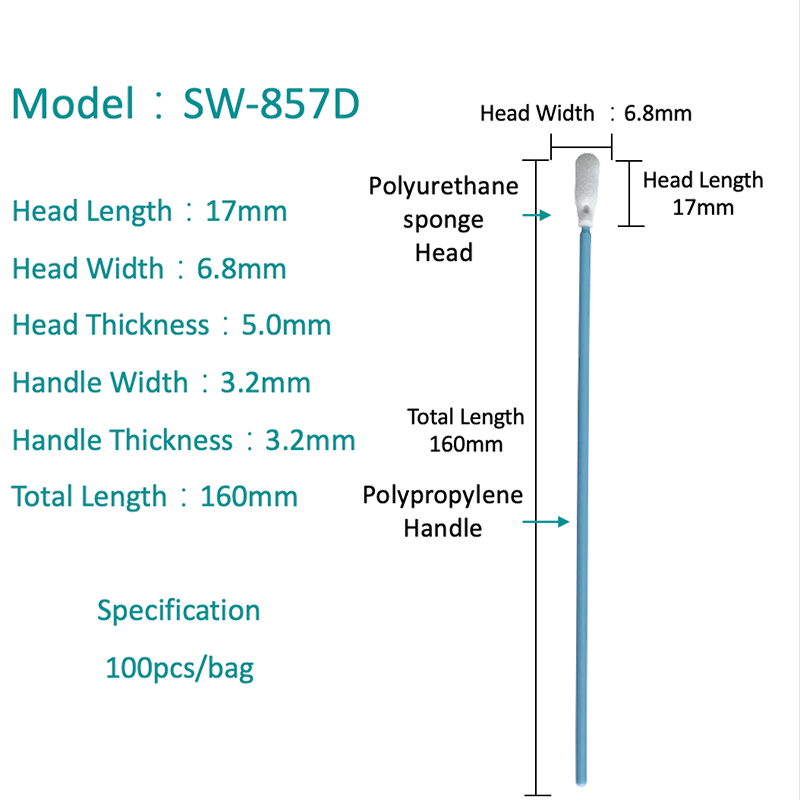
| Cylindrical / round | Fiber optic ferrules, barrel connectors | Consistent 360° contact on circular surfaces |
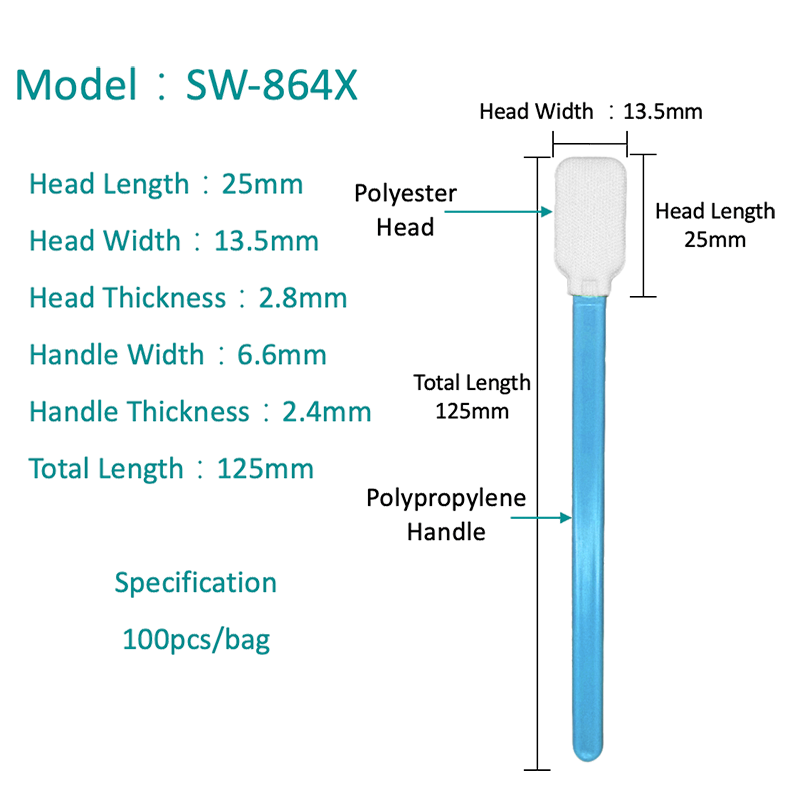
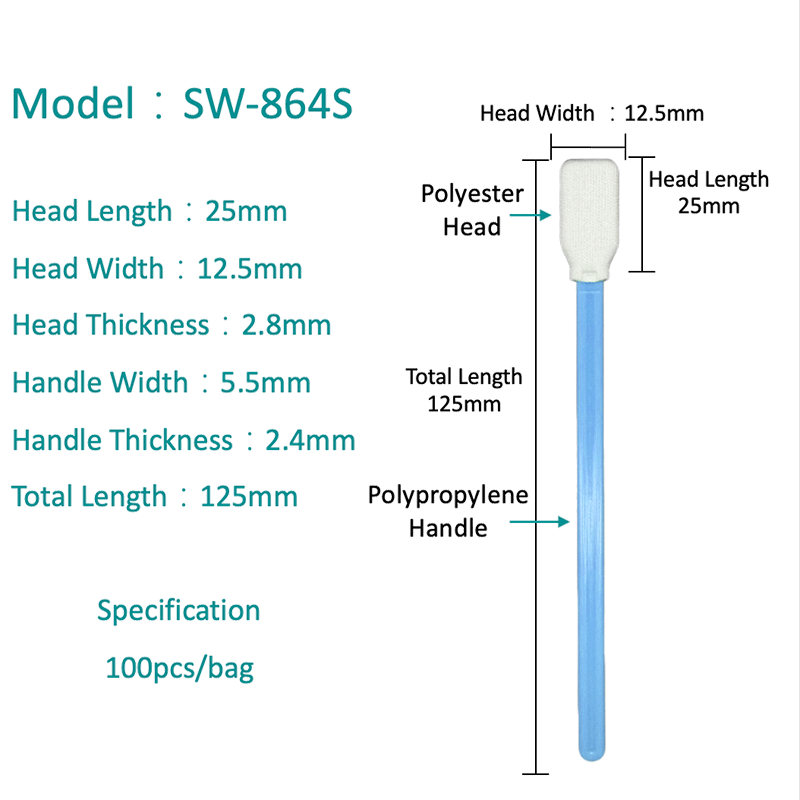
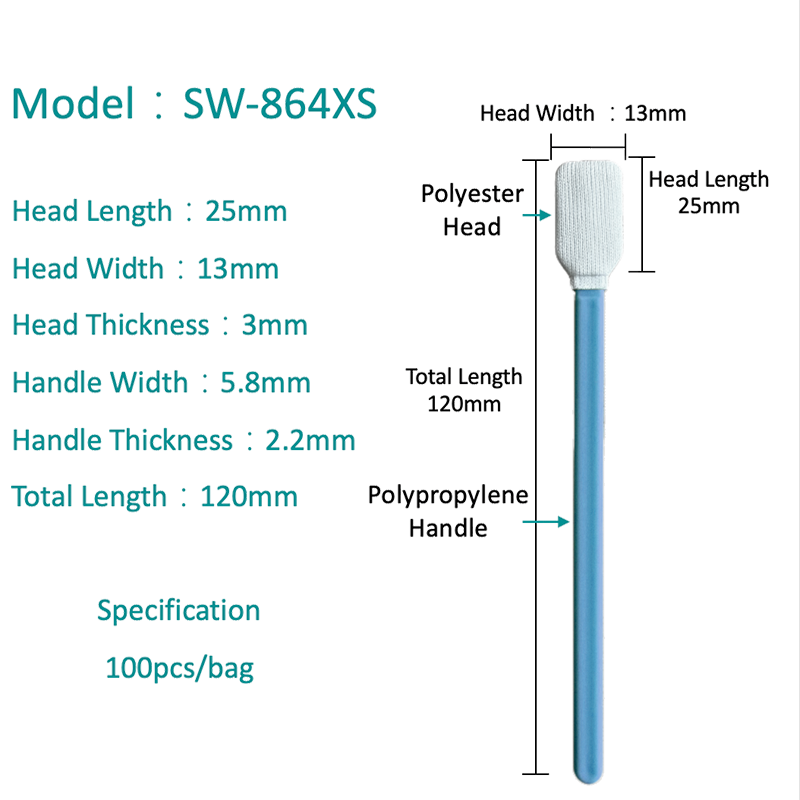
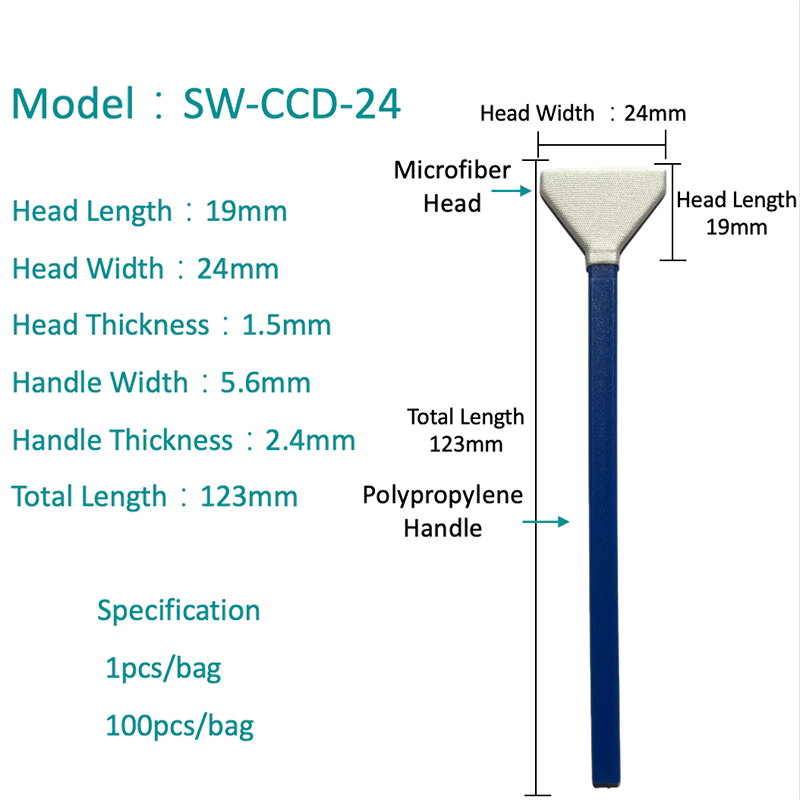
| Paddle / flat | Stencil apertures, flat sensor windows | Maximum contact area on planar surfaces |
| Pointed / chisel | PCB rework, tight connector recesses | Precision access to narrow geometries |
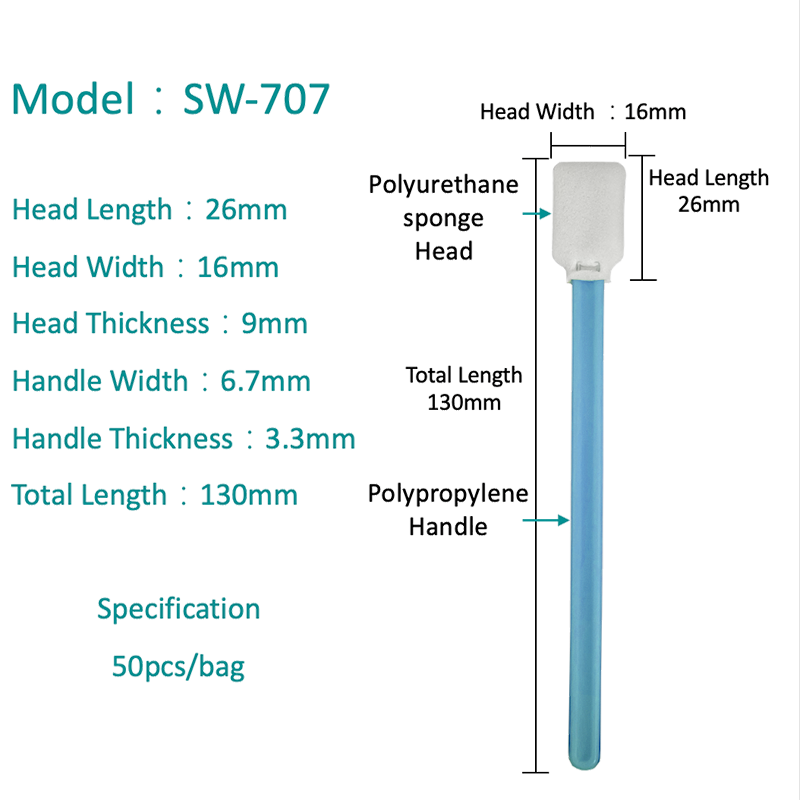
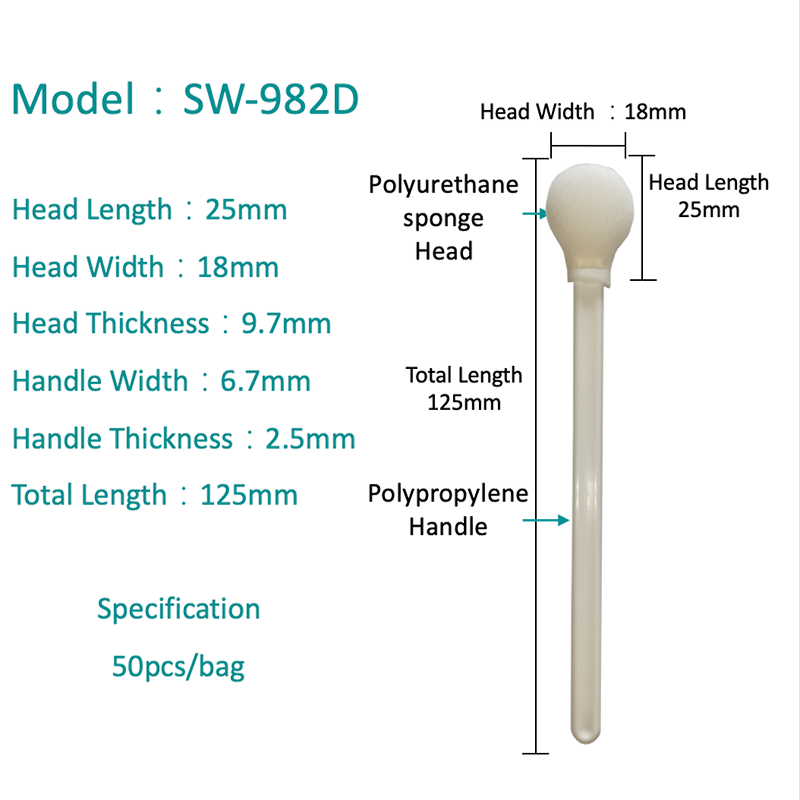
| Knob / bulb | Optical lens cleaning, probe tips | Gentle, even pressure distribution |
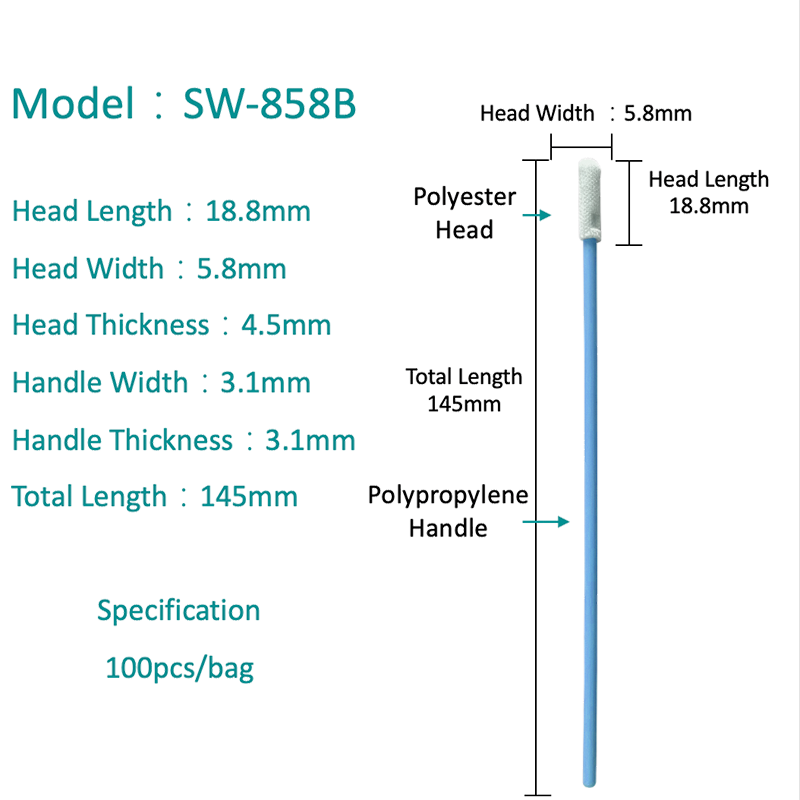
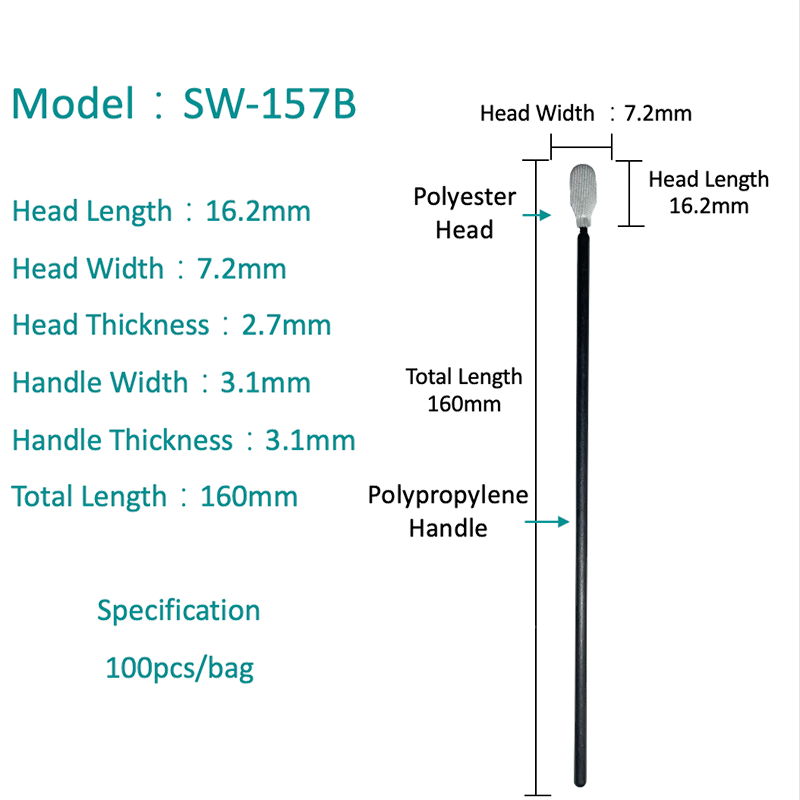
Handle materials are equally important. Polypropylene (PP) handles are the most common — chemically inert, lightweight, and compatible with alcohol and mild solvent cleaning. Carbon-loaded conductive PP handles are used in ESD-sensitive environments, dissipating static charge that could damage sensitive components. For benchtop laboratory work, longer handles (150–200 mm) improve reach into instrument cavities; short-handle "mini" formats are better suited for precision work under magnification.
Cleanliness grades further differentiate products: standard microfiber polyester swabs suit general electronics work, while cleanroom-processed variants are double-bagged and certified to particle and NVR (non-volatile residue) specifications for ISO Class 4–6 environments. Pre-saturated swabs — factory-loaded with isopropyl alcohol or deionized water — are available where solvent dispensing control is critical to the process.
How to Select the Right Microfiber Polyester Swab for Your Process
Specifying the correct swab requires matching four variables to your application: tip size, tip shape, cleanliness grade, and chemical compatibility.
- Define the target surface geometry. Measure the access opening or the critical surface area. A swab tip that is too large will not reach the cleaning zone; one that is too small will require excessive passes and extend cycle time.
- Identify your cleaning chemistry. Confirm that the swab's polyester tip and handle material are compatible with the solvent or cleaning agent used. Most polyester swabs tolerate IPA, acetone-free formulations, and aqueous detergents well, but verify against the manufacturer's chemical resistance data for aggressive solvents.
- Establish the contamination type. Dry particulate contamination is best addressed with a dry microfiber pass that mechanically entraps particles. Flux residues, lubricants, or adhesive films typically require a solvent-dampened swab followed by a dry pass to remove loosened material and residual solvent.
- Match cleanliness grade to environment. General electronics assembly can use standard swabs. ISO Class 5 or better cleanrooms, medical device lines, and optical assembly require certified low-NVR, low-particle swabs with documented lot traceability.
- Consider ESD requirements. Any application involving bare ICs, sensitive sensors, or low-voltage circuitry should use ESD-safe, conductive-handle swabs to prevent electrostatic discharge damage during contact.
A common specification error is equating "low-lint" with "particle-free." All swabs release some particles under mechanical stress; the difference between grades is the count and size of those particles. For processes where a single fiber on a sensor or bond pad causes a yield failure, only validated cleanroom-grade microfiber polyester swabs with documented particle counts should be used.
Best Practices for Effective Swab Cleaning Technique
Even a high-performance microfiber polyester swab will underperform if the cleaning method is incorrect. The following practices are standard in precision manufacturing and field maintenance environments:
- Use each swab once. Re-using a swab redeposits captured contamination. In ISO-classified environments, single-use is a process requirement; in field maintenance, it is still the recommended practice.
- Apply solvent at the tip, not directly on the surface. Dispensing solvent onto the swab tip gives controlled saturation and prevents solvent pooling in recesses or under components where it may cause secondary damage.
- Use a unidirectional stroke on critical surfaces. For fiber optic end-faces, the IEC 61300-3-35 standard specifies a single-pass, unidirectional wipe to avoid recontamination. The same principle applies to optical lens surfaces and sensor windows.
- Follow a wet-then-dry sequence. Dampen a first swab with the appropriate solvent to dissolve or lift the contaminant, then use a dry swab immediately after to pick up residual solvent and loosened material. This two-step process consistently outperforms a single-pass wet clean.
- Store swabs sealed until use. Microfiber polyester swabs are hygroscopic and will collect ambient particles if left open. In cleanroom environments, remove individual swabs from packaging immediately before use and discard unused opened swabs at the end of the shift.
Verification after cleaning — through visual inspection under magnification, optical microscopy, or in-process particle counting — is the only reliable way to confirm that cleaning was effective. The swab is a tool, not a guarantee; process discipline determines the result.

 ADDRESS
 CONTACT
 FAX
FAX EMAIL
EMAIL
