



 English
  中文简体
中文简体 
HOME / NEWS / Industry News / Sterile vs Non-Sterile Swabs for Wound Irrigation & Cleanroom Polyester
For wound irrigation, only sterile swabs should contact open tissue or wound beds. Non-sterile swabs carry a significant risk of introducing bacteria, and studies show that using contaminated materials can increase surgical site infection rates by 2 to 5 percent. In contrast, microfiber cleanroom polyester swabs are precision-engineered for contamination control in critical environments, not for direct wound care, unless the specific swab is validated sterile and designed for medical application. This article defines the practical differences, examines the role of sterility in wound management, and explains where cleanroom polyester swabs fit in laboratory and manufacturing settings.
Content
- 1 Sterile vs Non-Sterile Medical Swabs: Core Definitions
- 2 Why Sterility Is Crucial in Wound Irrigation
- 3 Microfiber Cleanroom Polyester Swab: Construction and Material
- 4 Comparing Swab Types for Wound Irrigation and Cleanroom Use
- 5 When Cleanroom Polyester Swabs Can Be Used in Medical Contexts
- 6 Practical Selection Criteria for Swabs in Wound Irrigation
- 7 The Role of Microfiber Polyester in Contamination Control
- 8 Integrating Concepts: Safe Swab Selection Protocol
Sterile vs Non-Sterile Medical Swabs: Core Definitions
A sterile medical swab is manufactured and packaged under validated processes to eliminate all viable microorganisms, achieving a sterility assurance level of 10⁻⁶ (one in a million chance of a non-sterile unit). The sterilization method is commonly ethylene oxide gas, gamma irradiation, or electron beam. Sterile swabs are individually wrapped in materials that maintain the sterile barrier until point of use. A non-sterile swab has not undergone a terminal sterilization process; its bioburden may be low if produced in a clean environment, but it is not guaranteed free of microorganisms. Non-sterile swabs are often used for general-purpose cleaning, specimen collection from intact skin, or industrial tasks where sterility is not required.
Why Sterility Is Crucial in Wound Irrigation
Wound irrigation involves flushing a wound with a solution to remove debris, bacteria, and necrotic tissue. If a swab is used to debride, absorb fluid, or apply medication, any microbial contamination on the swab can directly seed the wound bed, potentially causing a biofilm infection. Clinical guidelines from the CDC and WHO emphasize that materials contacting open wounds must be sterile. In a review of 15 studies, use of non-sterile supplies during wound care was associated with a 3.1 percent absolute increase in localized infection compared to sterile supplies. While some outpatient chronic wound care protocols explore clean technique, for acute surgical wounds, traumatic lacerations, or immunocompromised patients, the standard remains sterile swabs.
Microfiber Cleanroom Polyester Swab: Construction and Material
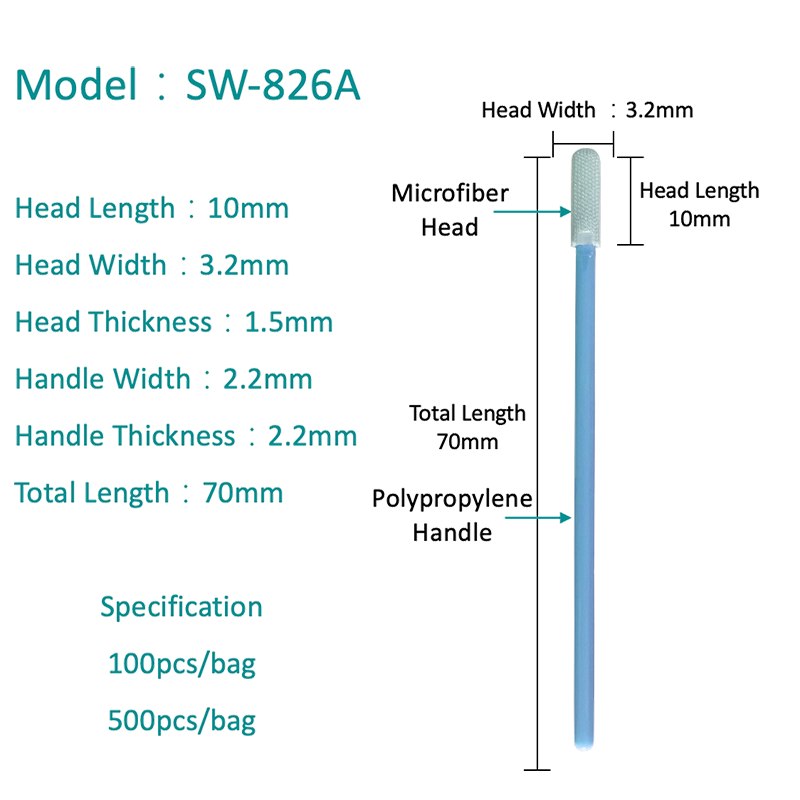
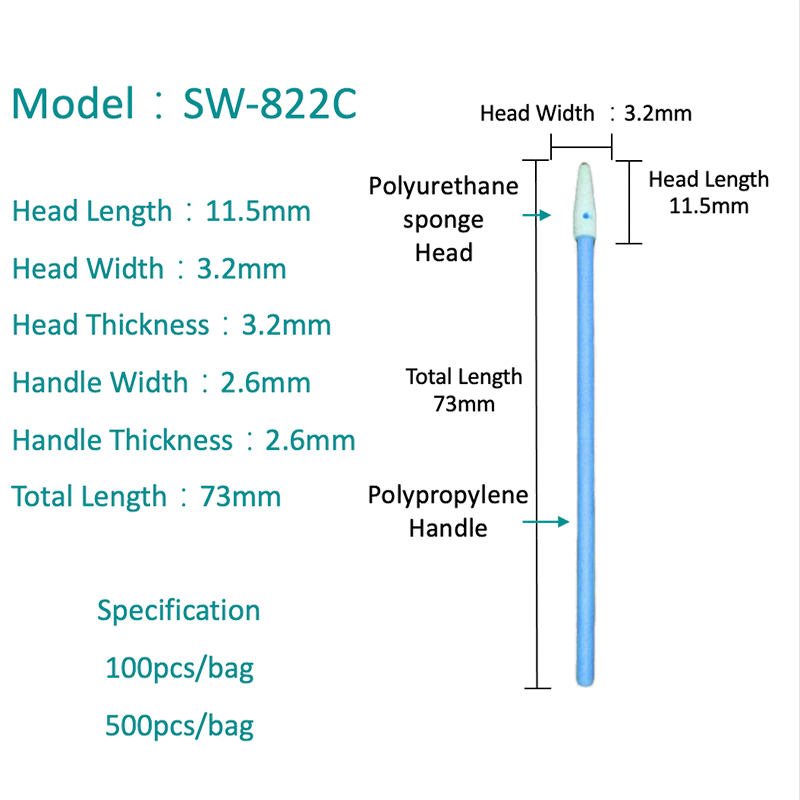
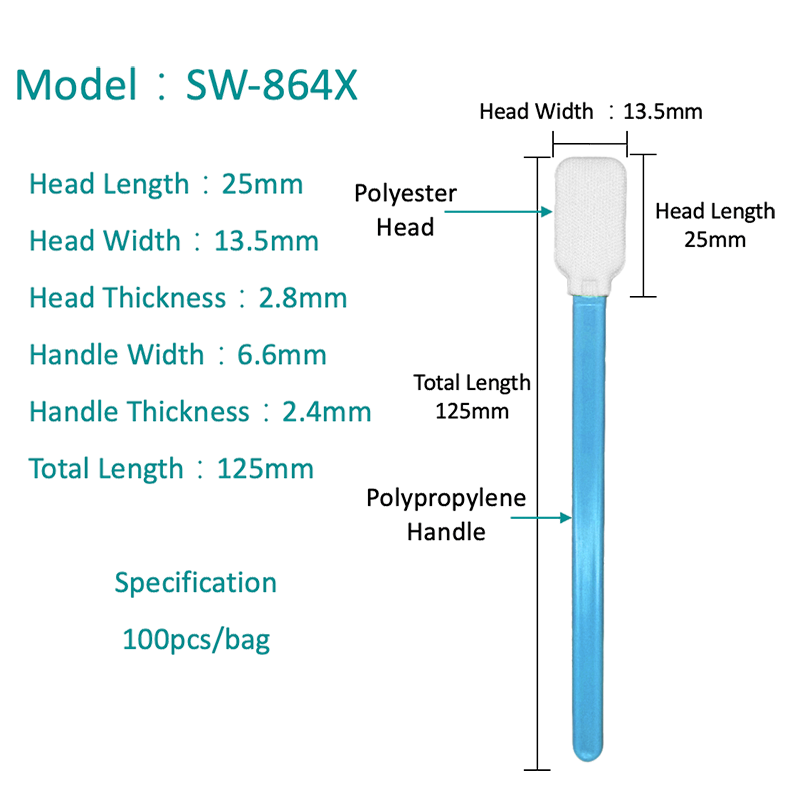
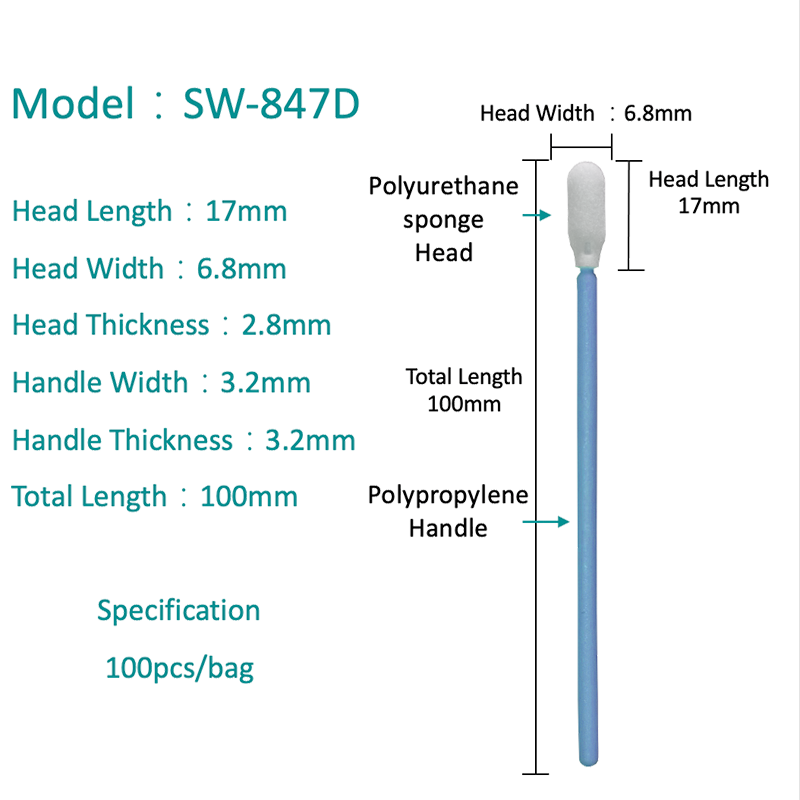
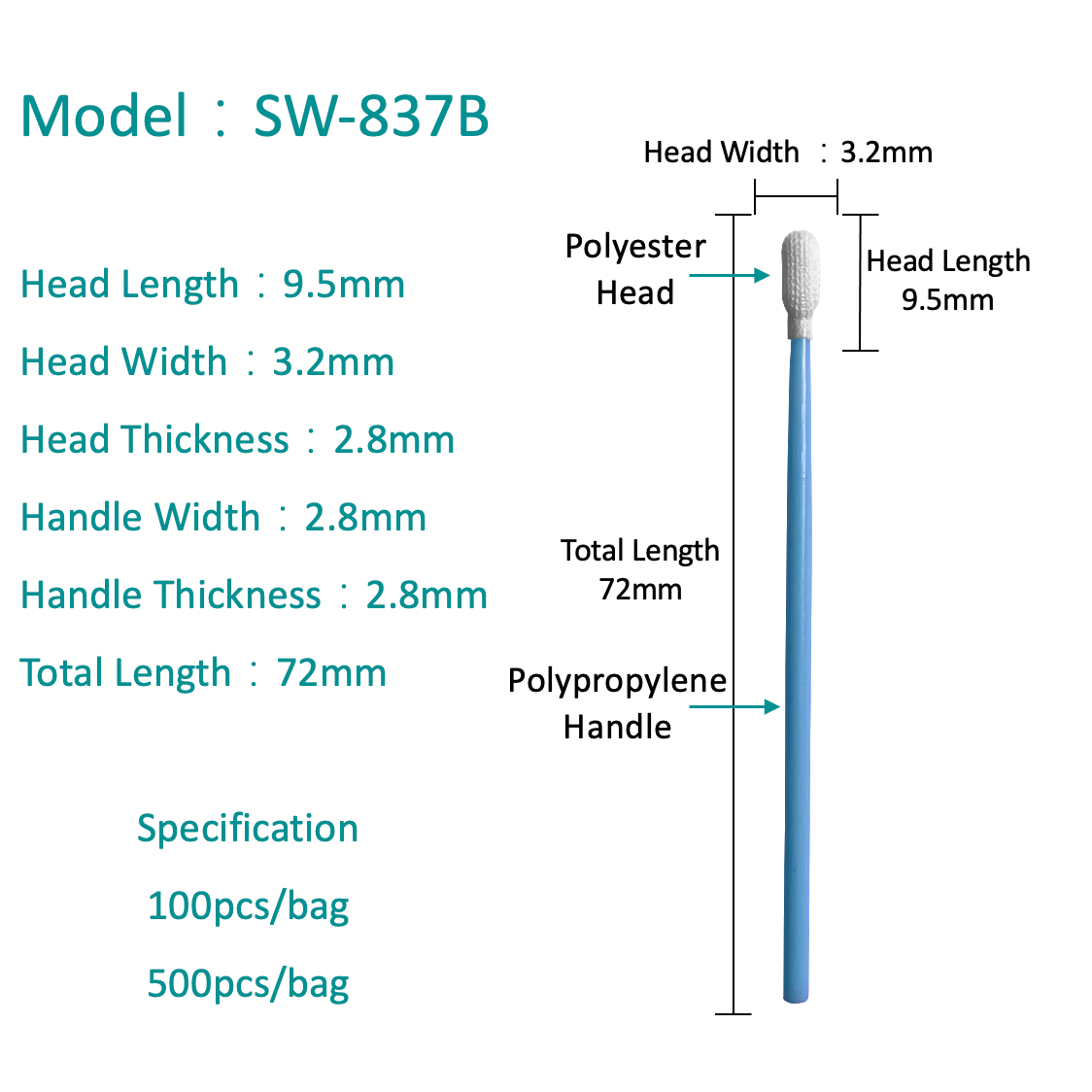
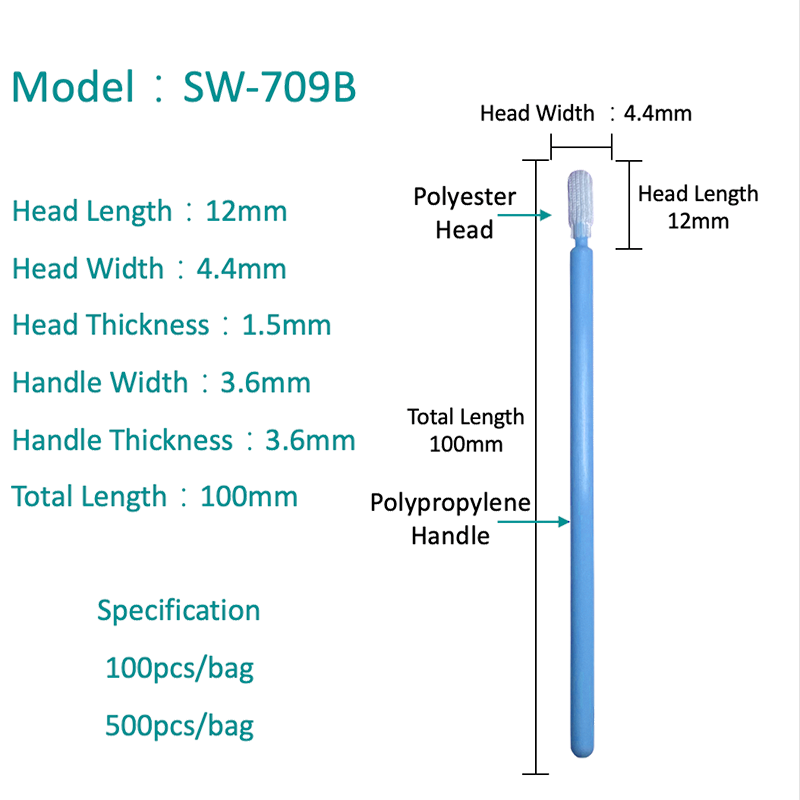
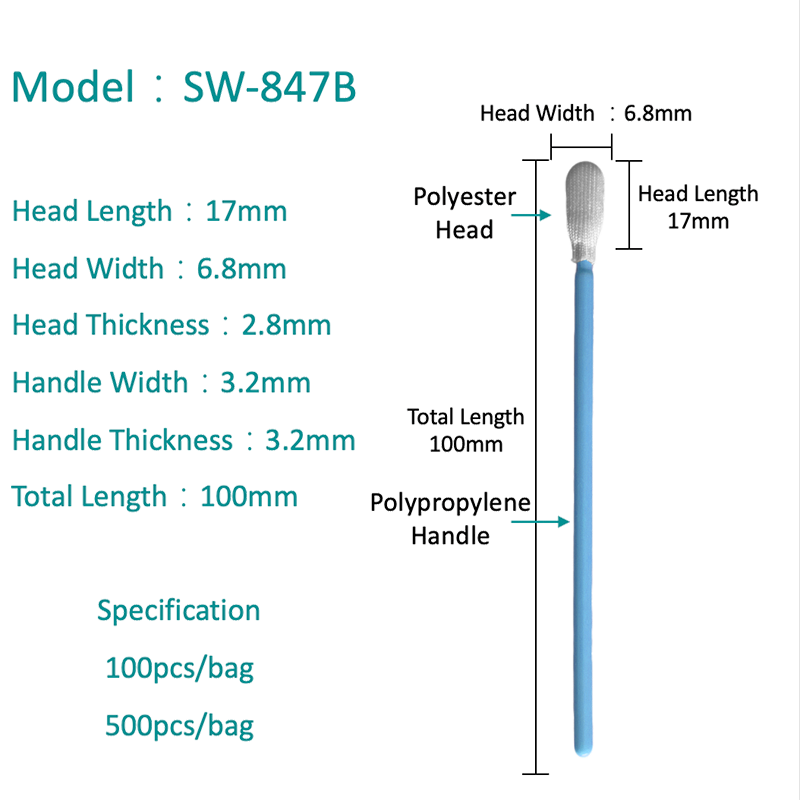
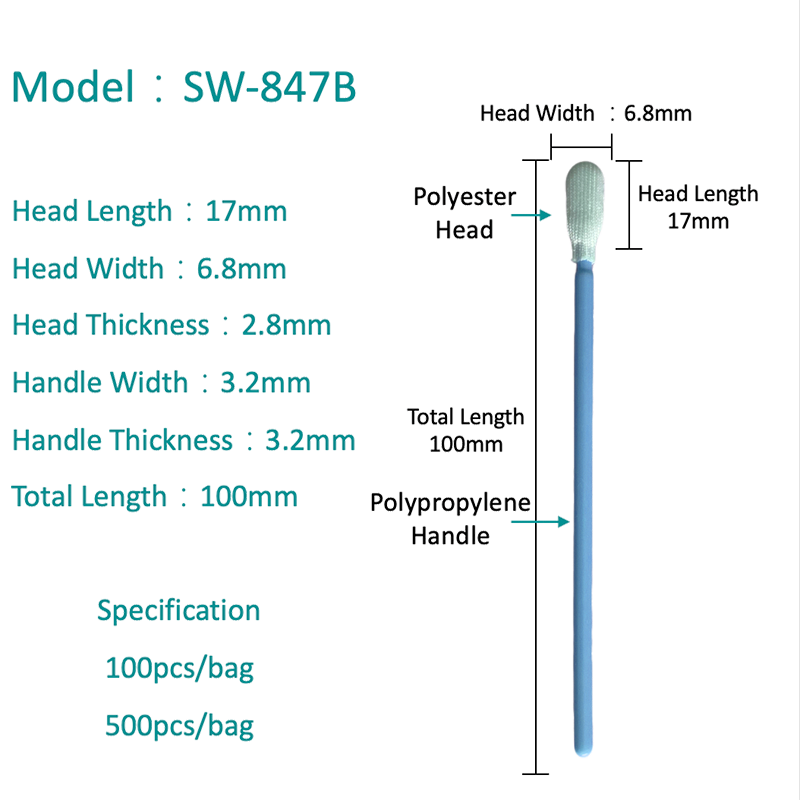
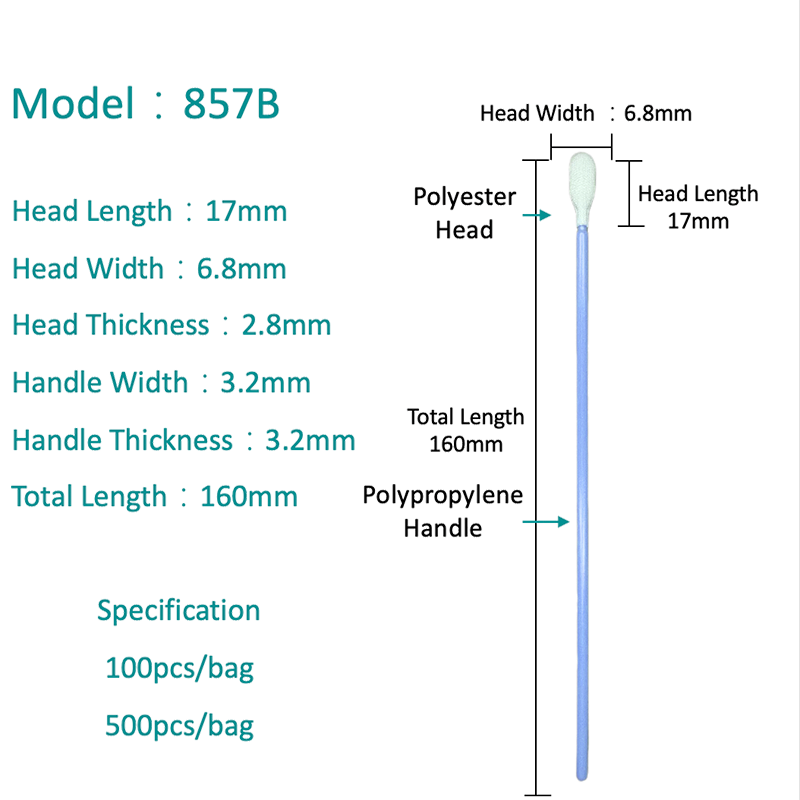
A microfiber cleanroom polyester swab features a head made from 100% continuous-filament polyester knit fabric, often with a microfiber structure that splits fibers into wedge shapes for enhanced particle entrapment. The handle is typically polypropylene or an autoclavable polymer, heat-bonded to the head without adhesives to prevent extractable residues. Unlike a cotton swab that can shed fibers and leave lint, a high-quality cleanroom polyester swab exhibits extremely low particle generation, often below 0.5 particles per swab at 0.5 microns when tested per IEST-RP-CC004. These swabs are laundered in cleanroom-compatible detergents and packaged either non-sterile or sterile, depending on end use.
Comparing Swab Types for Wound Irrigation and Cleanroom Use
The table below highlights the key differences between sterile medical swabs intended for wound care, non-sterile general swabs, and cleanroom polyester swabs.
| Feature | Sterile Medical Swab | Non-Sterile General Swab | Microfiber Cleanroom Polyester Swab |
|---|---|---|---|
| Microbial State | Sterile, SAL 10⁻⁶ | Not sterile, variable bioburden | Available sterile or non-sterile |
| Typical Head Material | Cotton, rayon, or foam | Cotton, polyester, foam | 100% continuous-filament polyester knit |
| Particle and Fiber Shedding | Low to moderate, lint possible | Moderate to high | Very low, engineered for cleanroom standards |
| Primary Use | Wound care, surgical prep, specimen collection | General cleaning, industrial, arts and crafts | Cleanroom wiping, stencil cleaning, precision optics, PCB assembly |
| Regulatory Context | Medical device, often FDA Class I or II | No medical claim, consumer product | Cleanroom consumable, ISO class 3-8 compatible |
When Cleanroom Polyester Swabs Can Be Used in Medical Contexts
Cleanroom polyester swabs are not automatically suitable for wound contact. However, many swab suppliers offer sterile cleanroom polyester swabs validated for medical device manufacturing and some clinical applications such as cleaning endoscope ports, applying lubricants to sterile connectors, or sampling in ISO 5 pharmaceutical isolators. These swabs must be labeled sterile and meet biocompatibility requirements per ISO 10993 if they contact the patient. In wound irrigation, a sterile foam or rayon swab is still preferred because polyester fabric may be less absorbent for wound exudate; but a sterile polyester swab with proper softness can serve for precision cleaning around wound margins or surgical sites. Always verify the intended use stated by the manufacturer.
Practical Selection Criteria for Swabs in Wound Irrigation
When choosing a swab for wound irrigation tasks, clinicians and care providers should evaluate the following factors against the specific clinical scenario.
- Sterility requirement: Any swab that touches open tissue, surgical site, or deep wound must be sterile. Non-sterile swabs are acceptable only for cleaning intact skin around the wound.
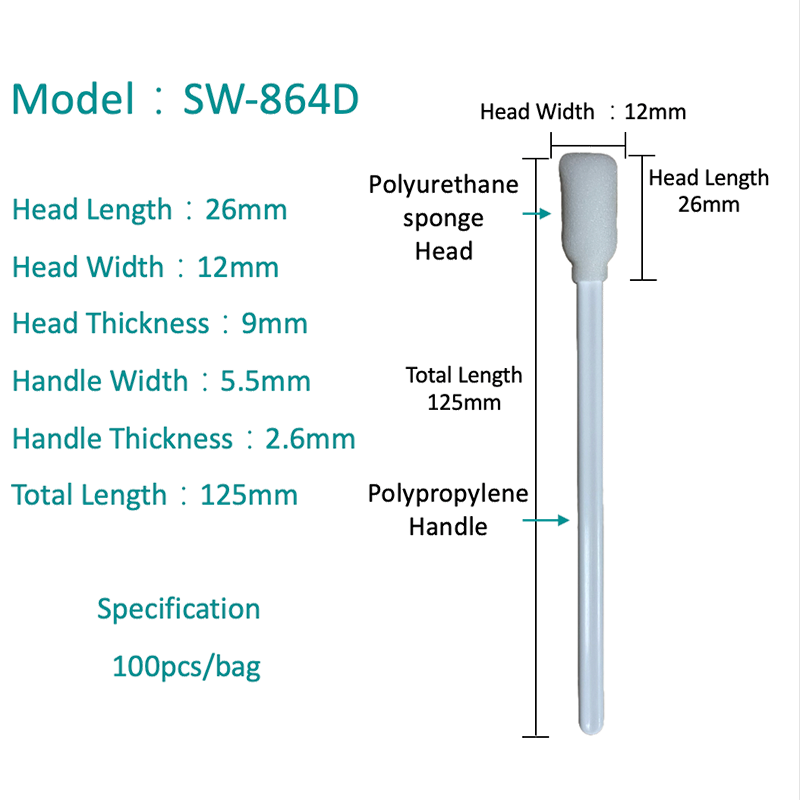
- Absorbency and material: Rayon and foam swabs offer high fluid holding capacity, typically absorbing 5 to 10 times their weight in saline, making them effective for soaking irrigation fluid. Polyester swabs have lower absorbency but release less lint.
- Linting and fiber residue: Lint deposited in a wound can cause foreign-body reaction. Sterile foam or non-woven gauze swabs are often chosen for low linting. Polyester cleanroom swabs produce minimal particulates, which is valuable in surgeries involving implants where fiber contamination could lead to rejection.
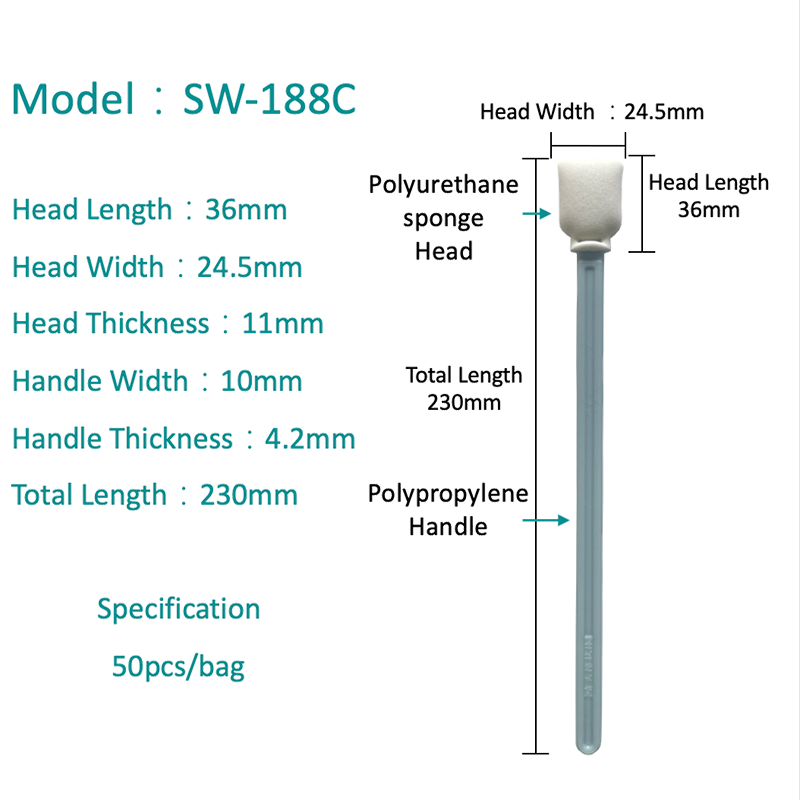
- Shaft and handle design: For irrigation of deep or tunneled wounds, a long, flexible handle may be necessary. Cleanroom swabs often come with rigid polypropylene shafts that allow precise application of force in small areas but may lack the required flexibility for certain wound geometries.
The Role of Microfiber Polyester in Contamination Control
In cleanroom settings, the microfiber polyester swab serves a critical role in surface sampling, removal of flux residues, and cleaning of sensitive optical components. The split microfiber structure creates over 40 kilometers of fiber per gram of material, generating an enormous surface area for entrapping sub-micron particles. Lab tests have demonstrated that a cleanroom polyester swab can remove 99.9% of 0.5-micron particles from a flat surface when used with an appropriate solvent. This extreme cleanliness directly supports pharmaceutical compounding, semiconductor fabrication, and aerospace assembly—not wound irrigation. The parallel lesson for healthcare is that material choice dictates contamination risk; using a structured cleanroom approach in product selection for wound care can reduce iatrogenic complications.
Integrating Concepts: Safe Swab Selection Protocol
A practical protocol to ensure the correct swab is used for any wound irrigation procedure is as follows. First, classify the wound as open versus closed; open wounds require sterile devices. Second, assess the need for absorbency versus cleanliness; for heavy exudate, a sterile rayon or foam swab is optimal. Third, if the task requires precision cleaning of a small, delicate area, consider a sterile polyester swab that meets biocompatibility standards, especially if the swab will be used near exposed tissue. Fourth, verify that the swab's packaging is intact and the expiration date of sterility is valid. Adhering to this protocol mitigates infection risk and ensures that the performance characteristics of the swab—whether sterile, low-linting, or high-absorbency—match the clinical demand.

 ADDRESS
 CONTACT
 FAX
FAX EMAIL
EMAIL
