



 English
  中文简体
中文简体 
HOME / NEWS / Industry News / Cleanroom Swabs: Materials, Types & How to Choose
Swab material is the single biggest factor separating a clean, residue-free wipe from a swab that leaves fibers, scratches a sensitive surface, or introduces static risk to electronics. Choosing correctly means matching swab material, tip construction, and handle type to the specific surface, contamination type, and cleanroom class involved.
Content
- 1 Foam Swabs vs Polyester Swabs
- 2 Cleanroom Swabs for Precision Cleaning
- 3 Cleanroom Swab Materials Comparison
- 4 How to Choose Cleanroom Swabs
- 5 Cleanroom Swab Selection Guide
- 6 Lint Free Cleanroom Swabs
- 7 ESD Safe Cleaning Swabs
- 8 Cleanroom Swabs for Electronics Manufacturing
- 9 Swabs for PCB Cleaning
- 10 Precision Cleaning Swabs for Manufacturing
Foam Swabs vs Polyester Swabs
| Factor | Foam Swabs | Polyester Swabs |
|---|---|---|
| Structure | Open or closed-cell foam tip, soft and conformable | Knitted or woven polyester fabric over a core |
| Particle/lint generation | Very low, ideal for particle-sensitive cleaning | Low, but generally higher than premium foam |
| Absorbency | High — good for solvent and liquid pickup | Moderate to high, depending on weave density |
| Surface contact | Conforms well to uneven or delicate surfaces | Firmer contact, better for light mechanical scrubbing |
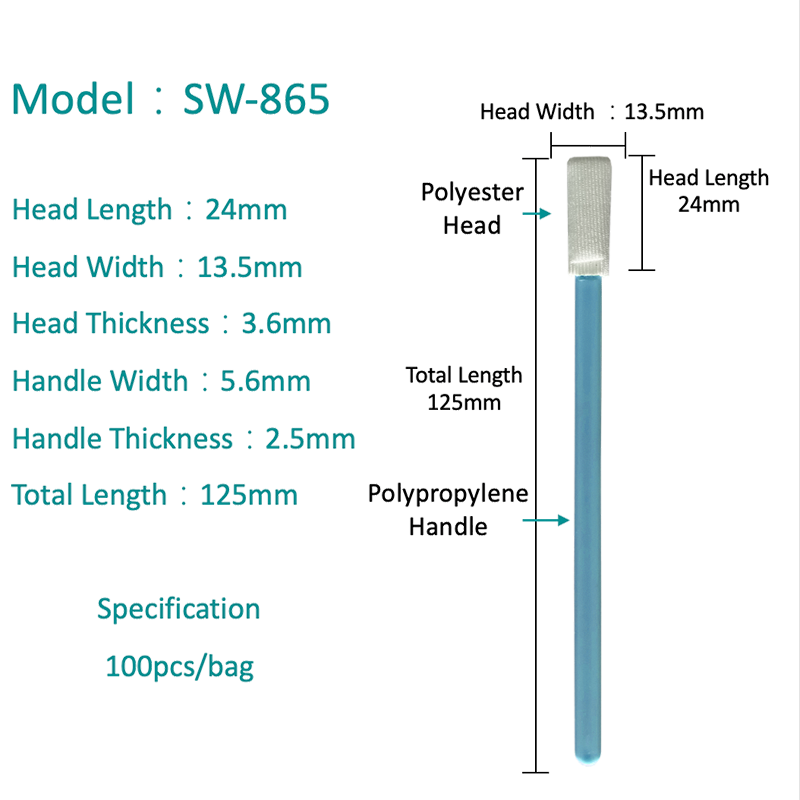
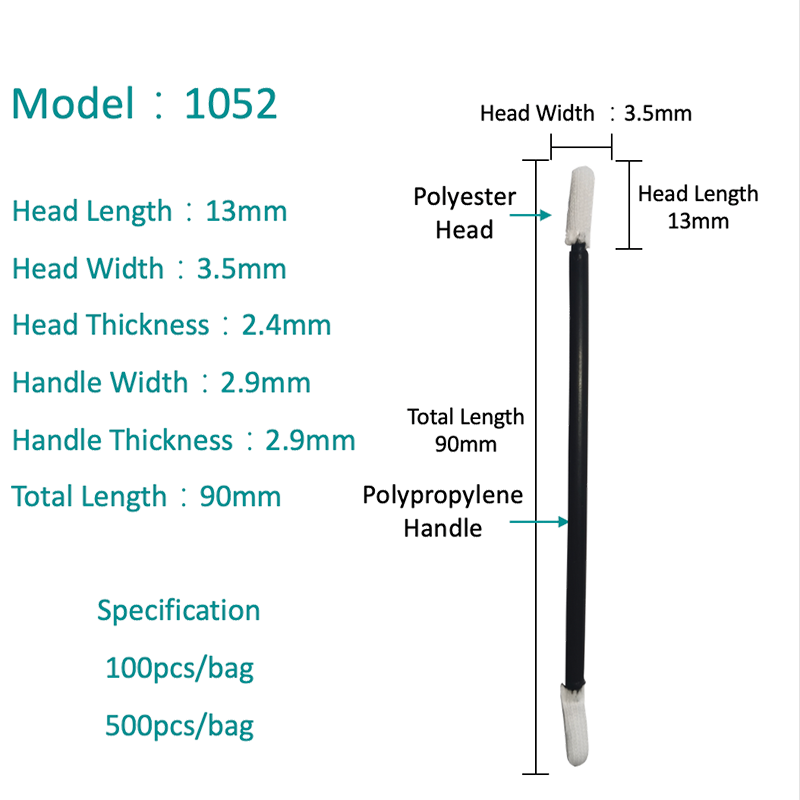
| Common use | Optical surfaces, sensitive electronics, precision wiping | General cleanroom cleaning, PCB and connector cleaning |
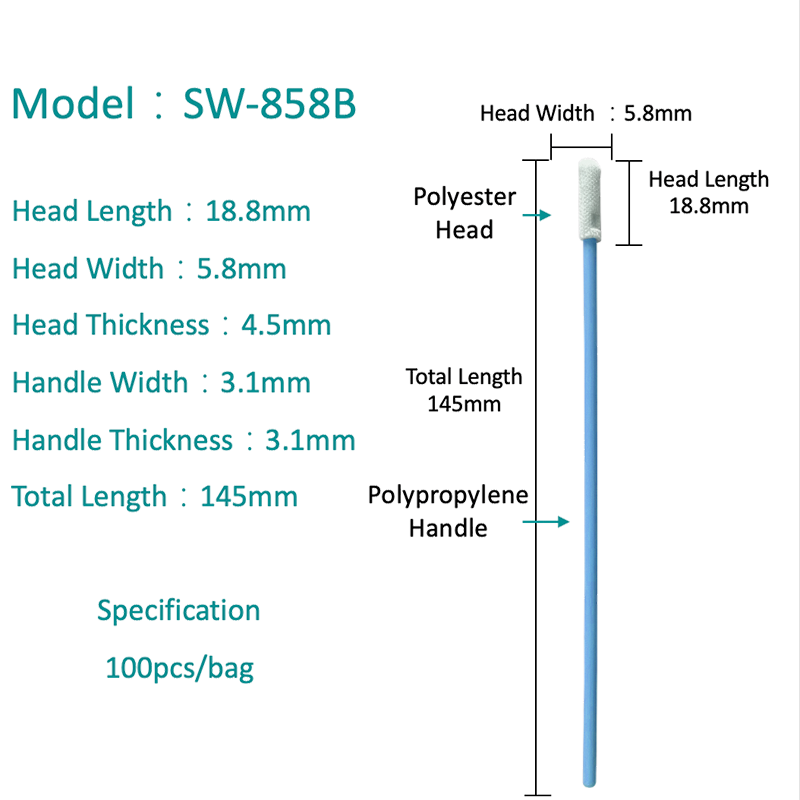
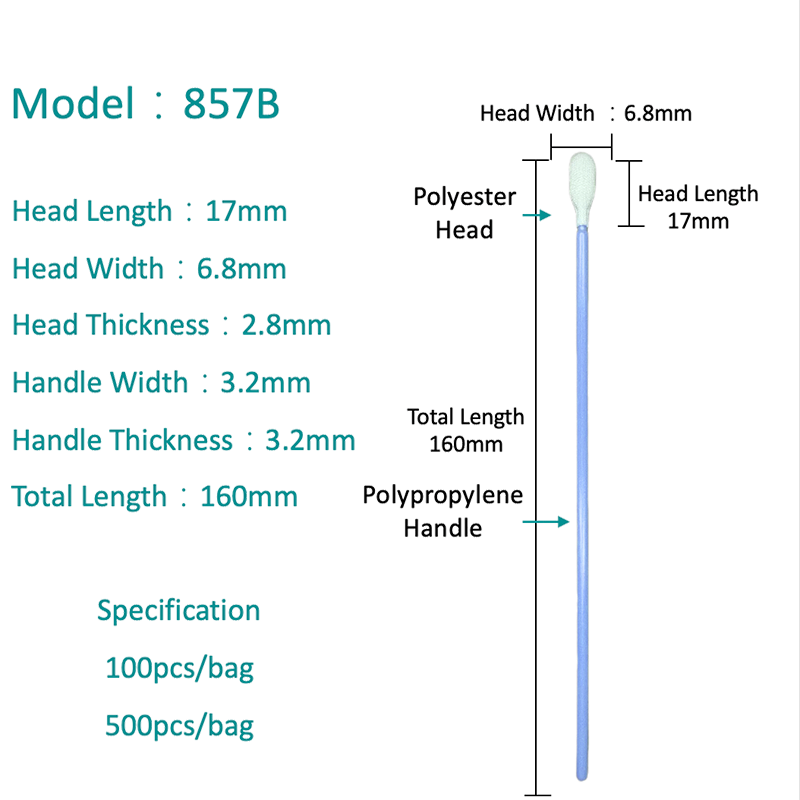
Foam swabs generally suit the most particle- and scratch-sensitive surfaces, while polyester swabs offer a good balance of absorbency and light abrasive action for general precision cleaning tasks.
Cleanroom Swabs for Precision Cleaning
Precision cleaning tasks — removing flux residue, particulate, or thin films from small, sensitive components — depend on a swab that won't introduce new contamination while it removes existing contamination. This means low particle and fiber shedding, controlled absorbency (enough to lift residue without leaving excess solvent behind), and a tip shape matched to the geometry being cleaned, from broad flat tips for open surfaces to pointed tips for tight recesses and connector pins.
Cleanroom Swab Materials Comparison
Polyurethane Foam
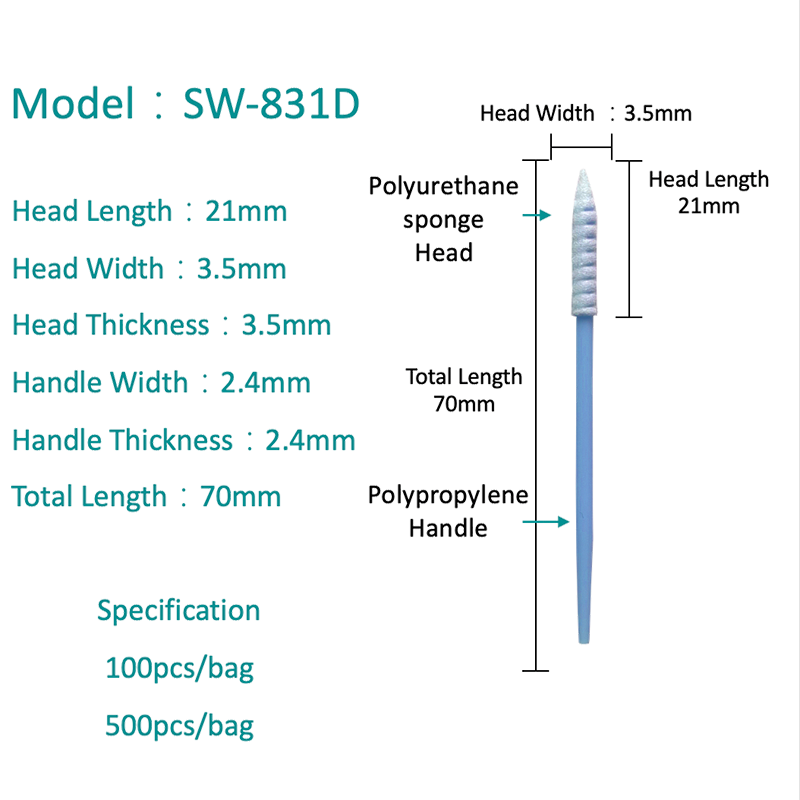
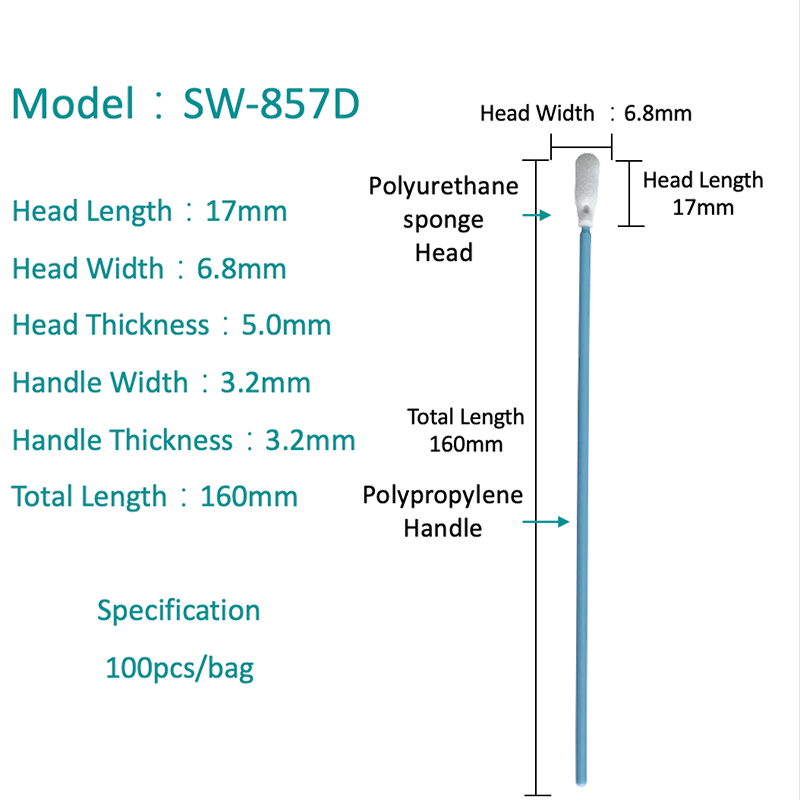
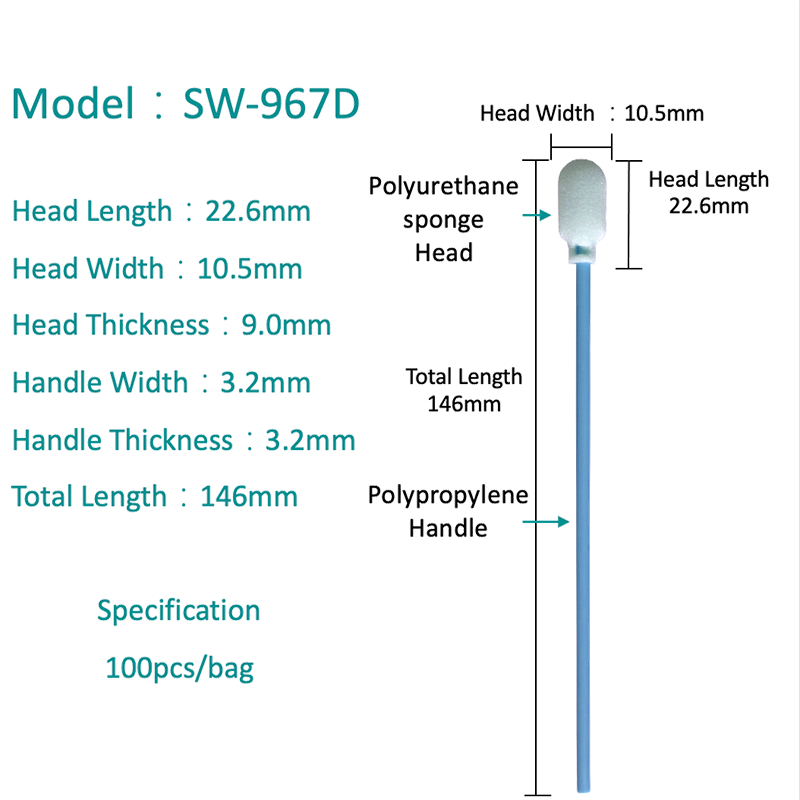
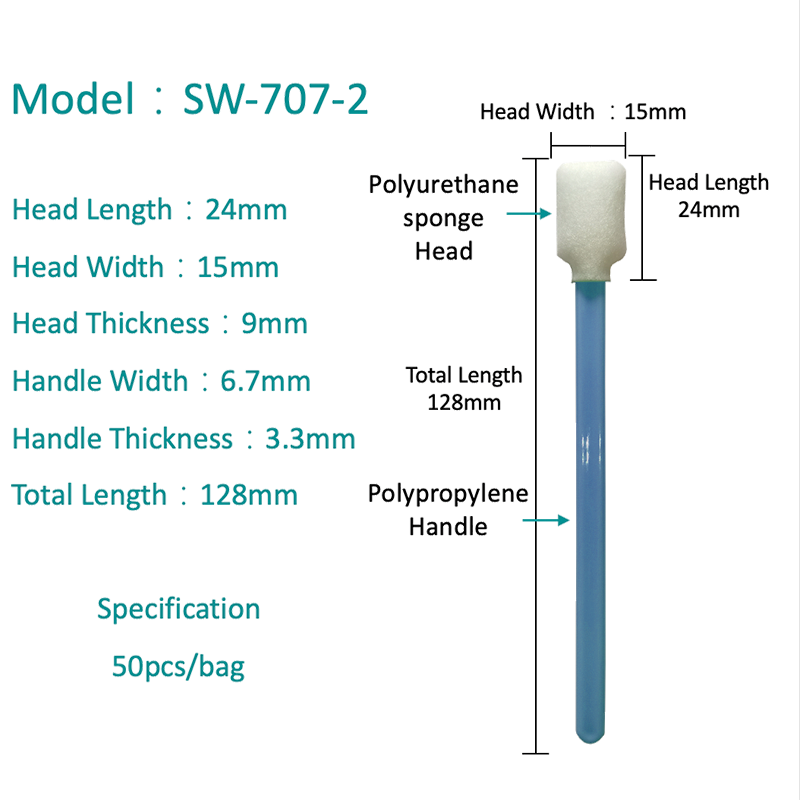
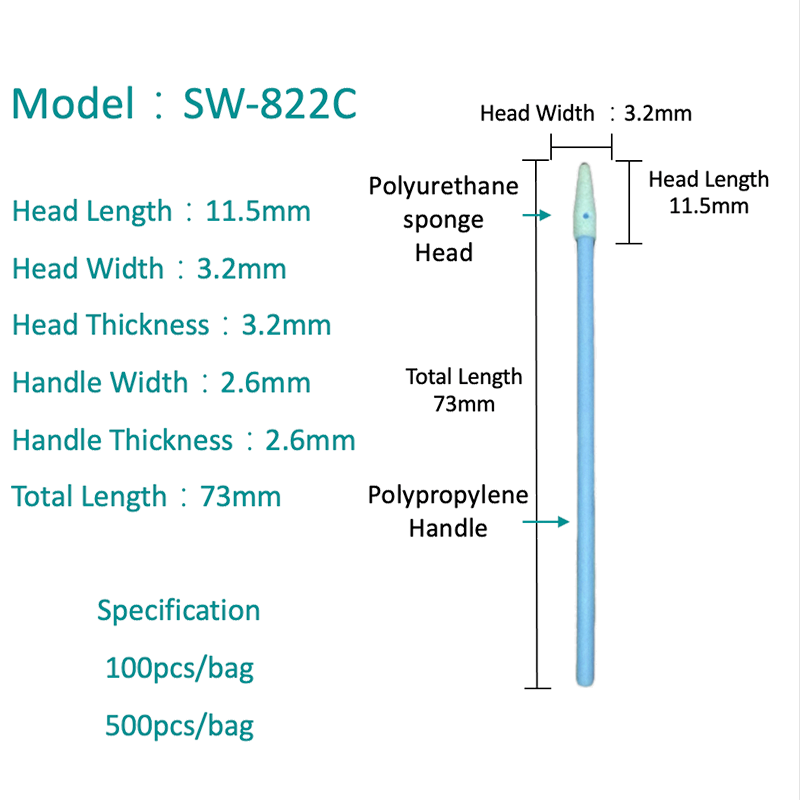
Extremely low particle generation and high absorbency, standard for cleanroom Class 10–100 applications and sensitive optical or electronic surfaces.
Polyester Knit/Weave
Balanced absorbency and light abrasion resistance, widely used for general cleanroom and electronics cleaning where moderate mechanical action helps.
Cotton
Higher lint and particle generation, generally unsuitable for true cleanroom or precision electronics work but used in lower-sensitivity general cleaning.
Microfiber
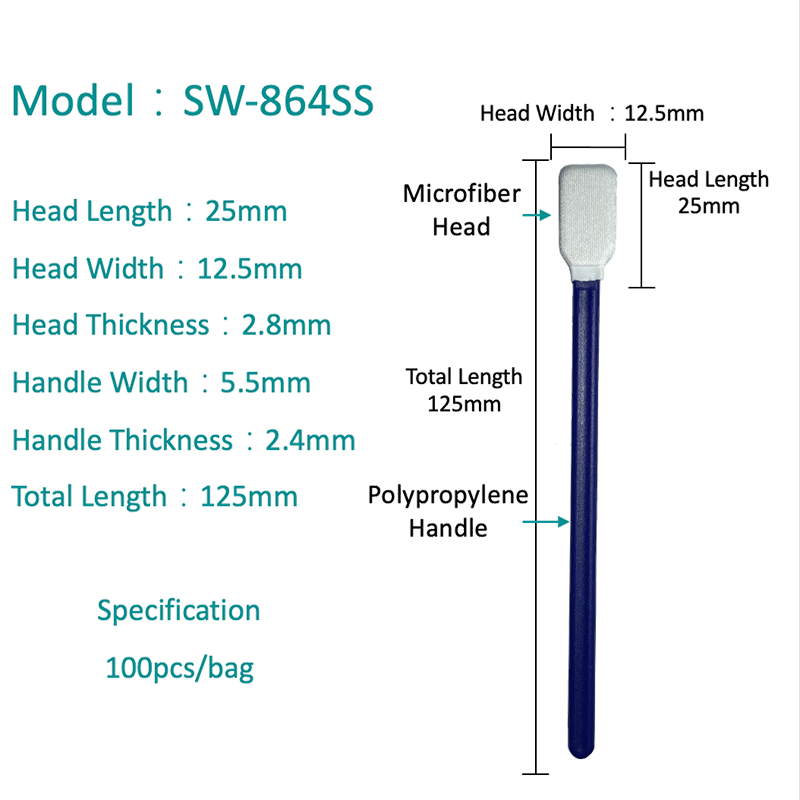
Fine fiber structure good for lifting fine particulate, though typically higher shedding than foam in ultra-clean environments.
How to Choose Cleanroom Swabs
- Match the material to the cleanroom class — higher-classification cleanrooms (lower particle counts) generally require foam or high-grade polyester with certified low particle and fiber shedding.
- Consider the surface sensitivity — delicate optics and coated surfaces call for soft, conformable foam tips that won't scratch.
- Check chemical compatibility — the swab material and handle need to withstand the solvent being used without degrading or dissolving.
- Confirm ESD requirements for electronics work, since standard swabs and handles can generate or hold static charge that risks sensitive components.
- Match tip shape to the task — pointed tips for connectors and recesses, flat or round tips for broader surface wiping.
Cleanroom Swab Selection Guide
| Application | Recommended Swab Type |
|---|---|
| Optical lens and sensor cleaning | Low-particle foam swab, pointed or tapered tip |
| PCB and connector cleaning | Polyester or foam swab, small pointed tip, ESD-safe handle |
| General cleanroom surface wiping | Polyester knit swab, standard or paddle tip |
| Solvent and flux residue removal | High-absorbency foam swab |
| Tight recesses and small components | Micro-tip foam or polyester swab |
Lint Free Cleanroom Swabs
Lint-free construction is a core requirement in any true cleanroom environment, since even a small amount of shed fiber can compromise a controlled process or contaminate a sensitive surface. Lint-free swabs are typically constructed with sealed or heat-bonded edges (rather than cut edges that can fray) and use foam or tightly knit polyester specifically engineered to minimize fiber release, often verified against particle count and fiber shedding test standards rather than marketing claims alone.
ESD Safe Cleaning Swabs
ESD-safe swabs are built with conductive or static-dissipative handle materials and packaging designed to prevent the buildup and discharge of static electricity during use — a critical requirement anywhere sensitive electronic components are being cleaned, since even a small static discharge can damage semiconductor devices. When ESD protection is required, both the swab handle and its packaging should carry appropriate ESD ratings, since a standard swab handle paired with ESD-safe swab material doesn't fully eliminate static risk.
Cleanroom Swabs for Electronics Manufacturing
Electronics manufacturing environments demand swabs that combine low particle generation, chemical compatibility with common solvents (isopropyl alcohol, flux removers), and ESD-safe construction together. Foam swabs with pointed or micro tips are common for cleaning connector pins, component leads, and tight spacing on populated boards, where precision contact matters as much as cleanliness.
Swabs for PCB Cleaning
PCB cleaning applications generally call for a swab that can reach between closely spaced components without dragging debris or leaving residue behind. Small, firm-tipped polyester or foam swabs work well for flux residue removal along solder joints, while finer pointed foam tips suit cleaning around fine-pitch components and connector housings where clearance is minimal.
Precision Cleaning Swabs for Manufacturing
Beyond electronics, precision manufacturing environments — medical device assembly, optics, aerospace components — rely on the same core selection principles: low particle and fiber generation, chemical compatibility with the cleaning agents in use, and a tip geometry matched to the part being cleaned. In regulated manufacturing settings, swabs are often selected and validated against documented cleanliness and material compatibility specifications rather than general-purpose assumptions, since process validation frequently requires traceable, consistent swab performance across batches.

 ADDRESS
 CONTACT
 FAX
FAX EMAIL
EMAIL
