



 English
  中文简体
中文简体 
HOME / NEWS / Industry News / Poly Swabs, Microfiber Swabs & Swab Types Explained
Content
Poly Swabs, Microfiber Swabs, and Swab Types Explained
Swabs are one of the simplest tools in precision cleaning and quality control, yet the differences between materials, head designs, and construction methods have a real impact on what a given swab can and can't be used for. A poly swab, a foam swab, and a microfiber swab may look similar from a distance, but each is engineered for a specific combination of absorbency, particle generation, chemical compatibility, and surface contact that determines whether it belongs in a cleanroom, an electronics assembly line, a laboratory, or a general industrial cleaning application.
This reference covers what a poly swab actually is, the main categories of swabs used across cleanroom and precision industries, what defines a microfiber swab specifically, the general and specialized uses swabs are put to, the materials swabs are made from, and what the widely referenced "3 swab test" actually measures in a cleanroom validation context.
ISO 3–8
Common cleanroom classes served
Polyester / Foam / Cotton
Common swab head materials
Low Particle Generation
Key requirement in critical environments
What Is a Poly Swab?
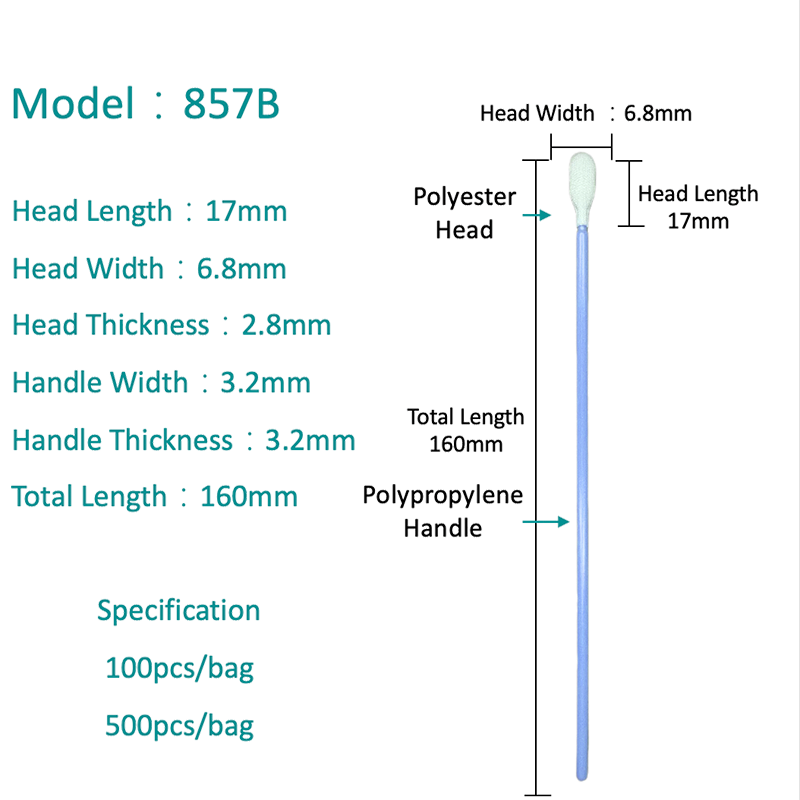
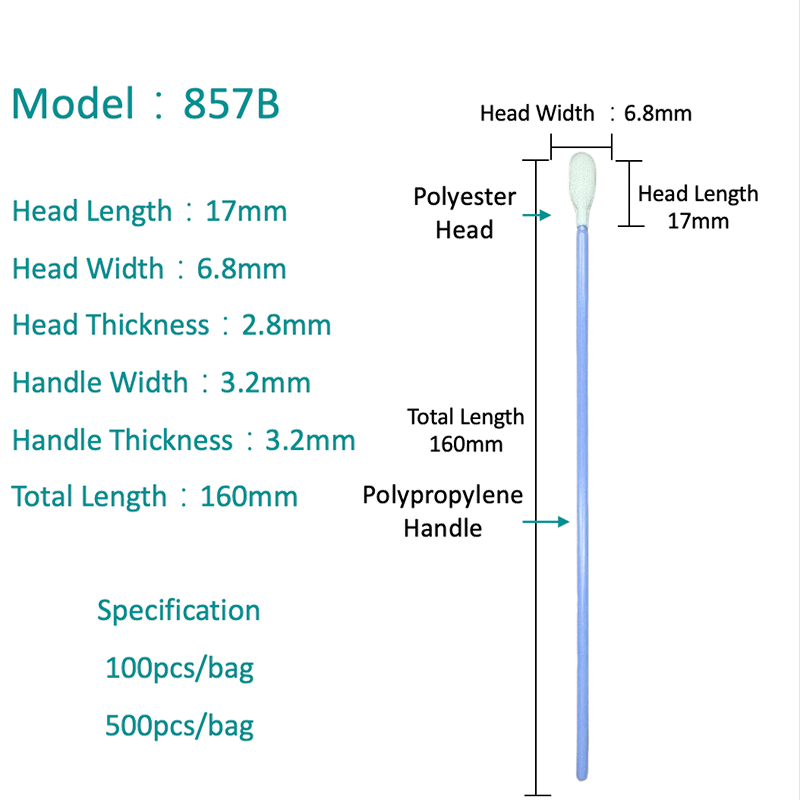
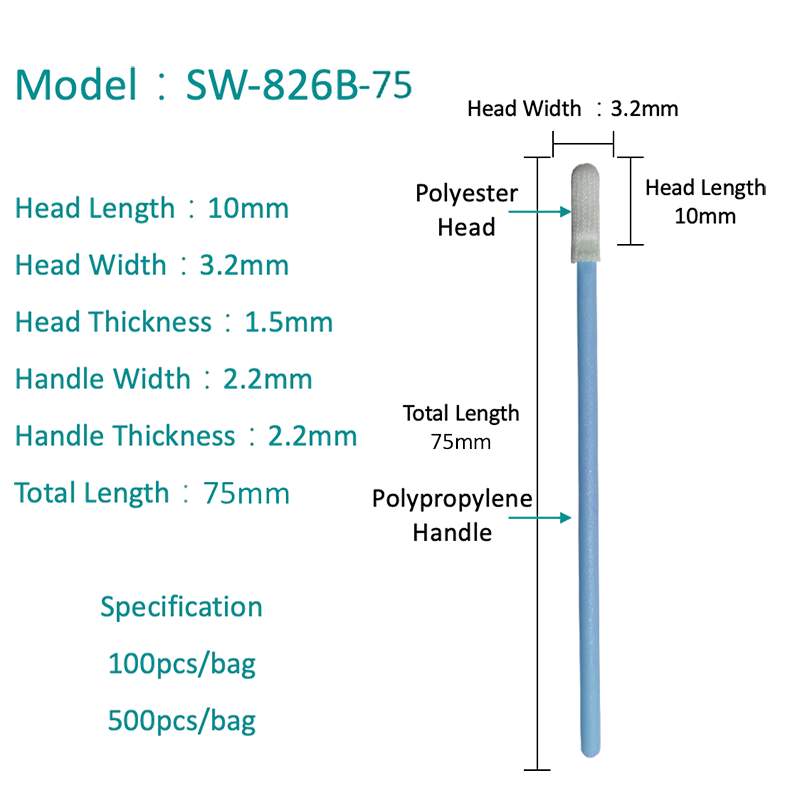
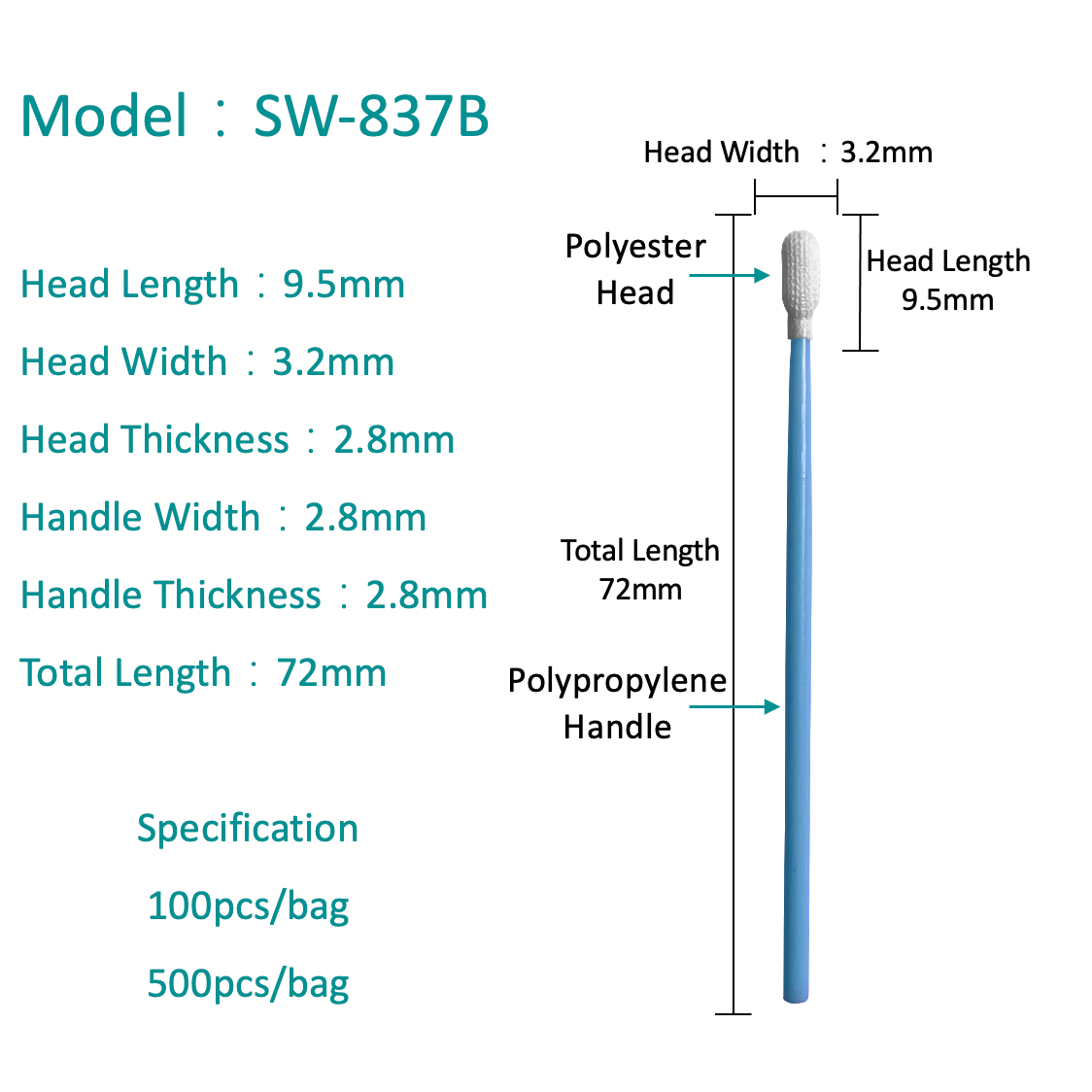
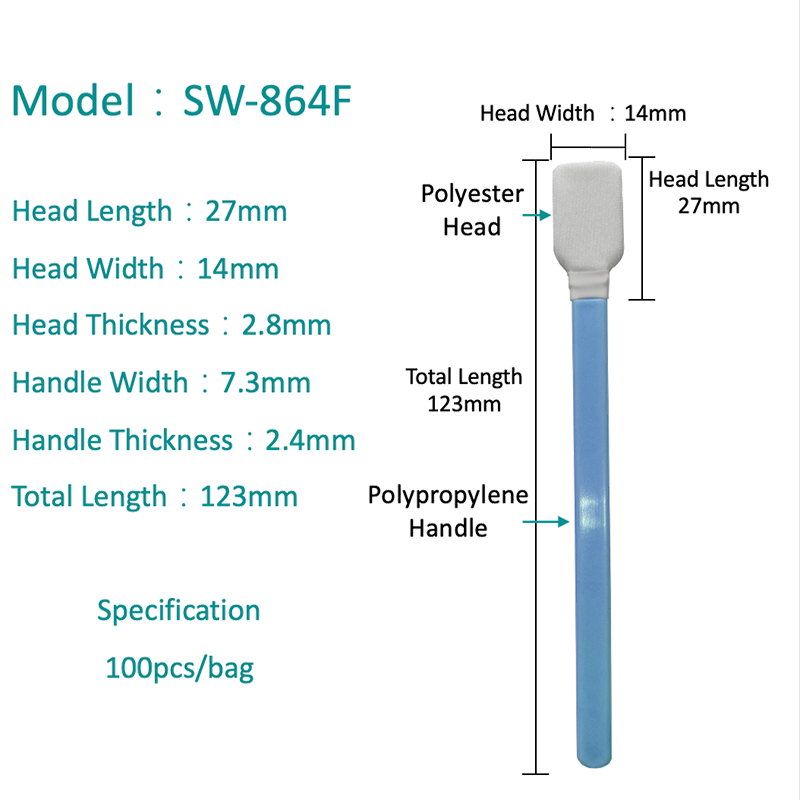
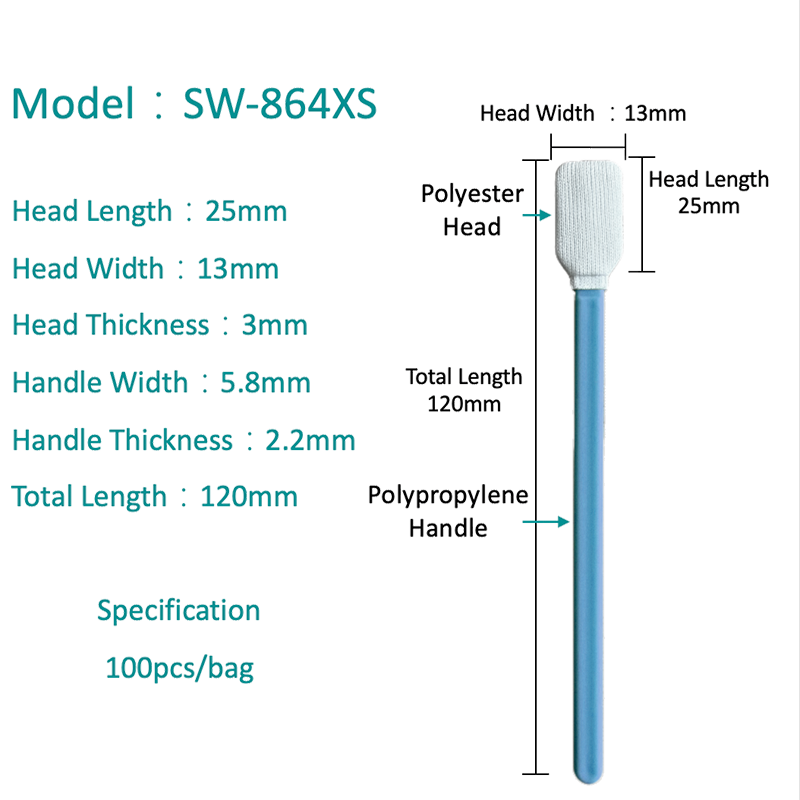
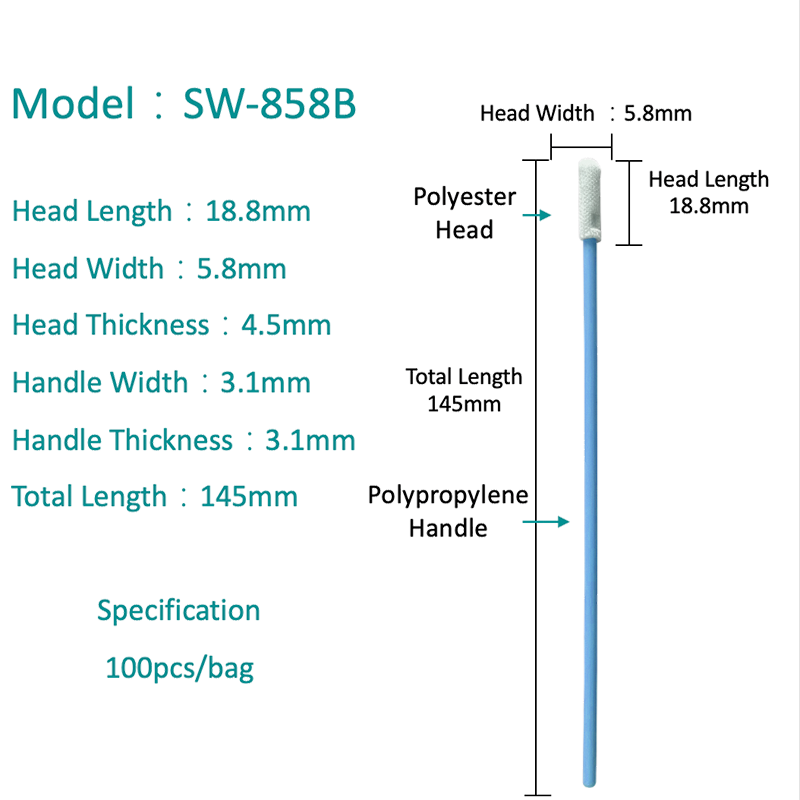
A poly swab is a cleaning and application tool with a head made from polyester fiber, typically either knitted or woven into a dense, low-linting fabric that's then heat-sealed or bonded onto a handle, most commonly molded polypropylene. The defining characteristic of a poly swab is its combination of durability and low particle shedding, since polyester fiber, unlike natural fibers such as cotton, doesn't break down into loose fibers or particulates nearly as easily under friction or solvent exposure, making it a standard choice in environments where contamination control matters.
Poly swabs are widely used in electronics manufacturing, cleanroom maintenance, and precision equipment cleaning specifically because polyester fiber holds up well against common solvents like isopropyl alcohol without degrading or leaving residue behind, a property that natural fiber swabs generally can't match. This chemical compatibility, combined with polyester's relatively low cost compared to microfiber or specialty foam alternatives, is why poly swabs remain one of the most commonly stocked swab types across cleanroom and electronics supply catalogs.
The handle construction of a poly swab also plays a meaningful role in its overall performance, since cleanroom-grade poly swabs typically use handles molded from low-outgassing polypropylene, and the bond between handle and swab head is engineered to resist separation under normal use, preventing the head from detaching and becoming a contamination risk itself, particularly critical in cleanroom and semiconductor applications where a dropped or shed component can compromise an entire batch.
What Are the Types of Swabs?
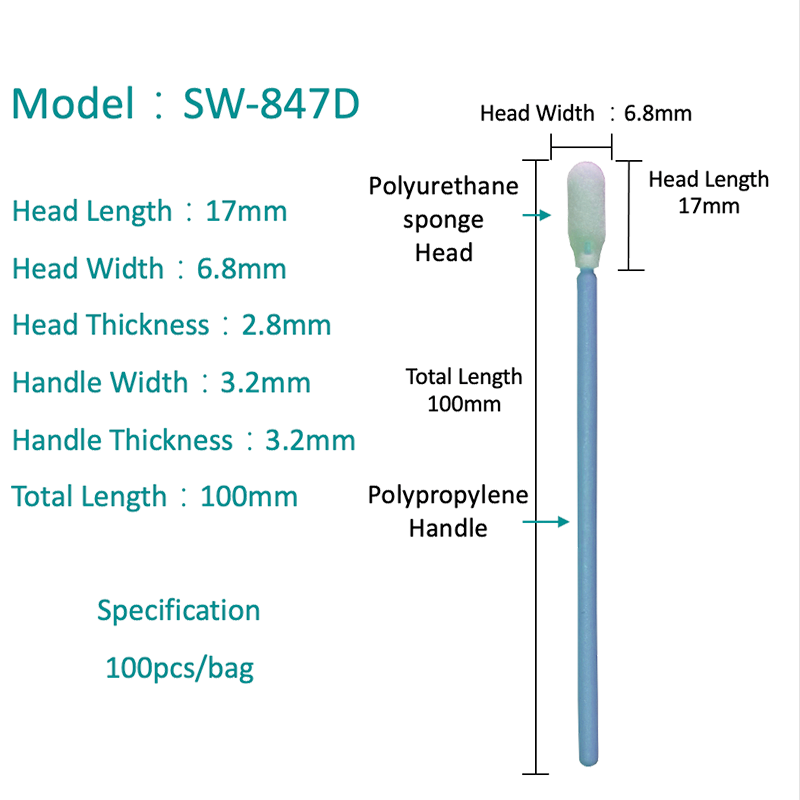
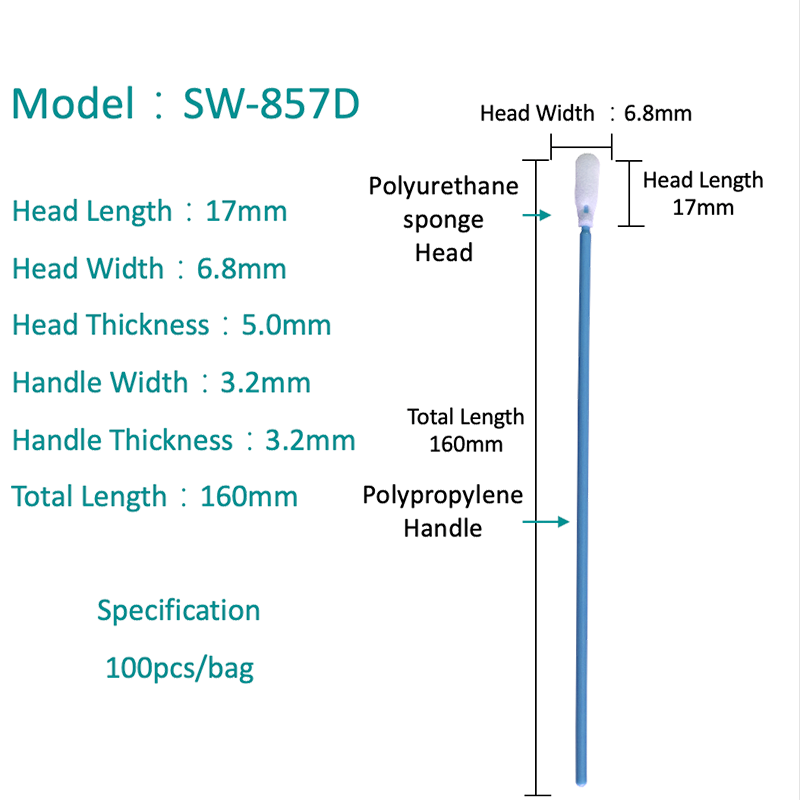
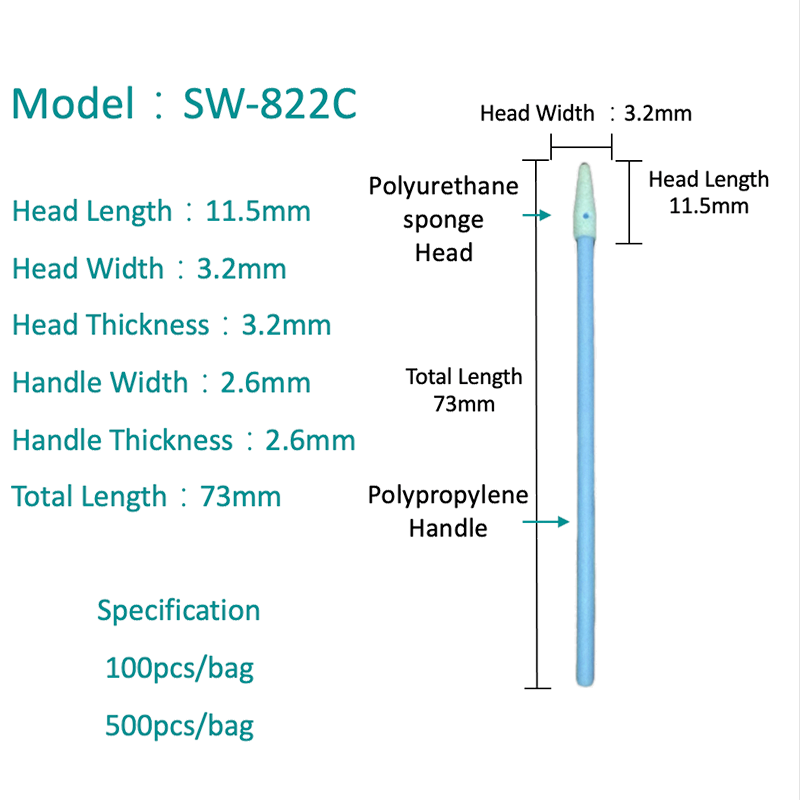
Swabs used across cleanroom, laboratory, and industrial applications generally fall into several head-material categories, each suited to different cleaning and sampling requirements. Polyester (poly) swabs offer a strong balance of low linting, chemical resistance, and cost-effectiveness, making them the general-purpose workhorse across many cleanroom and electronics applications. Foam swabs, typically made from open-cell or closed-cell polyurethane foam, offer exceptional absorbency and are especially effective for cleaning recessed or delicate surfaces like optical lenses, print heads, and connector interfaces where a firmer fiber swab could cause scratching.
Cotton swabs, while inexpensive and widely available, generate significantly more loose fiber and particulate than synthetic alternatives, which generally disqualifies them from cleanroom and precision electronics use, though they remain common in general household, medical, and cosmetic applications where particle generation isn't a critical concern. Microfiber swabs sit at the premium end of the category, offering superior absorbency and cleaning efficiency due to microfiber's extremely fine fiber structure, which is discussed in more detail in the following section.
Beyond head material, swabs are also differentiated by tip shape and size, with pointed, rounded, chisel, and rectangular tips each suited to different surface geometries, from tight connector pins to broad flat surfaces. Choosing the correct combination of head material and tip shape for a specific cleaning task, rather than defaulting to a single general-purpose swab across every application, meaningfully improves cleaning consistency and reduces the risk of surface damage or contamination.
Common swab head materials matched to their key property and typical application.
What Is a Microfiber Swab?
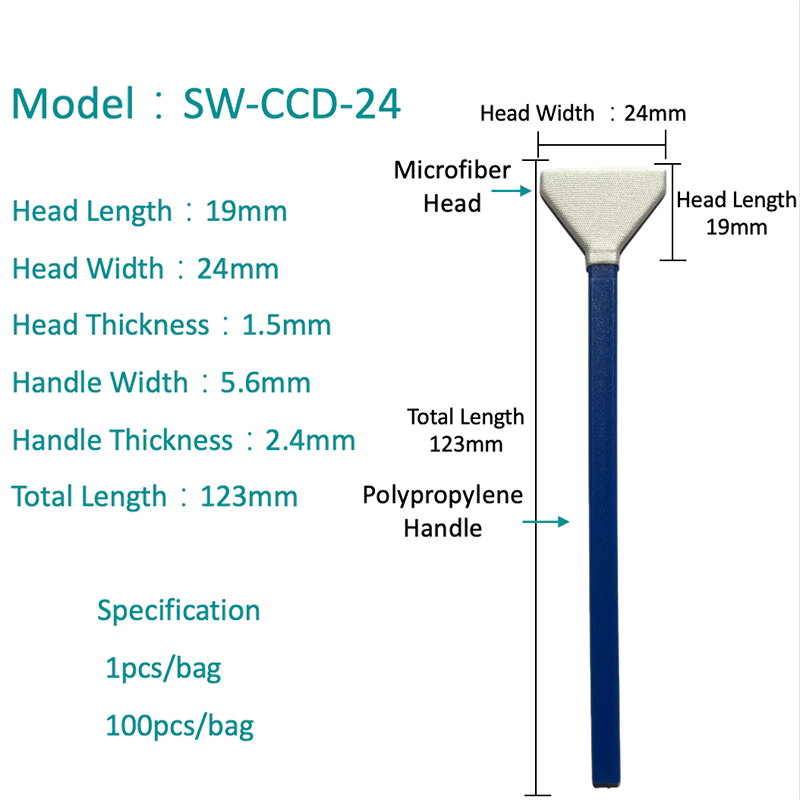
A microfiber swab uses a head woven or knitted from ultra-fine synthetic fibers, typically a blend of polyester and polyamide, engineered to be significantly finer than standard polyester fibers used in conventional poly swabs. This fine fiber structure dramatically increases the swab's surface area relative to its size, allowing it to capture and hold both liquid residue and microscopic particulate far more effectively than standard fiber or foam swabs, which is why microfiber swabs are frequently specified for the most demanding cleaning and verification tasks.
Beyond raw absorbency, microfiber's split-fiber structure gives it a mild mechanical cleaning action even without added abrasives, helping to lift stubborn residue, oils, and fine particulate from surfaces that a smoother fiber swab might simply push around rather than actually remove. This makes microfiber swabs especially valuable for cleanroom surface verification, optical component cleaning, and any application where both liquid and particulate contamination need to be addressed in a single pass.
The tradeoff for microfiber's superior performance is cost, since microfiber swabs are generally priced higher than standard poly swabs due to the more complex fiber production and swab assembly process involved. For routine, lower-criticality cleaning tasks, this added cost may not be justified, but for validation sampling, final surface verification before critical assembly steps, or cleaning of high-value optical and precision components, the improved cleaning performance of a microfiber swab typically justifies the price difference.
What Is a Swab Used For?
Cleanroom Surface Cleaning
Swabs are used to wipe down equipment, tooling, and surfaces inside cleanrooms and controlled environments, removing particulate and residue without introducing new contamination.
Electronics & Precision Assembly
In electronics manufacturing, swabs clean flux residue, dust, and contaminants from PCBs, connectors, and delicate components without scratching sensitive surfaces.
Surface Sampling & Validation
Swabs are used to collect surface samples for contamination testing, verifying that a cleaned surface meets required particulate or residue limits before use.
Optical & Medical Applications
Foam and microfiber swabs are commonly used to clean lenses, sensors, and optical components, as well as in various medical and laboratory sample collection procedures.
What Is a Swab Made Of?
The head of a swab is generally made from one of several materials, each selected for a specific balance of absorbency, particle generation, and chemical resistance: knitted or woven polyester fiber for standard poly swabs, open or closed-cell polyurethane foam for foam swabs, split microfiber blends of polyester and polyamide for microfiber swabs, or natural cotton fiber for general-purpose cotton swabs. The choice of head material is the single biggest factor determining whether a given swab is suitable for cleanroom or precision electronics use versus general-purpose cleaning.
The handle, meanwhile, is almost universally molded from polypropylene in cleanroom and precision-grade swabs, chosen for its rigidity, chemical resistance, and low tendency to outgas or shed particulate, which matters just as much as head material in controlled environments. Lower-cost consumer swabs sometimes use paper or wood handles instead, which are acceptable for general household use but are avoided in cleanroom and electronics applications due to their higher particle-shedding potential.
Some specialized swabs incorporate additional materials into their construction, such as conductive fibers woven into the head for static-sensitive electronics applications, or specific bonding adhesives engineered to resist separation when exposed to aggressive solvents. Understanding exactly what a given swab is made of, down to the handle material and bonding method, is important for buyers working in regulated or highly controlled environments where every material entering the process needs to be documented and verified against contamination and outgassing requirements.
What Is the 3 Swab Test?
The 3 swab test is a cleanroom and controlled-environment verification method used to assess surface cleanliness and contamination levels by taking three separate swab samples from a defined surface area, then analyzing each sample independently for particulate count, residue, or microbial presence depending on the specific validation protocol being followed. Using three samples rather than a single swab improves statistical reliability, helping to distinguish a genuinely dirty surface from a single anomalous reading caused by sampling variation or an isolated contamination event.
In practice, the 3 swab test is commonly applied during cleanroom qualification, equipment changeover validation in pharmaceutical and food processing facilities, and periodic surface monitoring programs, where consistent, repeatable sampling technique across all three swabs is essential to getting meaningful results. Each swab is typically wiped across a standardized surface area using a consistent pattern and pressure, then placed into its own sample container for laboratory analysis or particle counting, keeping the three samples fully separated to avoid cross-contamination between them.
Because the swab itself becomes part of the sample being analyzed, using a swab with known low background particulate and residue levels, typically a certified cleanroom-grade poly or microfiber swab, is essential to getting an accurate 3 swab test result. A swab that sheds its own fibers or carries residual contamination from its manufacturing process can produce a false positive reading, incorrectly suggesting a surface is out of specification when the swab itself was actually the source of the detected contamination.

 ADDRESS
 CONTACT
 FAX
FAX EMAIL
EMAIL
